
Starting nursing school means learning many hands-on skills that directly impact patient care. Among them, stoma care is an important nursing procedure that requires both technical accuracy and patient-centered communication.
For many nursing students, caring for a patient with an ostomy can feel challenging at first. Understanding stoma assessment, appliance changes, and skin protection requires more than textbook knowledge. It requires repeated hands-on practice.
With proper training tools and structured practice, students can build the confidence needed to provide safe and compassionate ostomy care.
What is Stoma Care?
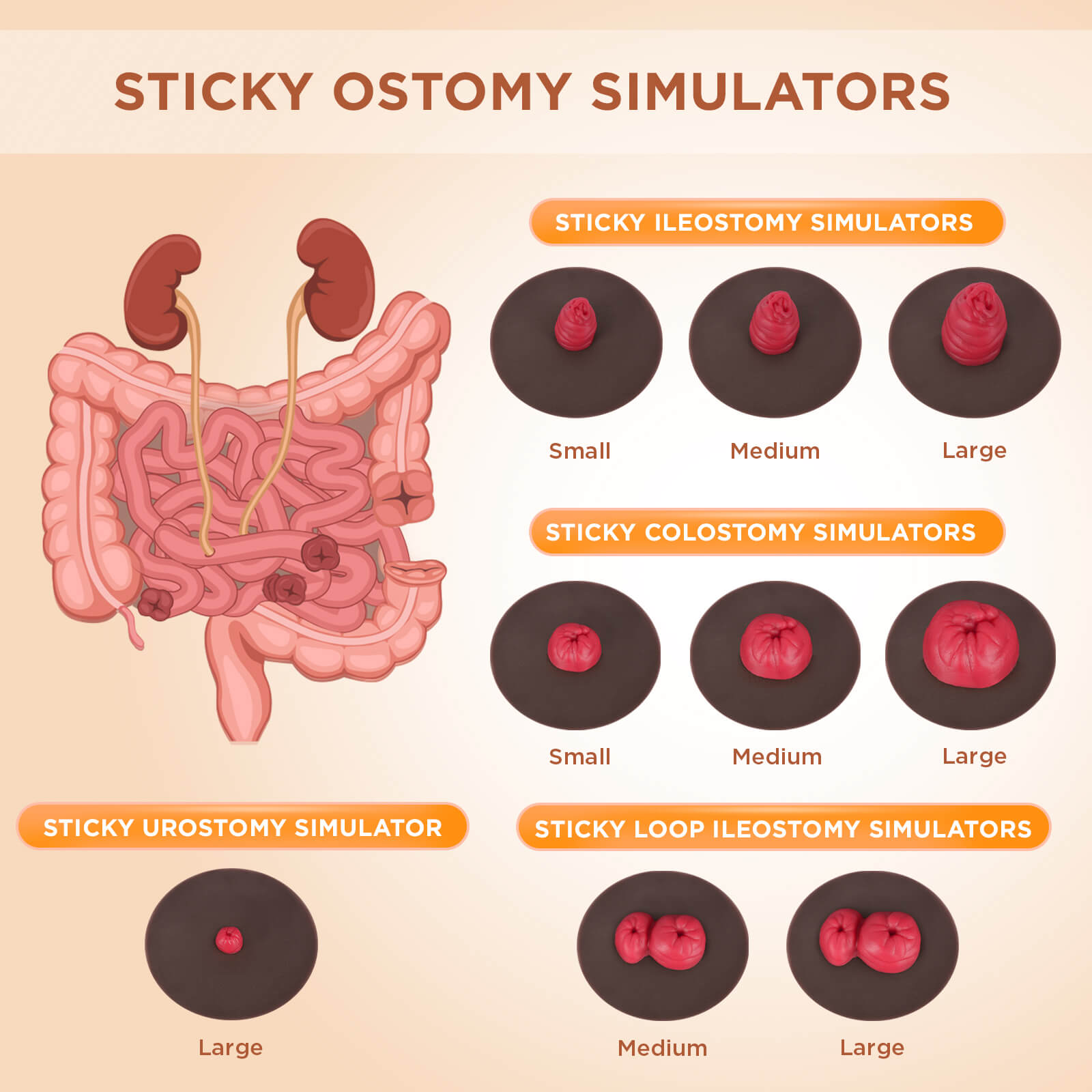
A stoma is a surgically created opening that allows waste to leave the body after certain medical procedures, such as a colostomy, ileostomy, or urostomy.
Stoma care involves maintaining the health of the stoma and surrounding skin, changing ostomy appliances, preventing complications, and supporting patients in adapting to life with an ostomy.
For nursing students, mastering these skills is essential because nurses often play a key role in ostomy education and daily patient support.
Essential Stoma Care Skills for Nursing Students
1. Performing Stoma and Skin Assessment
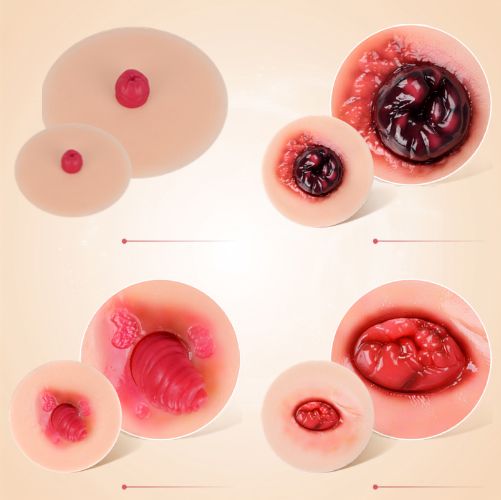
Before changing an ostomy appliance, nurses must evaluate:
- Stoma color and appearance
- Signs of irritation or infection
- Skin condition around the stoma
- Possible leakage areas
Regular assessment helps identify potential complications early and improves patient outcomes.
2. Removing and Applying Ostomy Appliances
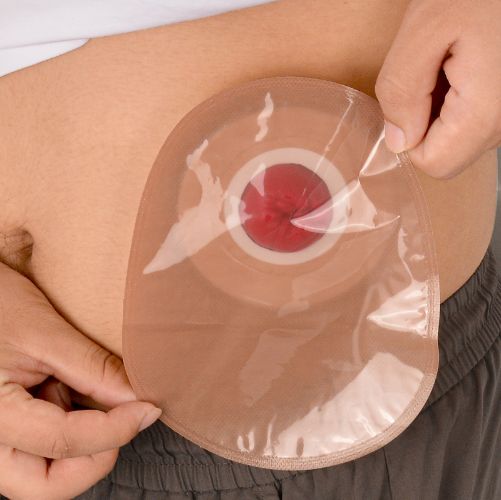
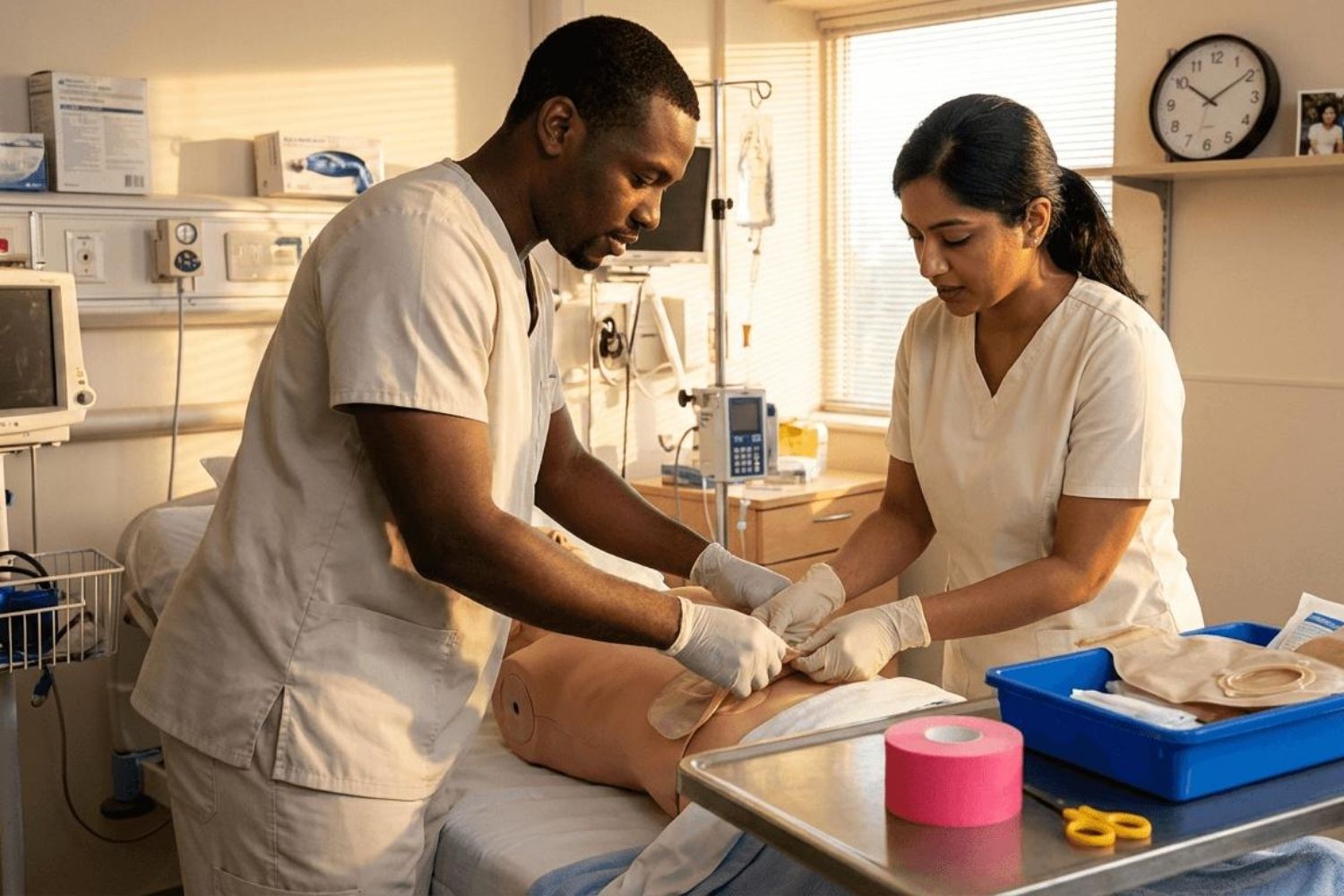
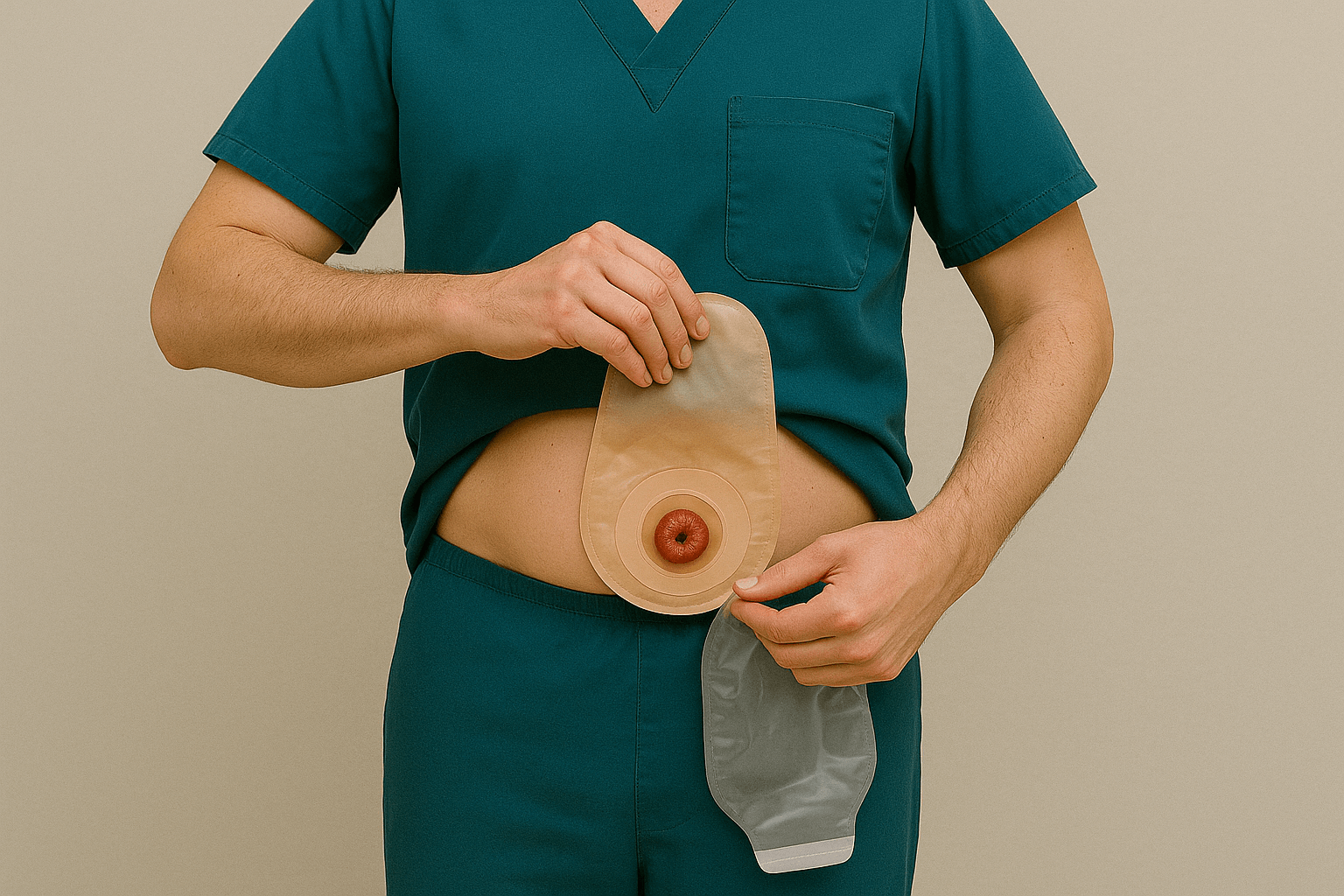
One of the most important skills in ostomy care is learning how to safely change a pouching system.
Students should practice:
- Removing an old pouch without damaging surrounding skin
- Cleaning and preparing the stoma area
- Measuring the stoma size correctly
- Cutting and fitting the wafer properly
- Applying the pouch securely to prevent leakage
Although these steps may appear simple, repeated practice helps develop the precision and confidence needed in clinical settings.
3. Preventing Leakage and Skin Irritation
Poor appliance fitting is one of the most common challenges for beginners.
Nursing students should understand how to:
- Select the appropriate pouch size
- Create a proper seal around the stoma
- Recognize early signs of skin irritation
- Educate patients about daily ostomy care
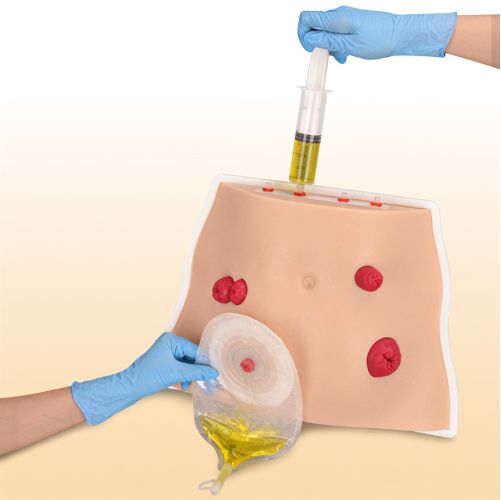
Hands-on simulation allows students to practice these techniques in a safe learning environment before working with real patients.
Practice Stoma Care with Realistic Training Models
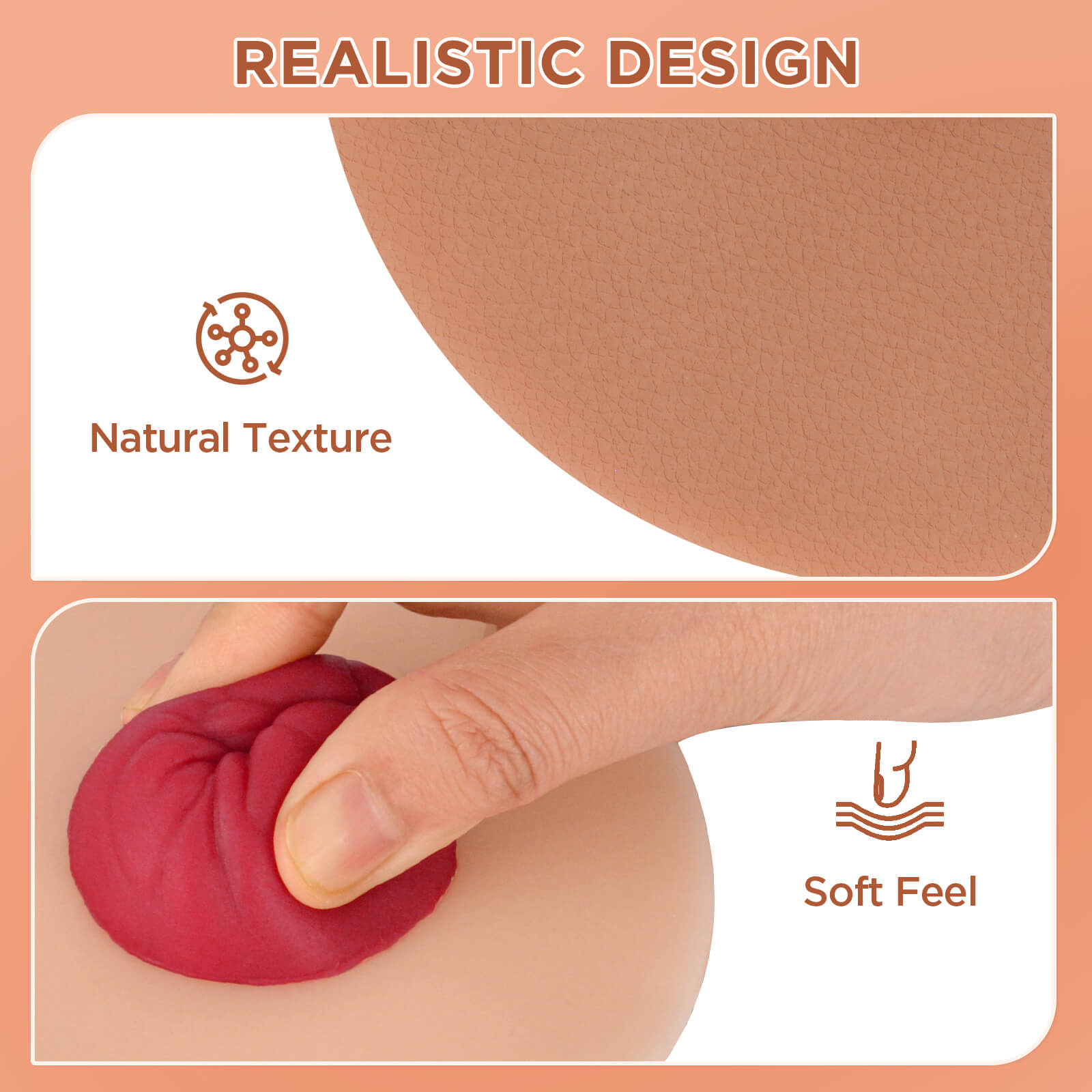
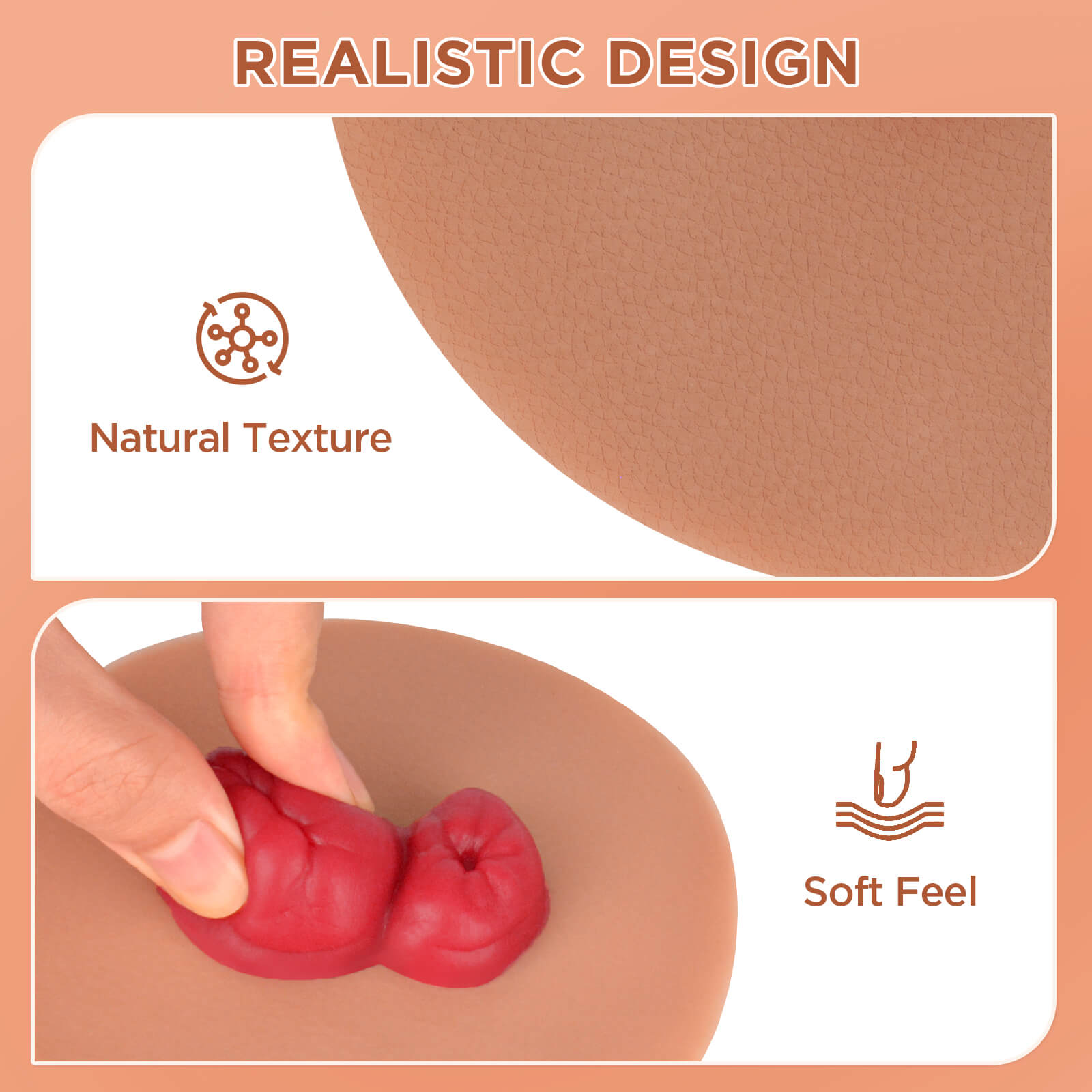
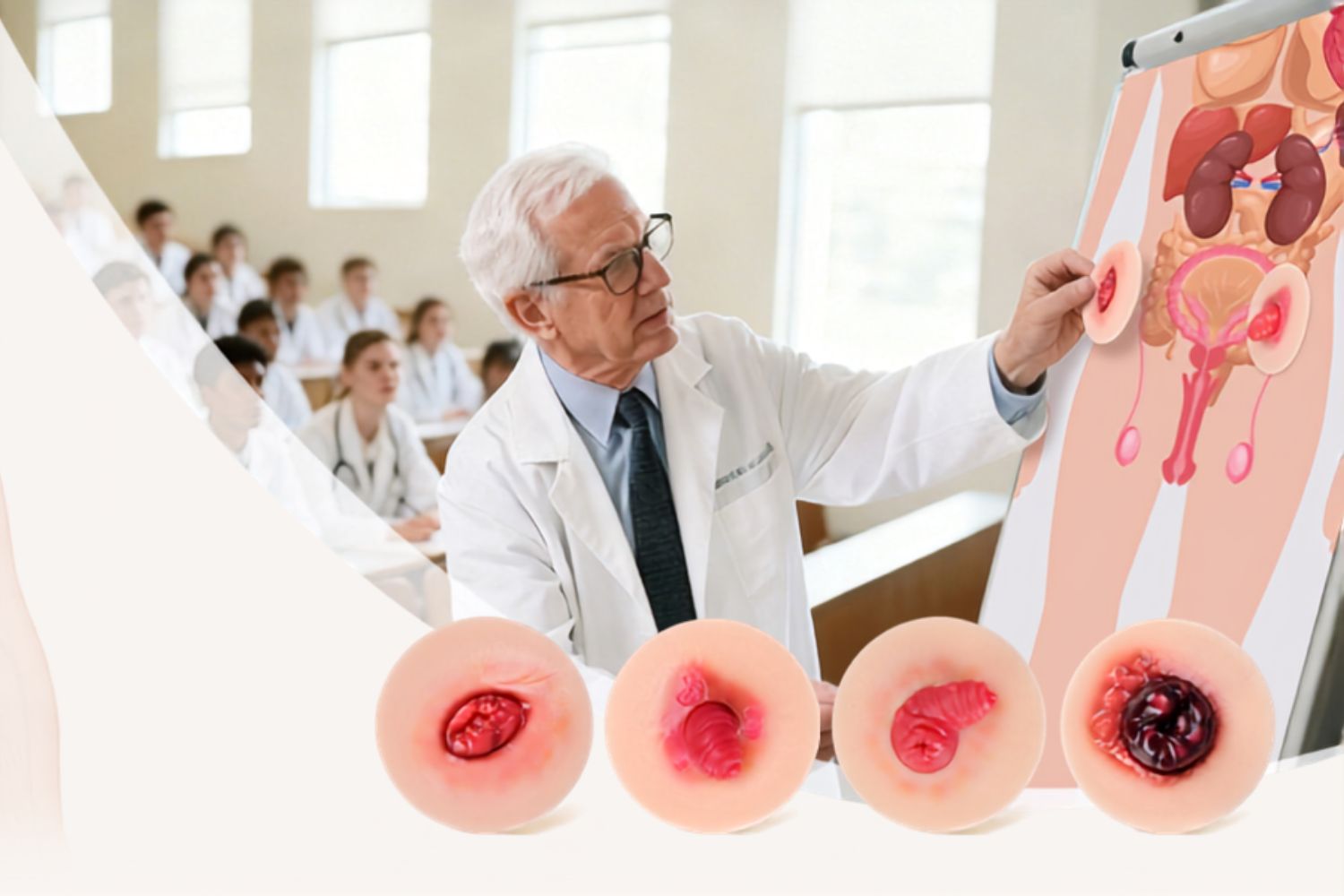
Learning ostomy care from diagrams or videos alone can be difficult. Realistic simulation models allow students to practice essential procedures repeatedly and improve their confidence.
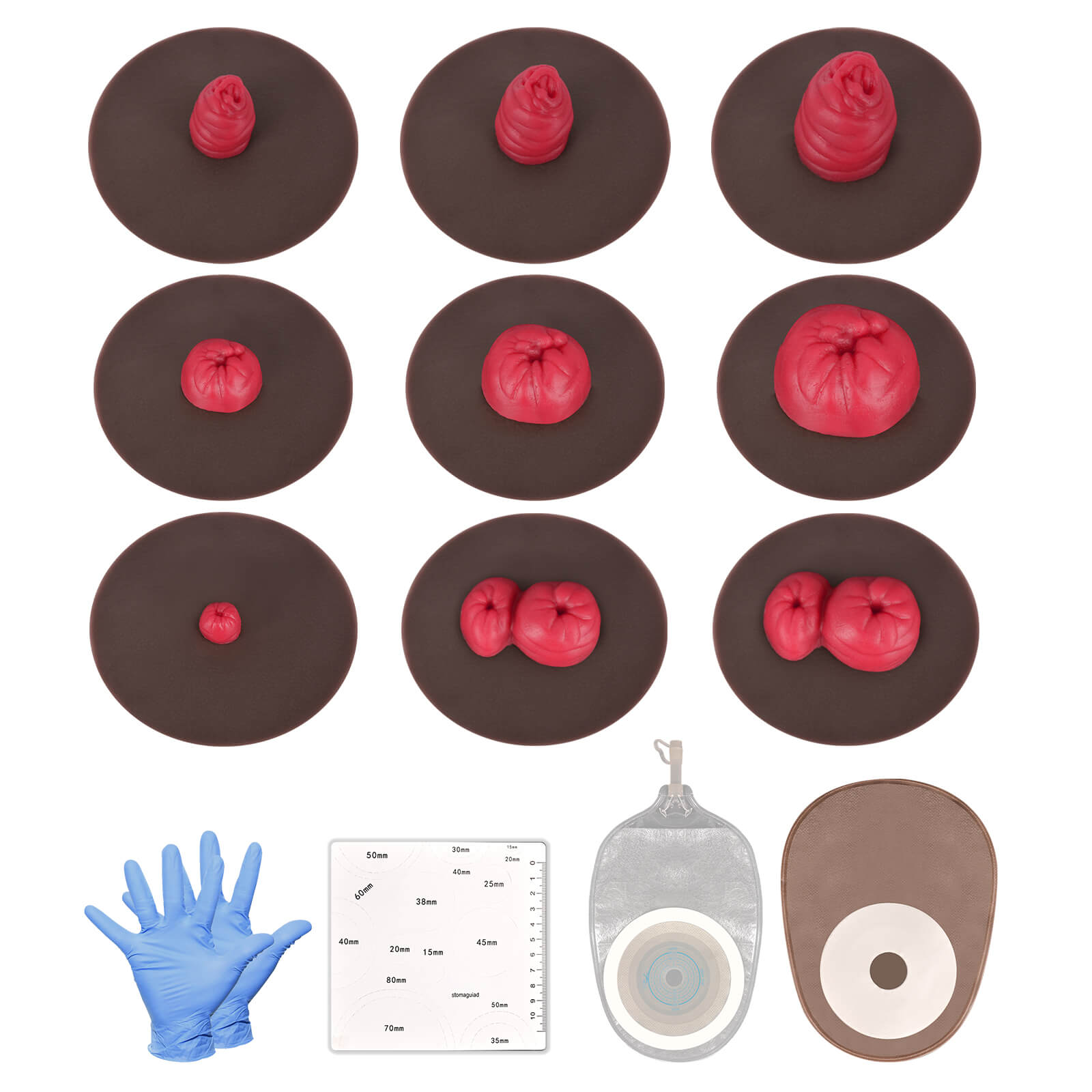
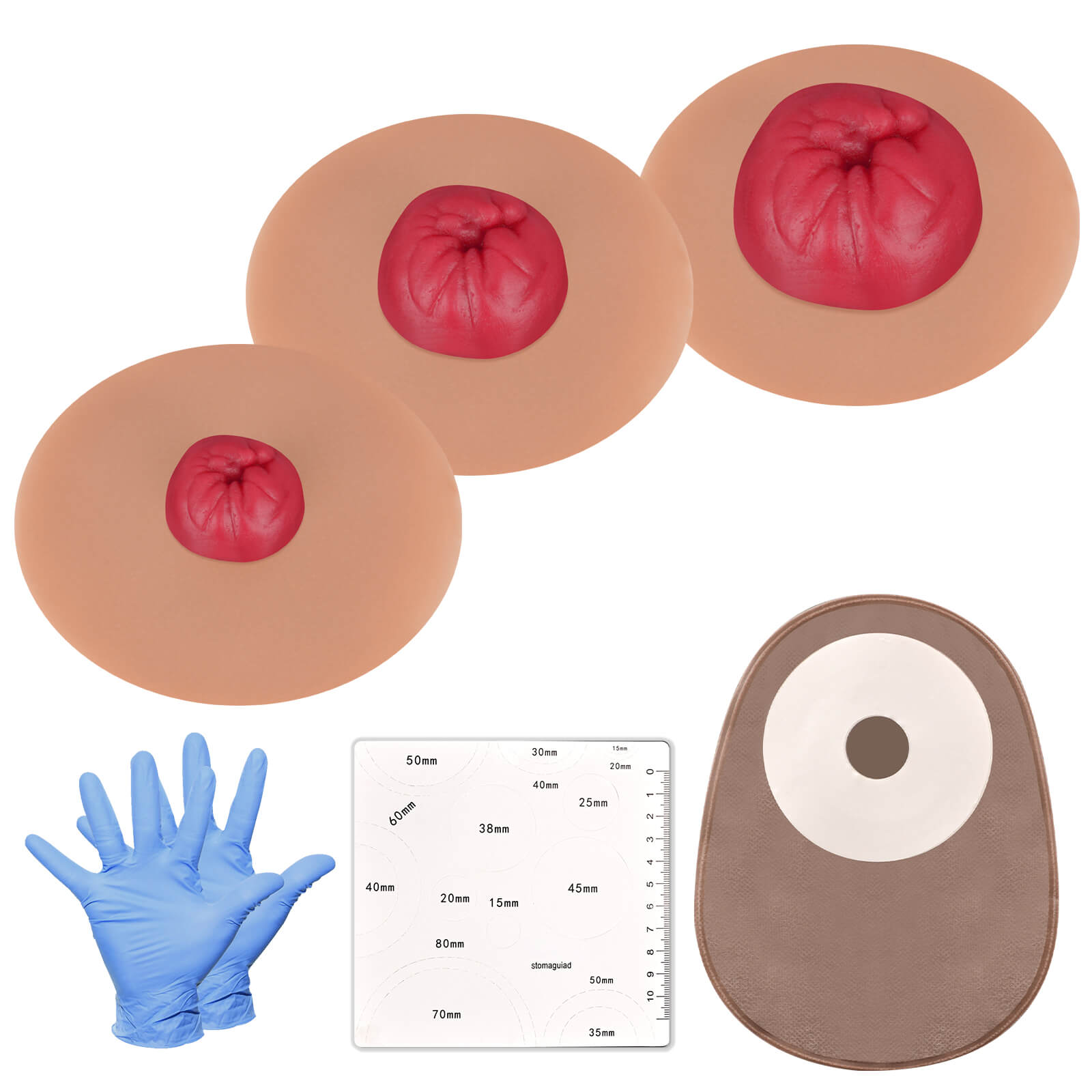
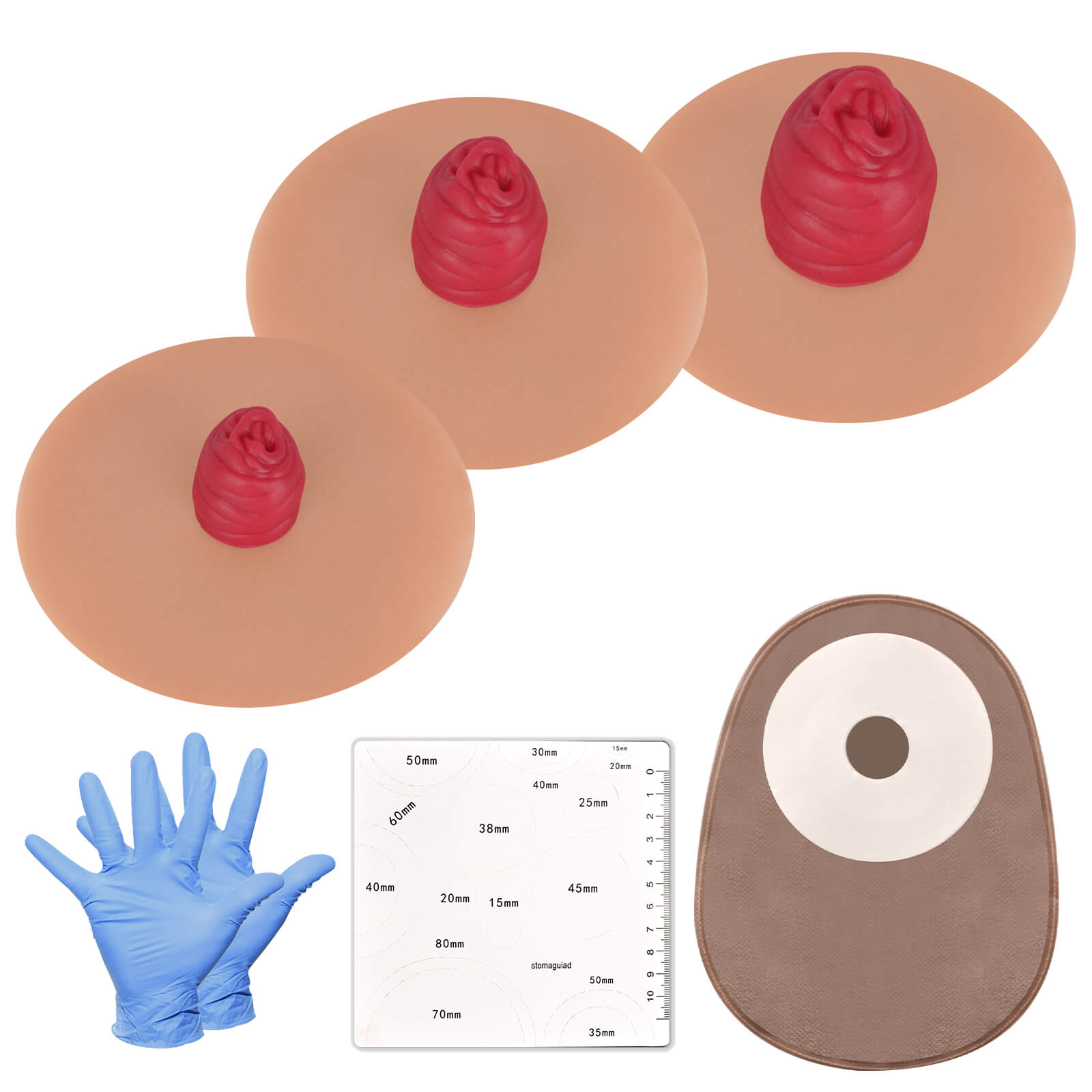
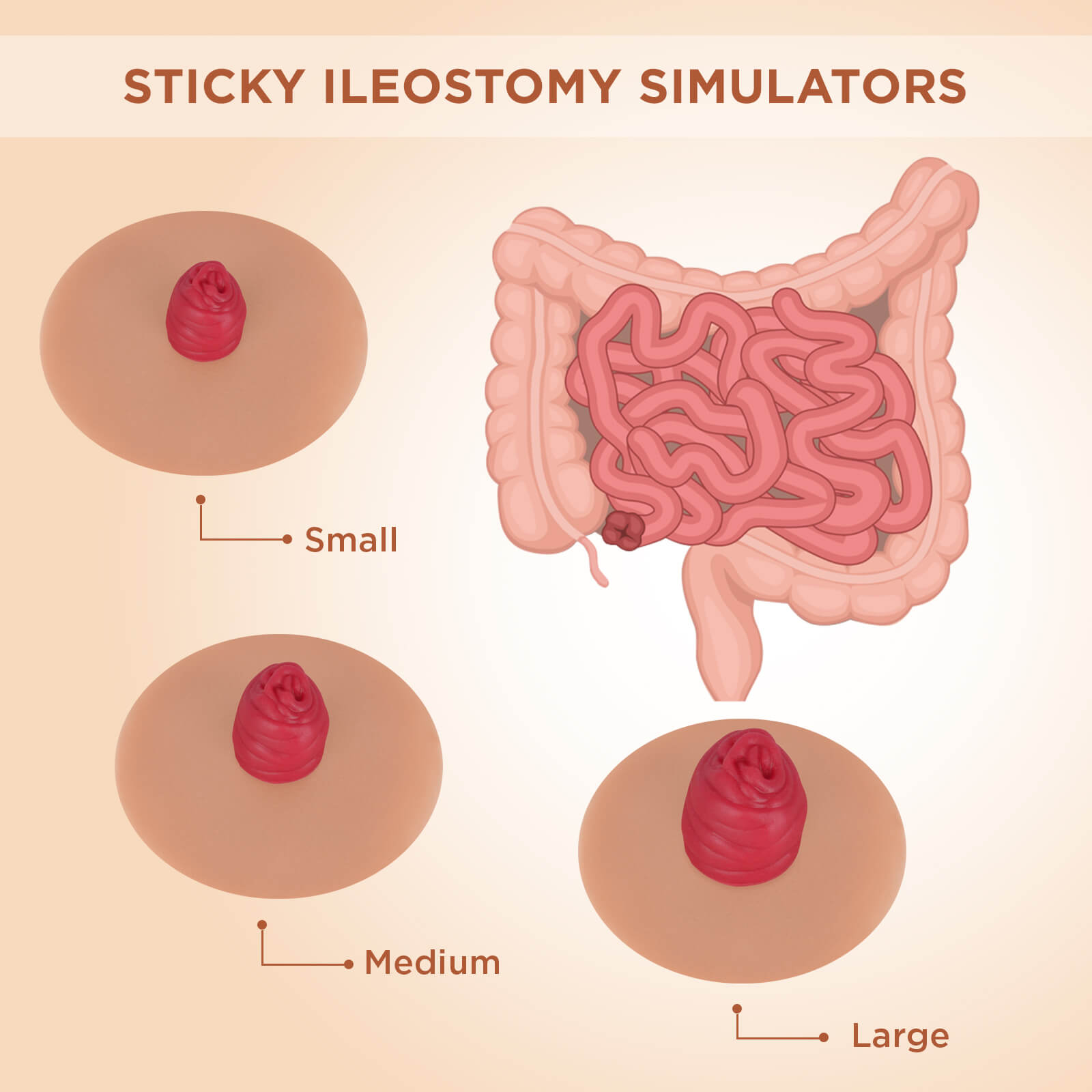
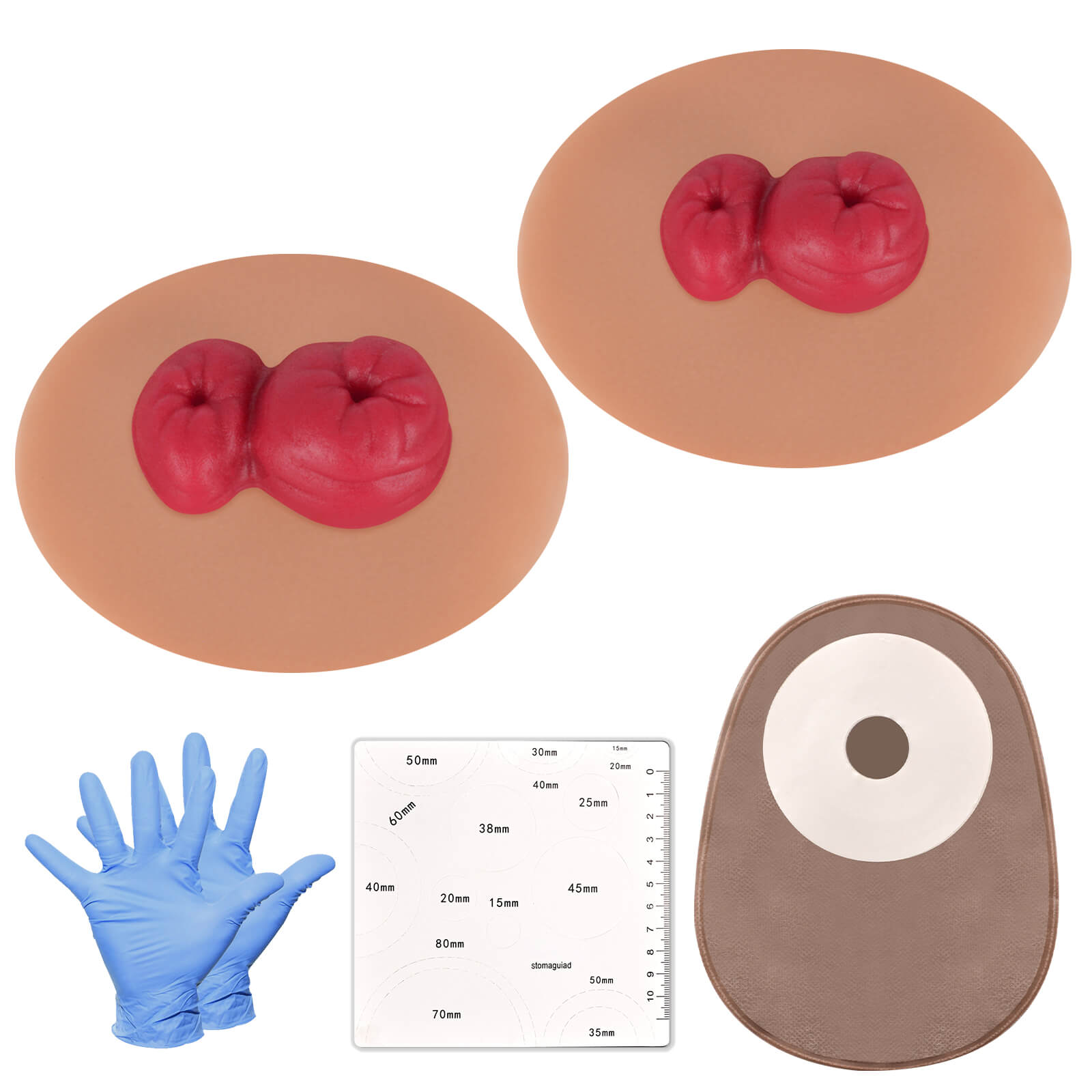
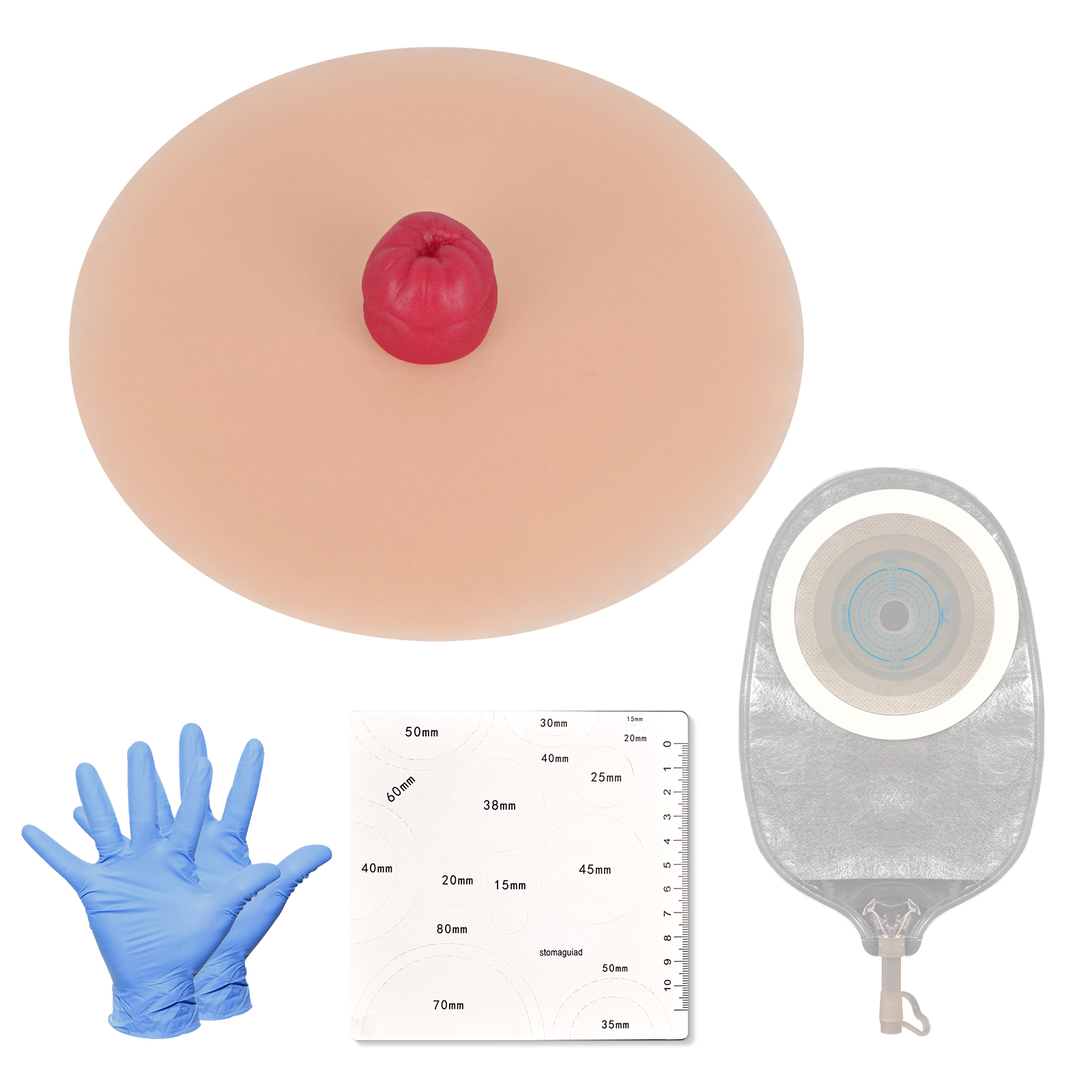
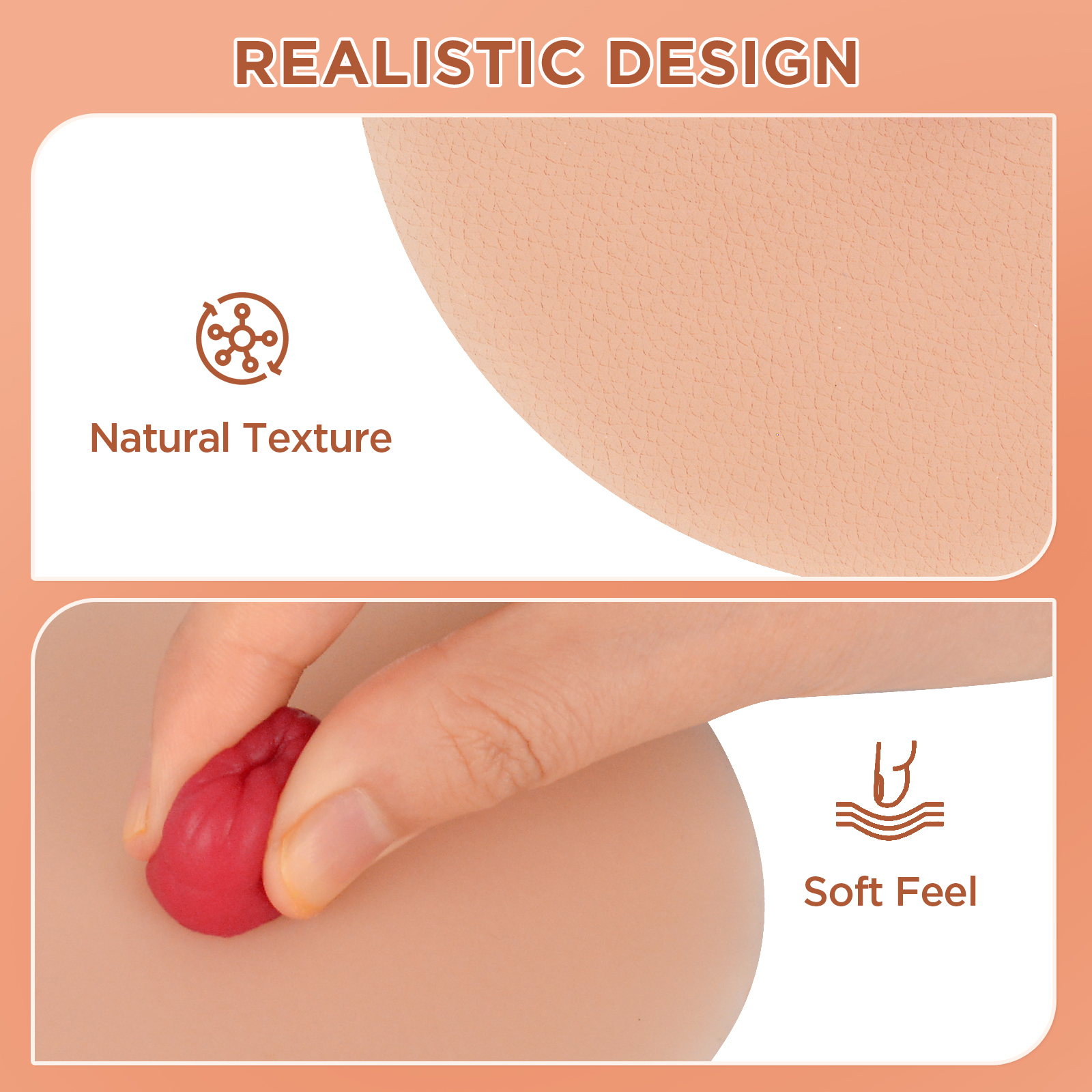
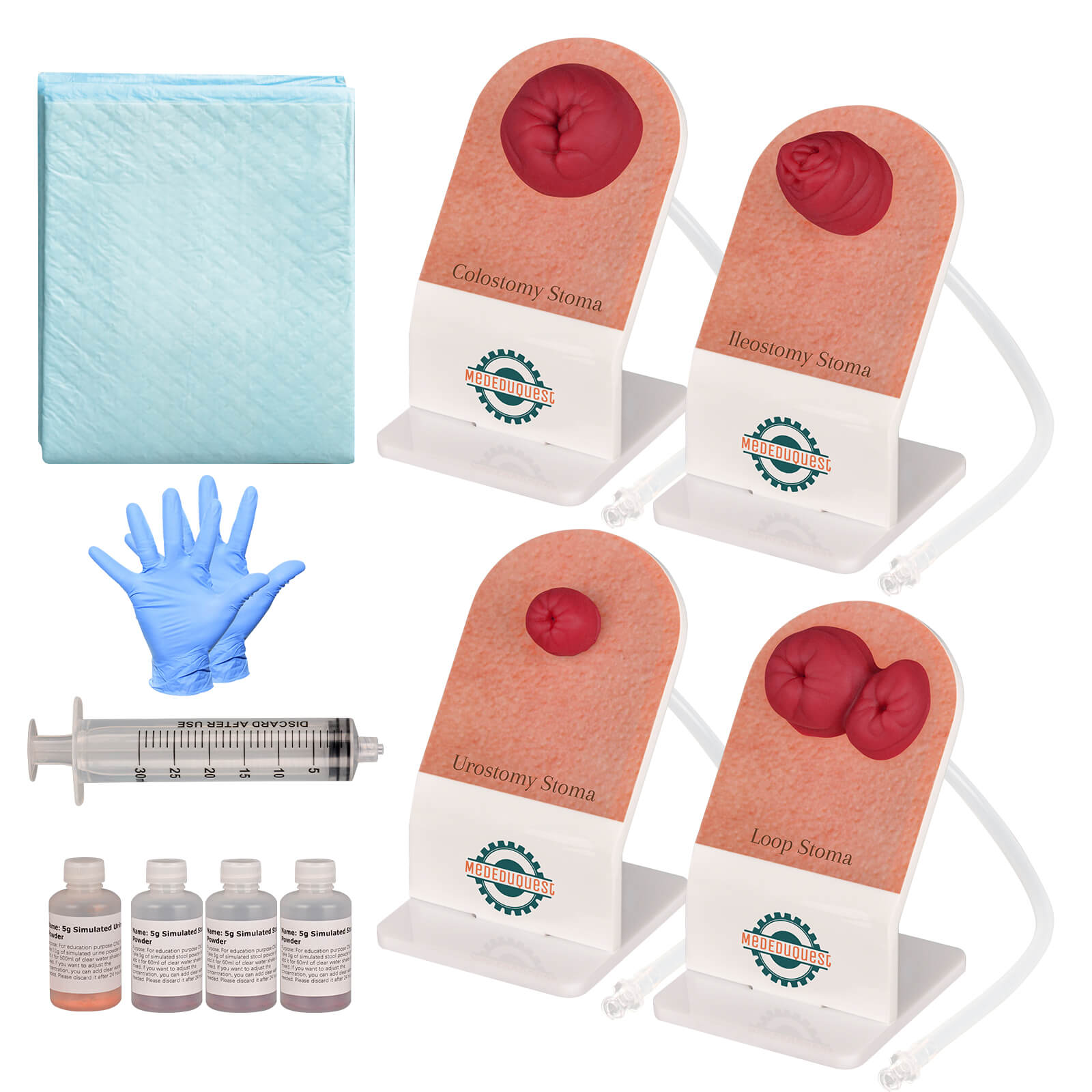
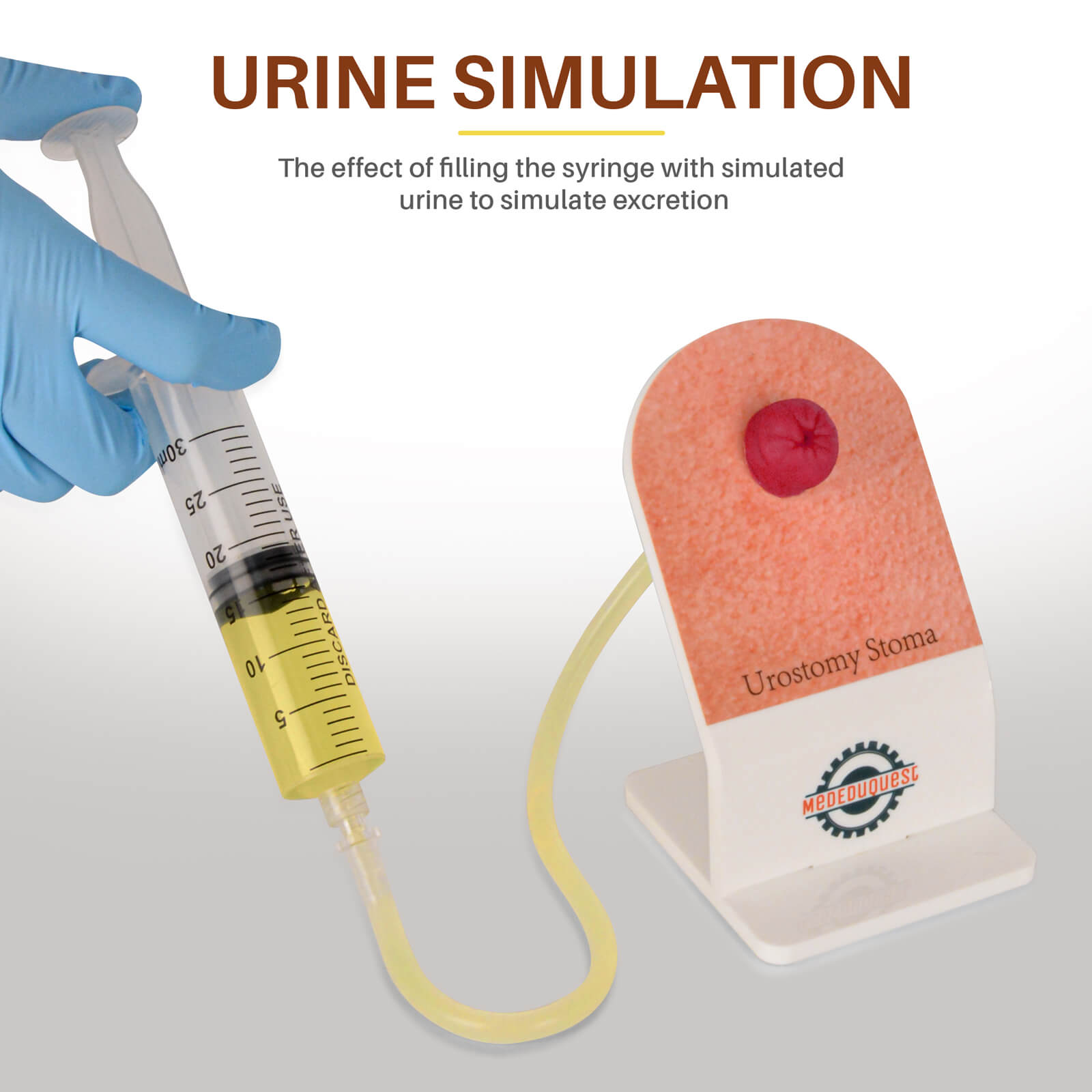
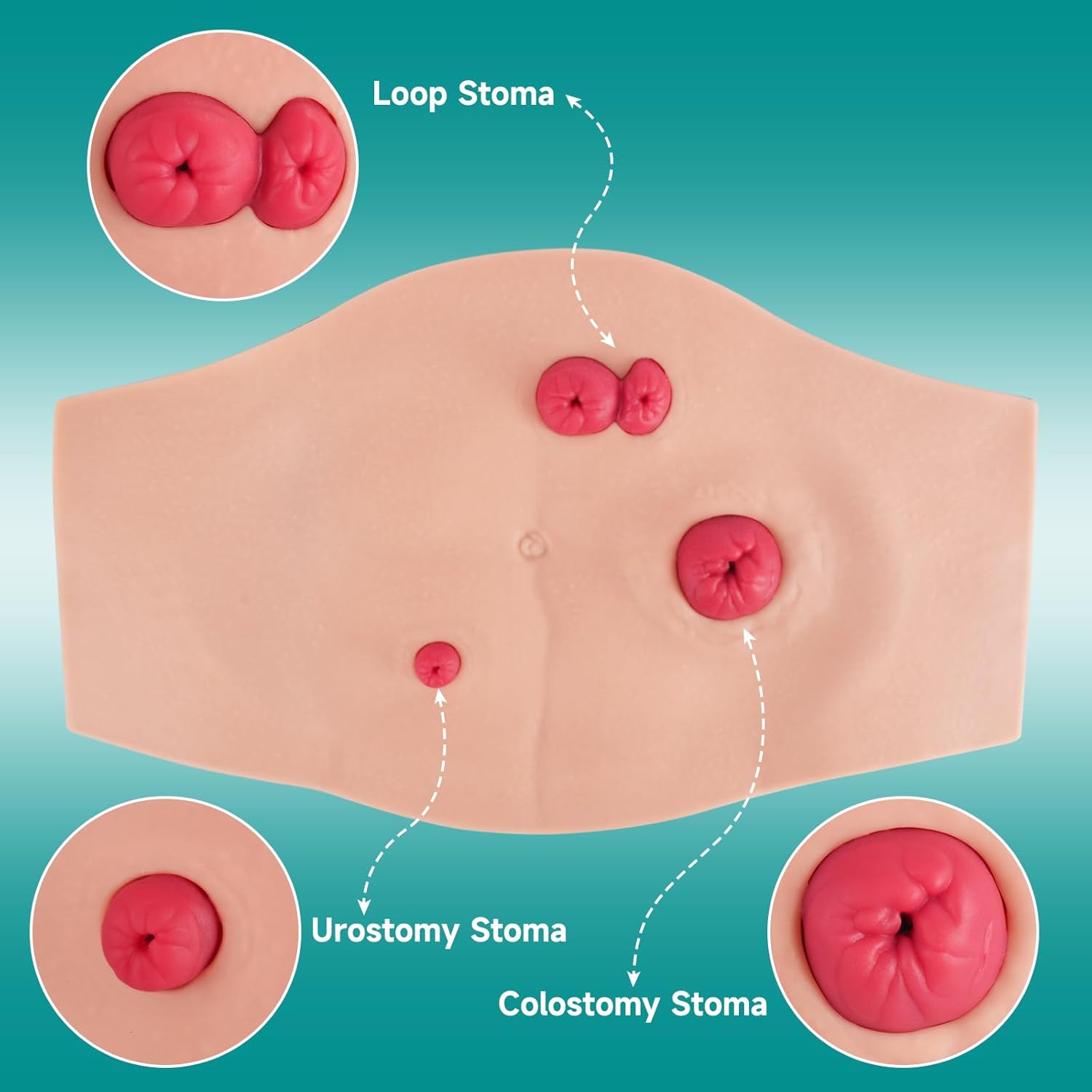
The Ostomy Care Training Kit with Display Stand from MedEduQuest provides a realistic platform featuring multiple stoma types for practicing:
- Stoma assessment
- Pouch placement and removal
- Wafer measurement and trimming
- Ostomy care demonstrations
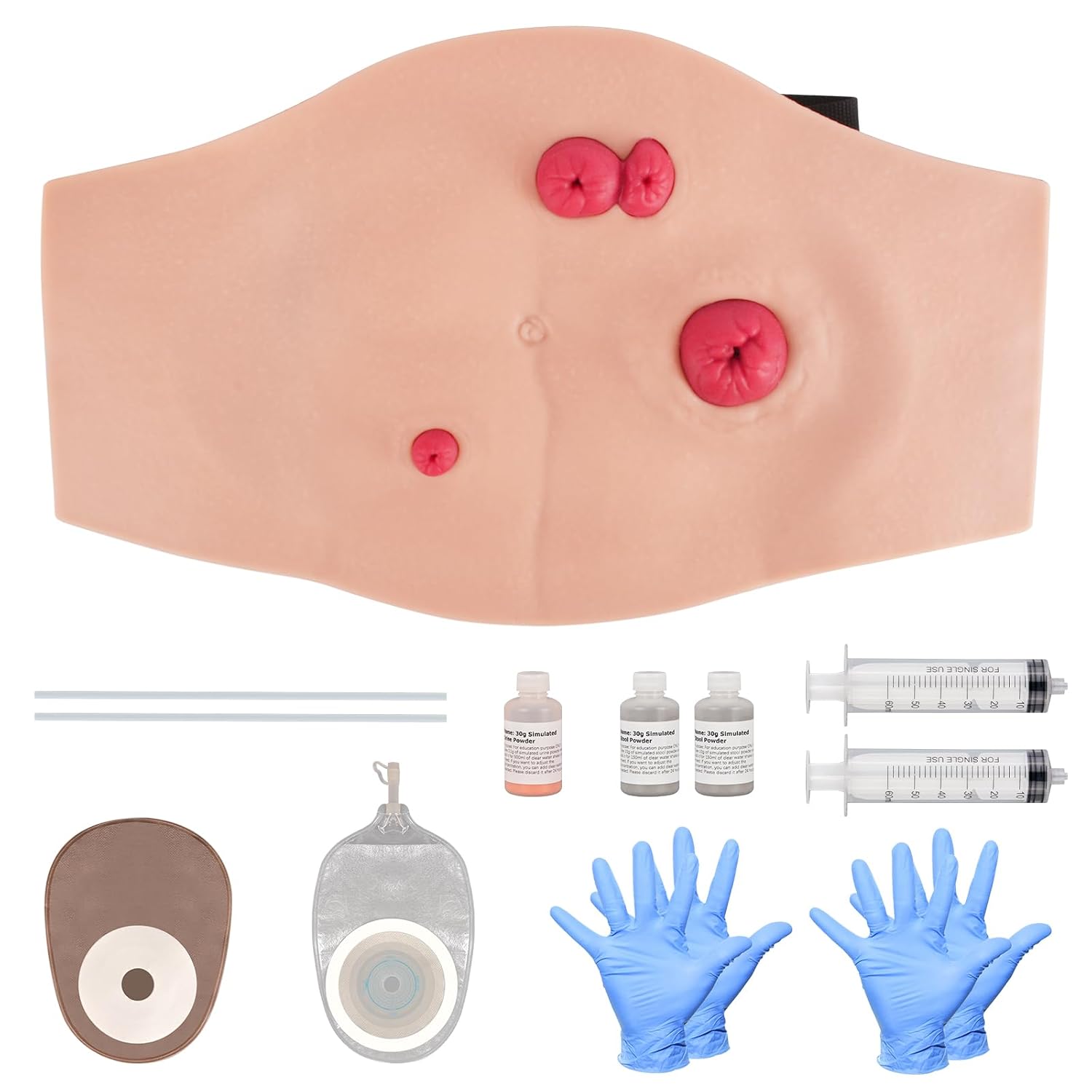
For more advanced practice, a wearable ostomy care trainer or ostomy care simlator allows students to perform care procedures in different body positions, creating a more realistic patient-care experience.
Tips for Improving Ostomy Care Skills
Practice Regularly
Like other nursing procedures, stoma care improves through repetition. Regular practice helps students develop better technique and reduce hesitation.
Follow a Step-by-Step Routine
Using the same procedure sequence each time helps build confidence and prevents missed steps.
Record Your Progress
Keeping a practice log can help identify challenges, track improvement, and focus on areas that need additional training.
Learn Patient Communication Skills
Ostomy care is not only a technical procedure. Nurses also need to provide emotional support and help patients feel comfortable managing their condition.
Why Hands-On Ostomy Training Matters
For nursing students, simulation-based learning bridges the gap between classroom knowledge and clinical practice.
Realistic ostomy training models provide a safe environment where students can:
- Practice repeatedly without patient risk
- Develop confidence before clinical placement
- Improve procedure accuracy
- Understand different ostomy conditions
MedEduQuest ostomy training models are designed to support nursing education, skills labs, and healthcare training programs by providing realistic and practical learning experiences.
Conclusion
Stoma care is an essential nursing skill that requires knowledge, practice, and confidence. By learning proper assessment techniques, appliance management, and patient care approaches, nursing students can become better prepared for real-world clinical situations.
Hands-on practice with realistic ostomy training models helps transform theoretical knowledge into practical nursing skills.
.jpg?w=1600&h=1600)
.jpg?w=1600&h=1600)
.jpeg?w=1600&h=1600)
.jpeg?w=1600&h=1600)
.jpeg?w=1600&h=1600)
.jpeg?w=1600&h=1600)
.jpg?w=1000&h=1000)
.jpg?w=1000&h=1000)
.jpeg?w=1500&h=1500)
.jpeg?w=1500&h=1500)
.jpeg?w=1600&h=1600)
.jpeg?w=1600&h=1600)
.jpg?w=1600&h=1600)
.jpg?w=1600&h=1600)
.jpg?w=1500&h=1500)
.jpg?w=1500&h=1500)
.jpg?w=1500&h=1500)
.jpg?w=1500&h=1500)
.jpg?w=1500&h=1500)
.jpg?w=1500&h=1500)
.jpg?w=1500&h=1500)
.jpg?w=1500&h=1500)