
Choosing the right ostomy care model is an important decision for nursing schools, simulation centers, and healthcare training programs.
A high-quality ostomy simulator does more than demonstrate basic procedures. It helps students develop practical skills, improve clinical confidence, and prepare for real patient care situations.
When selecting an ostomy training model, educators should consider several key factors, including realism, teaching flexibility, durability, and suitability for different learning objectives.
Why Choosing the Right Ostomy Training Model Matters
Ostomy care involves multiple skills that require hands-on practice, such as:
- Stoma assessment
- Peristomal skin evaluation
- Appliance removal and replacement
- Wafer measurement and fitting
- Leakage prevention
- Patient education
While textbooks and videos provide important knowledge, students need realistic practice opportunities to develop proper technique.
The right simulation model allows learners to repeat procedures in a safe environment before applying these skills in clinical settings.
1. Realistic Anatomy and Clinical Features
The first factor to consider is how closely the model represents real patient care situations.
A good ostomy training model should provide:
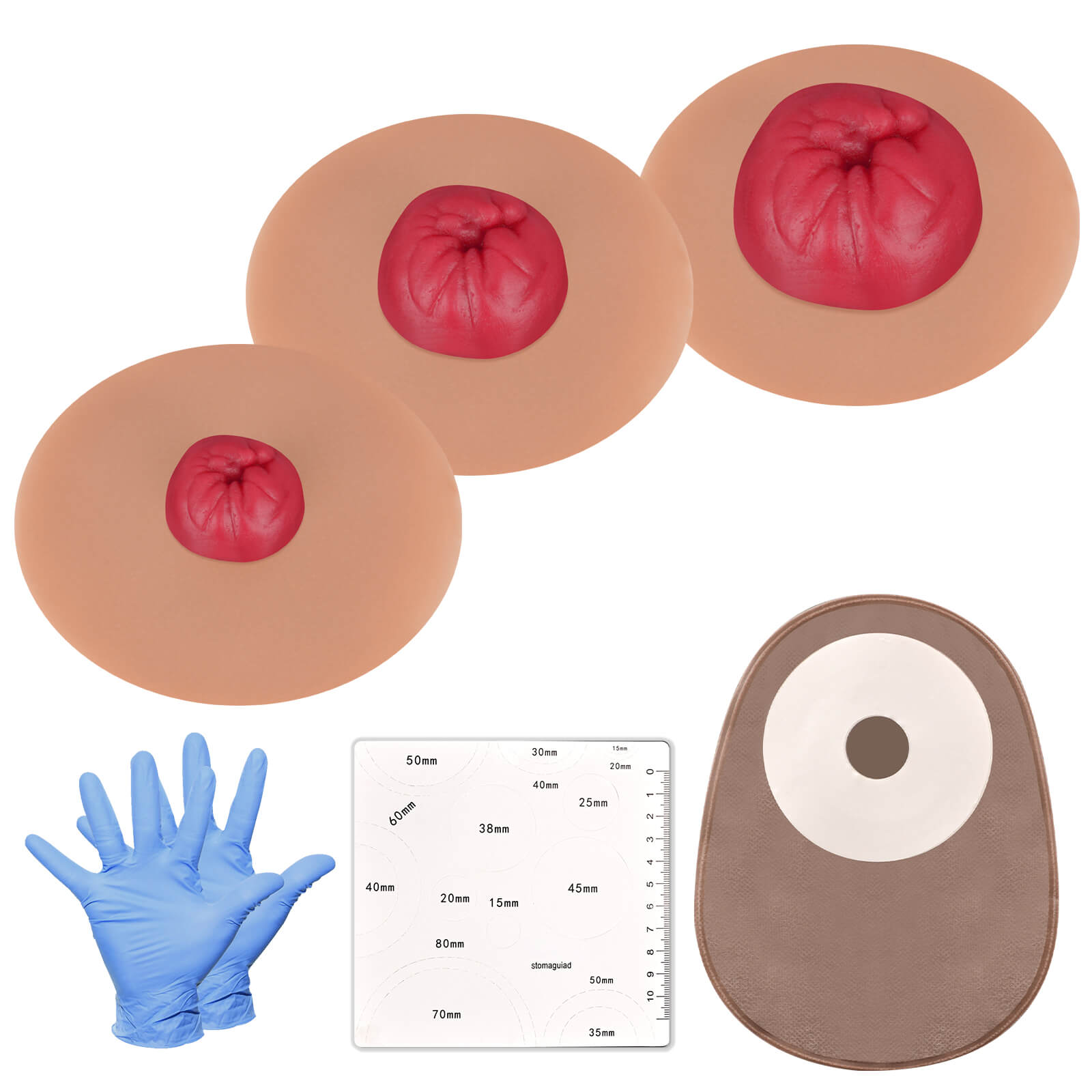
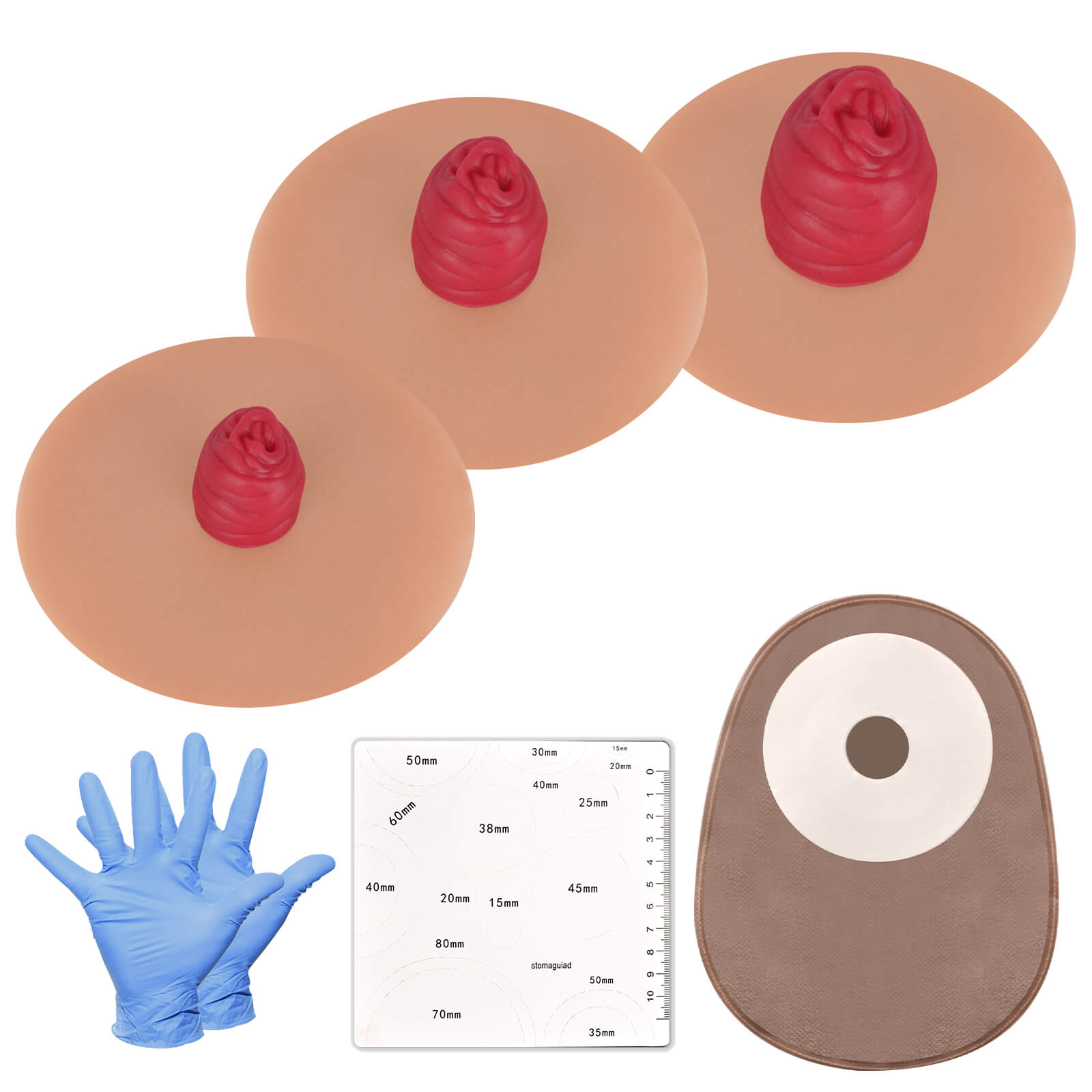
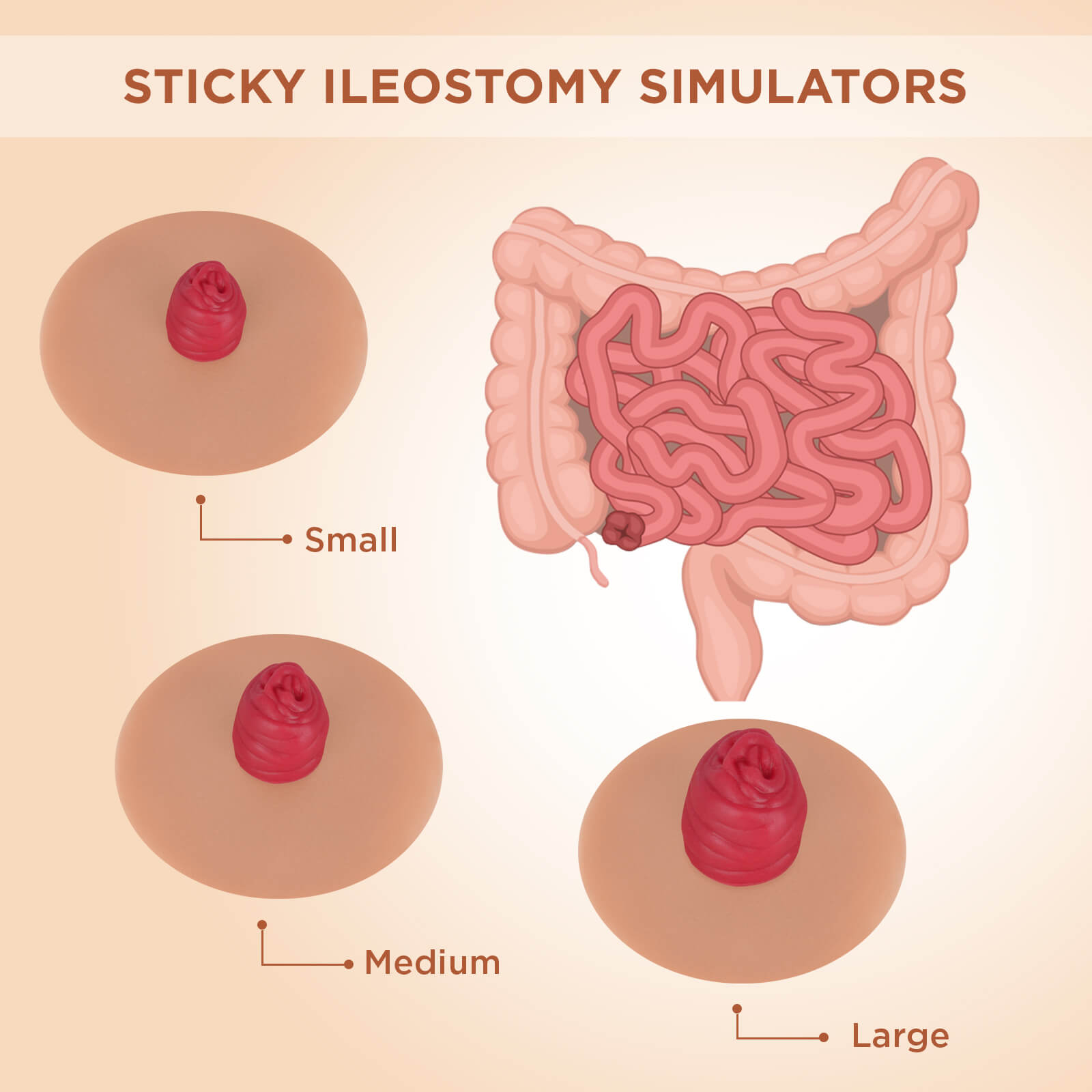
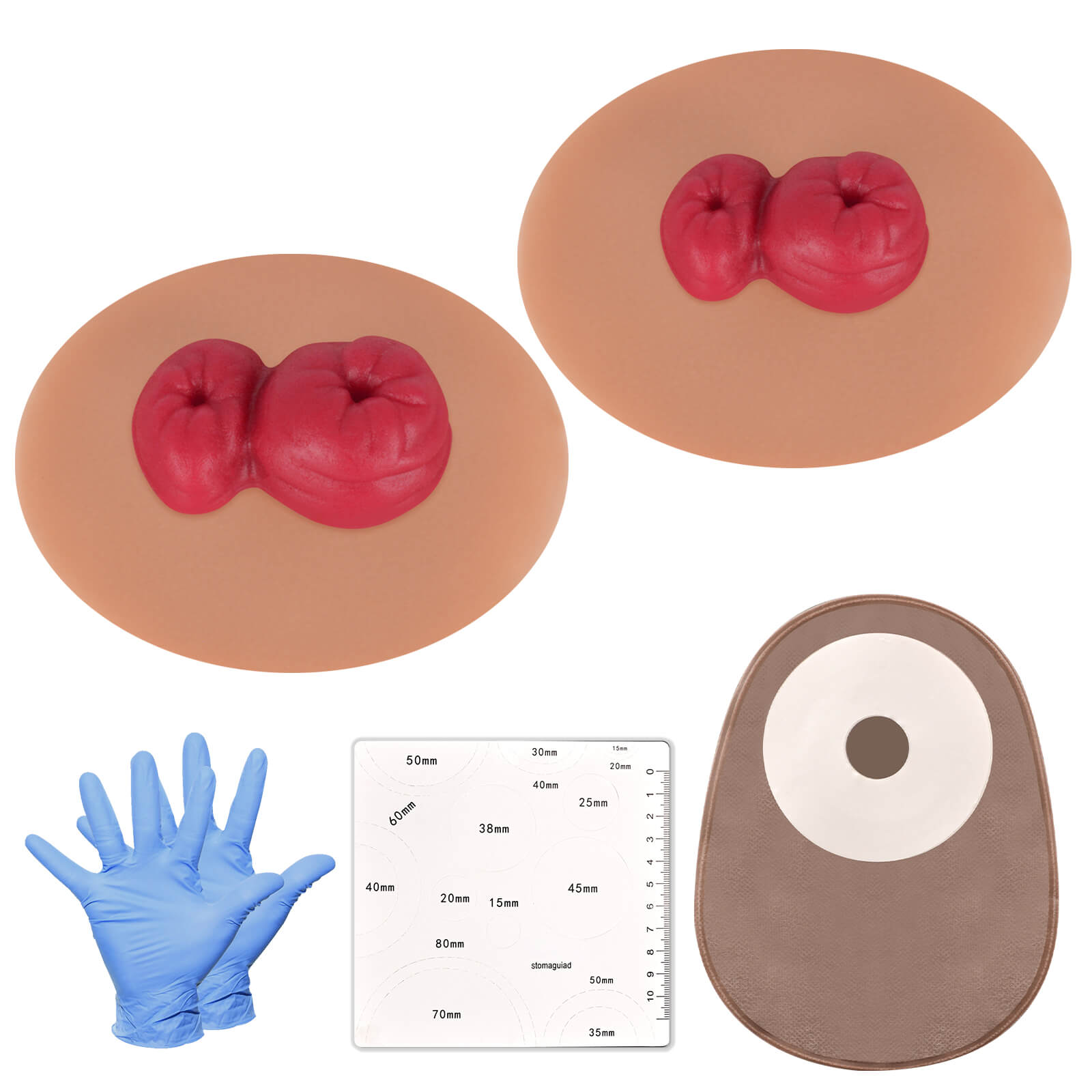
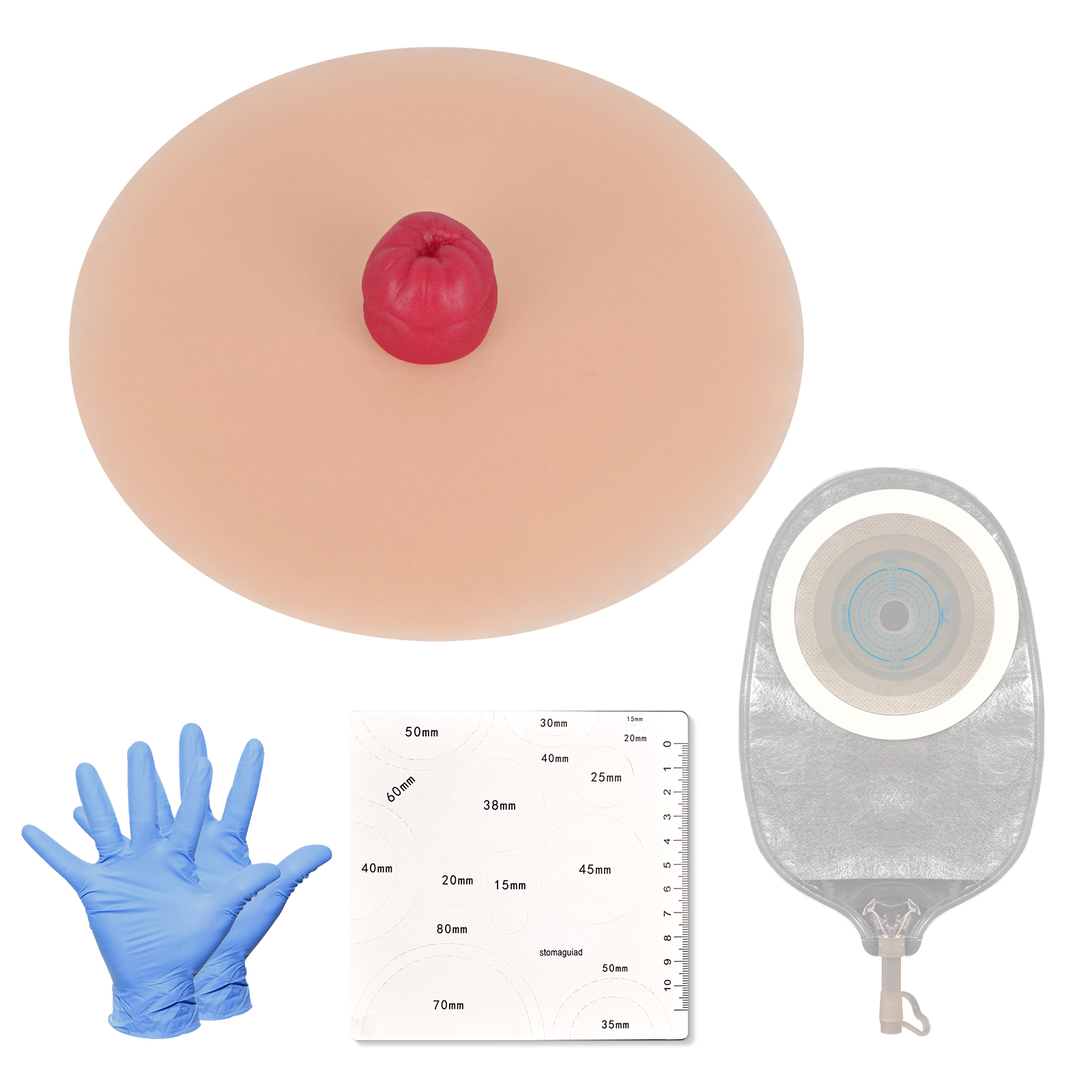
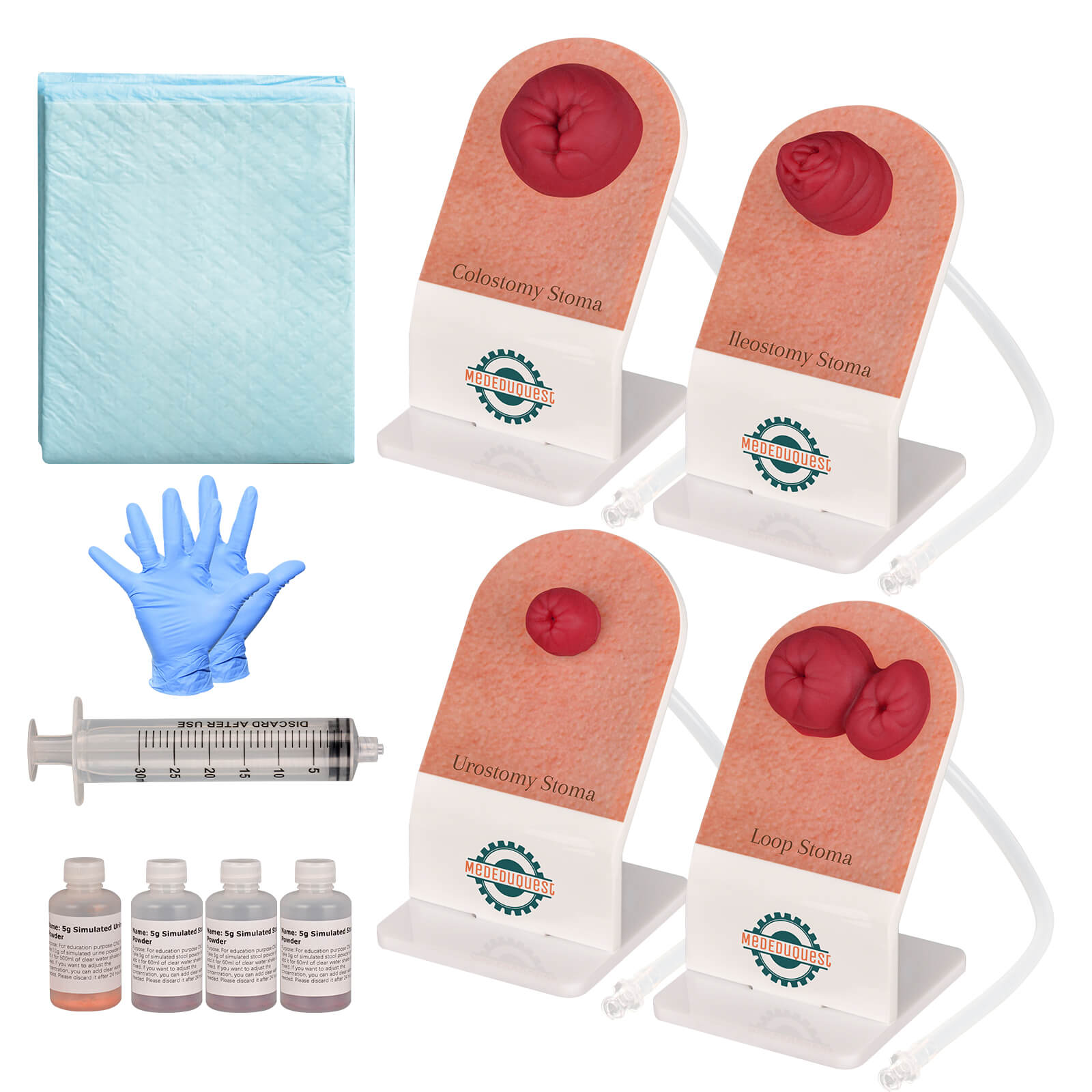
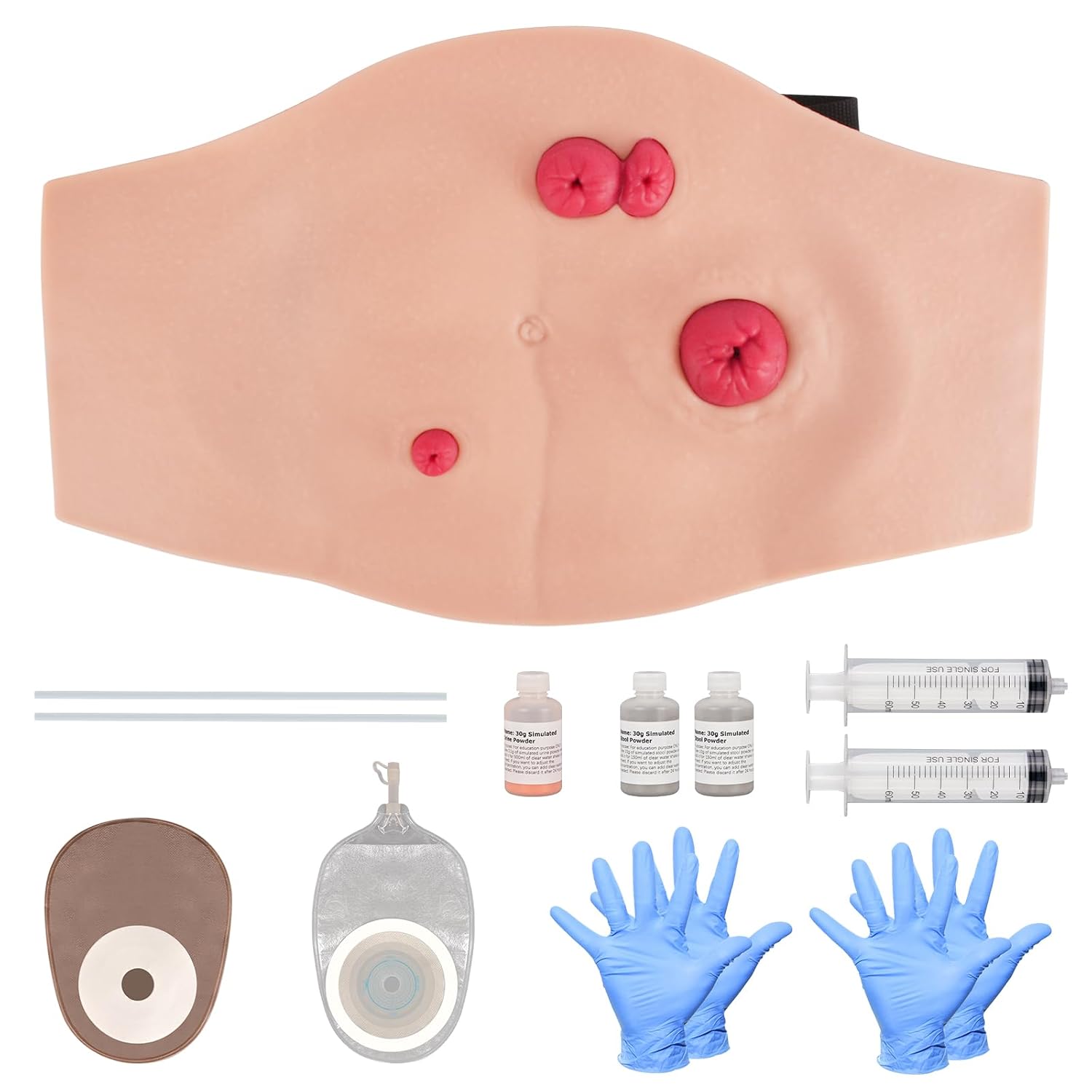
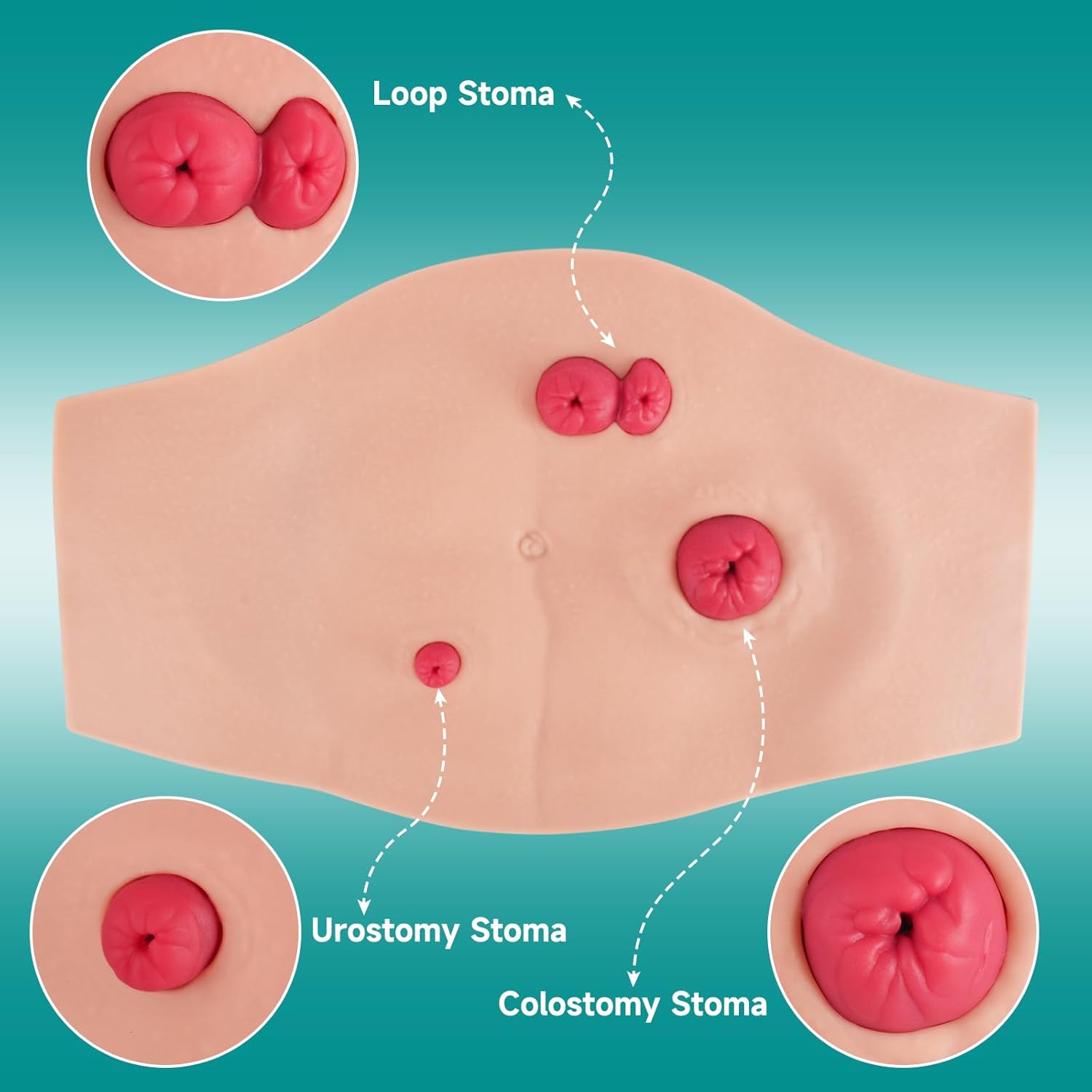
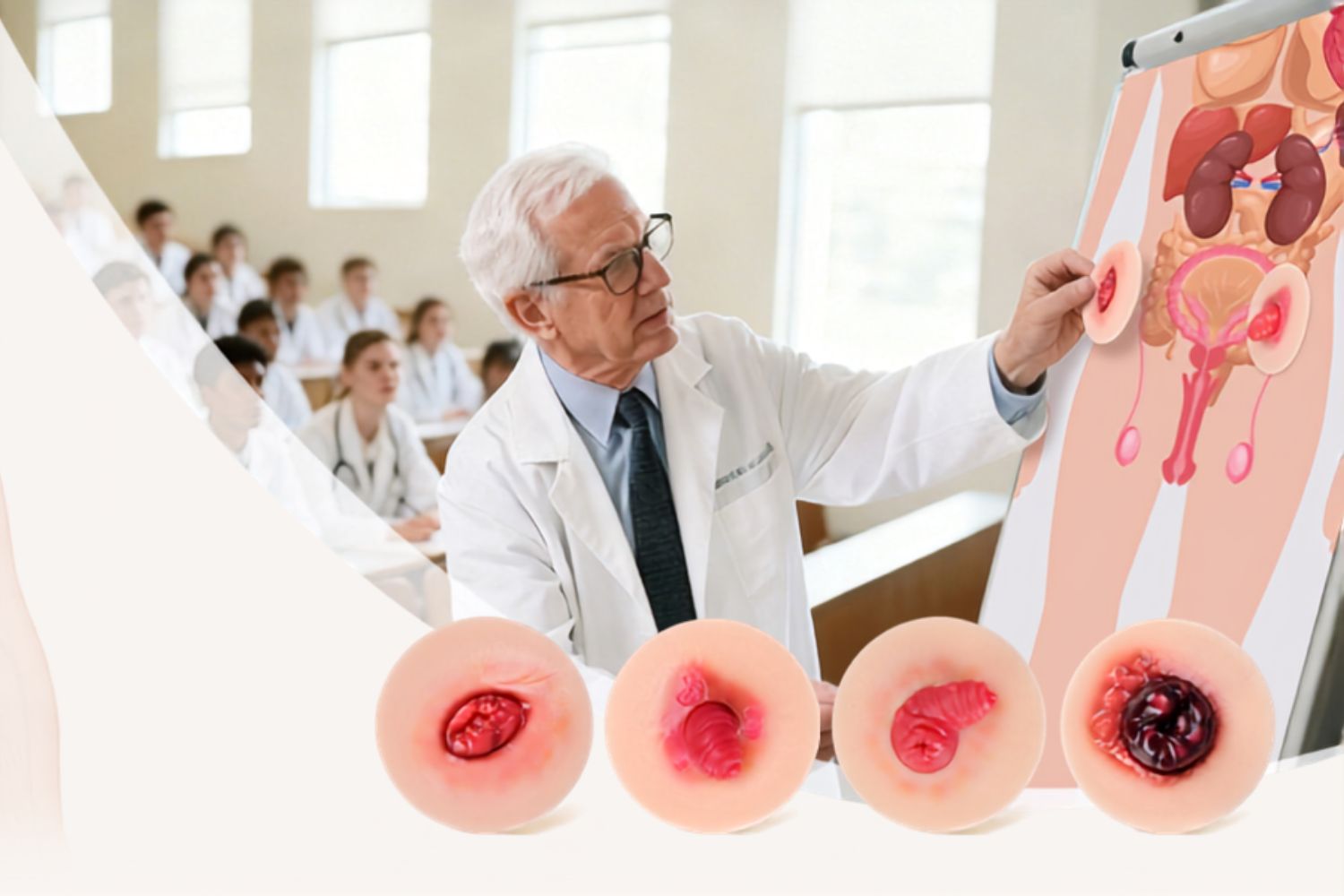
Realistic Stoma Appearance
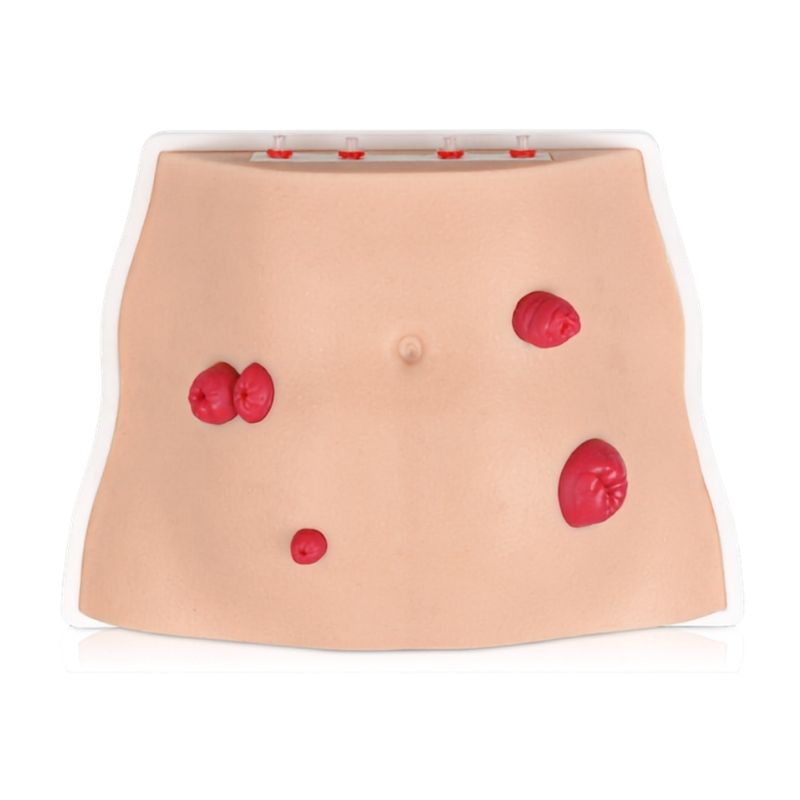
Students should be able to recognize different stoma characteristics, including:
- Colostomy
- Ileostomy
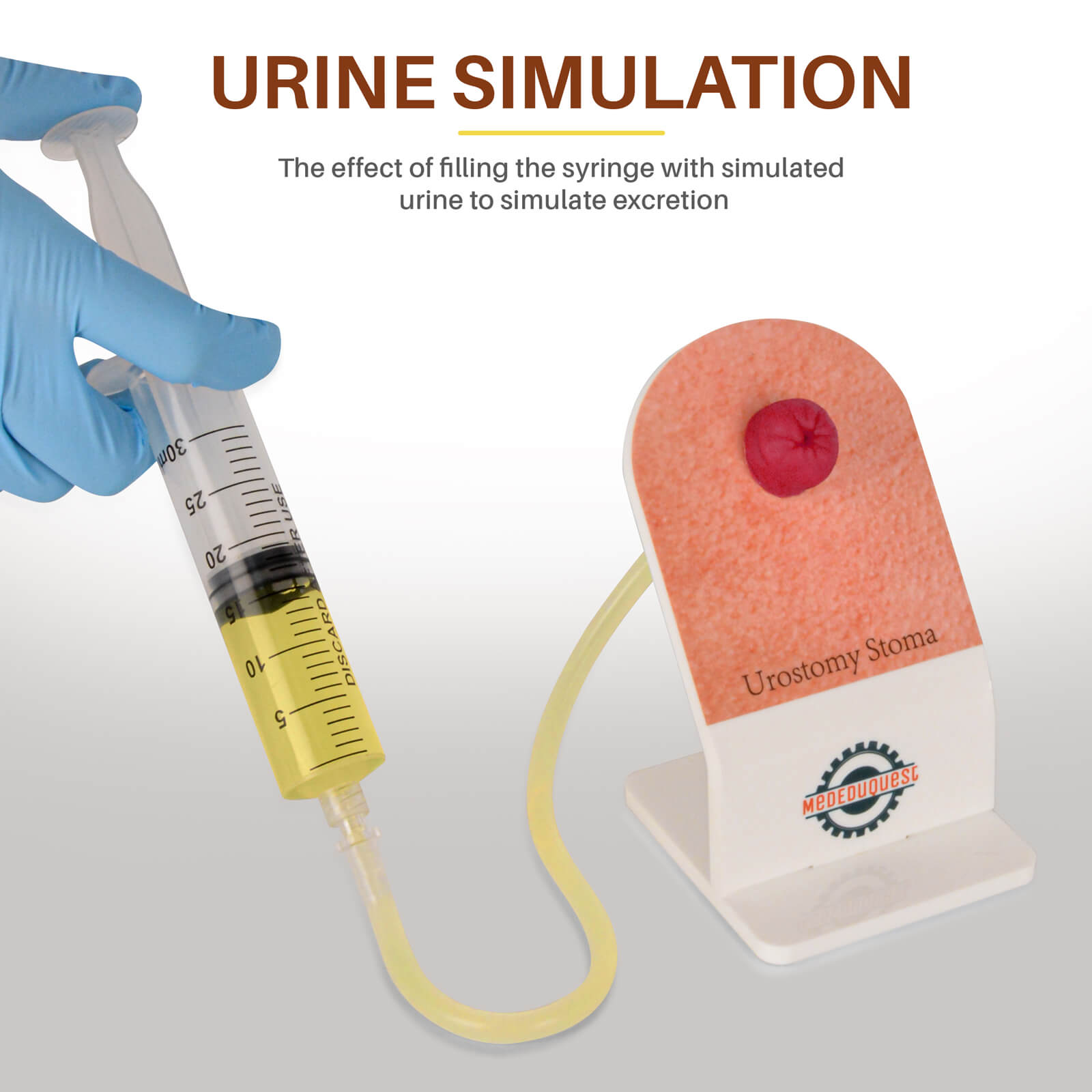
- Urostomy
- Loop stoma
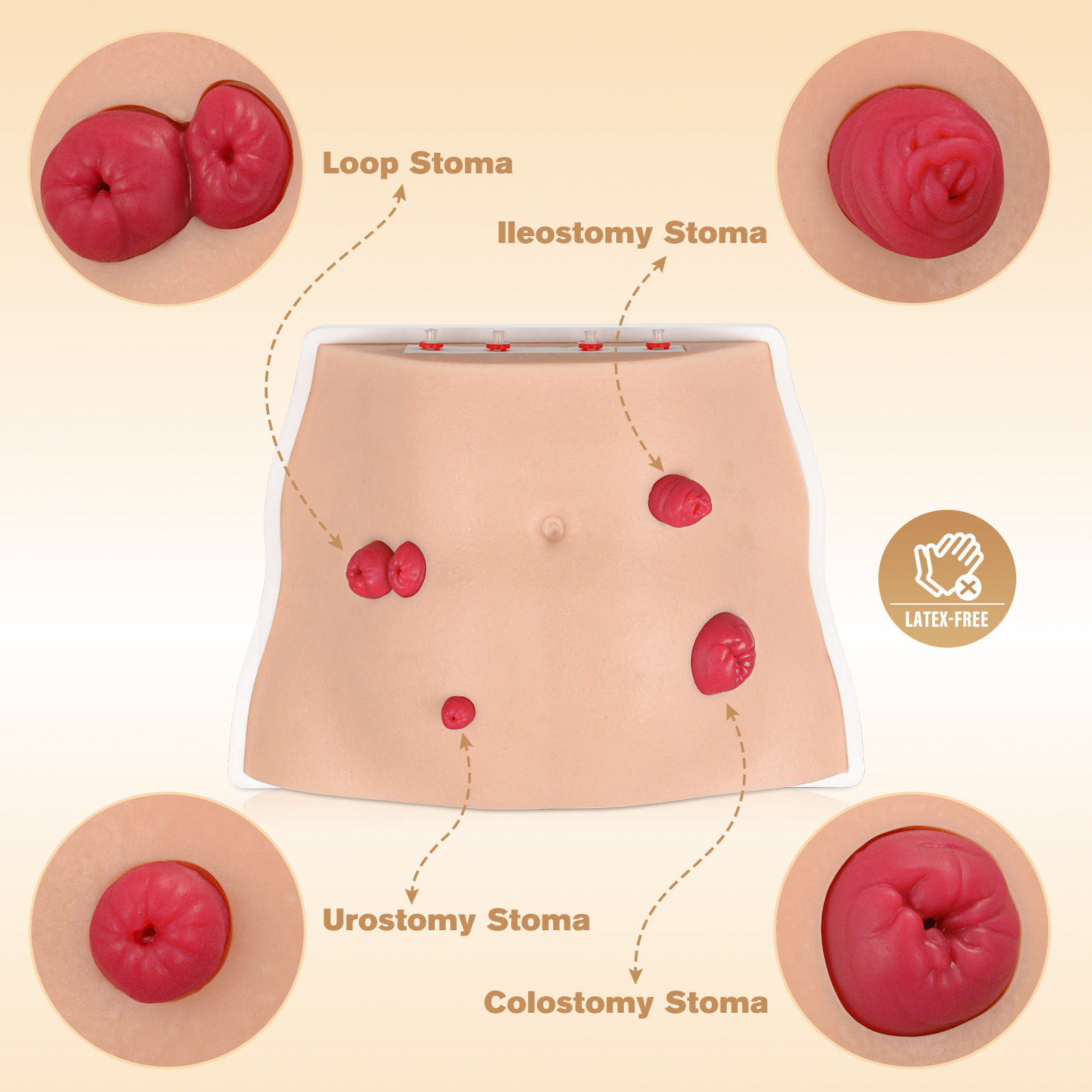
Understanding differences between ostomy types helps students provide more individualized care.
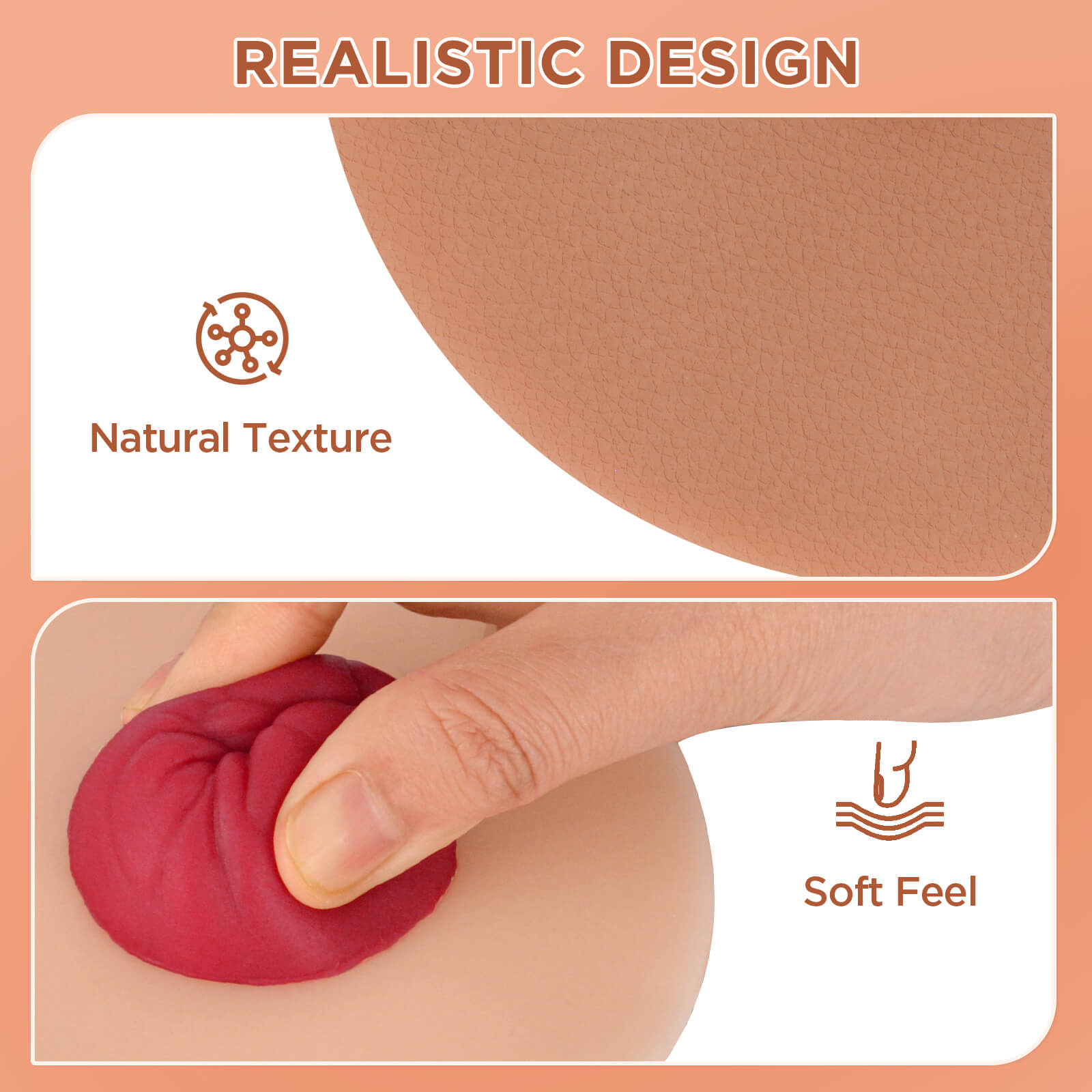
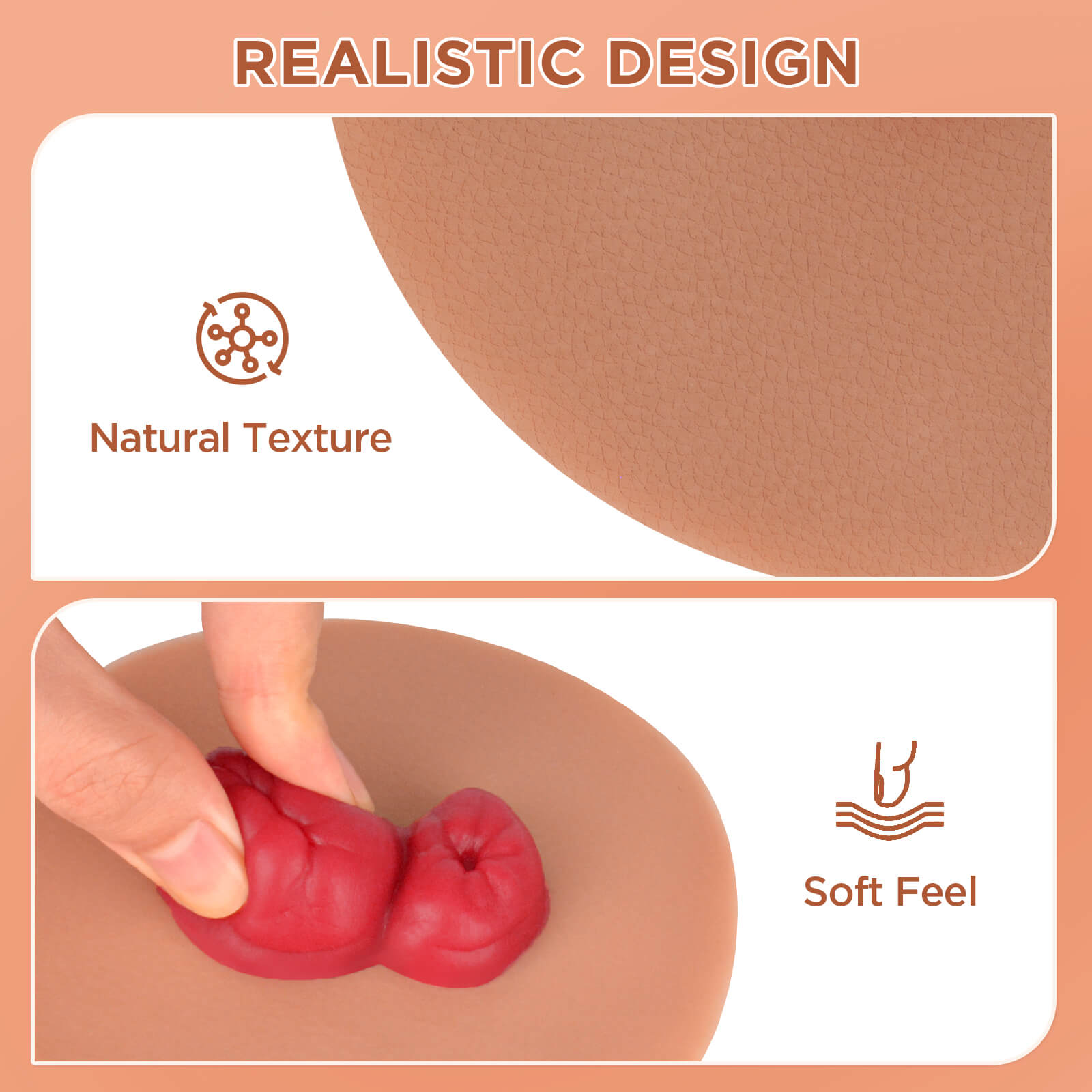
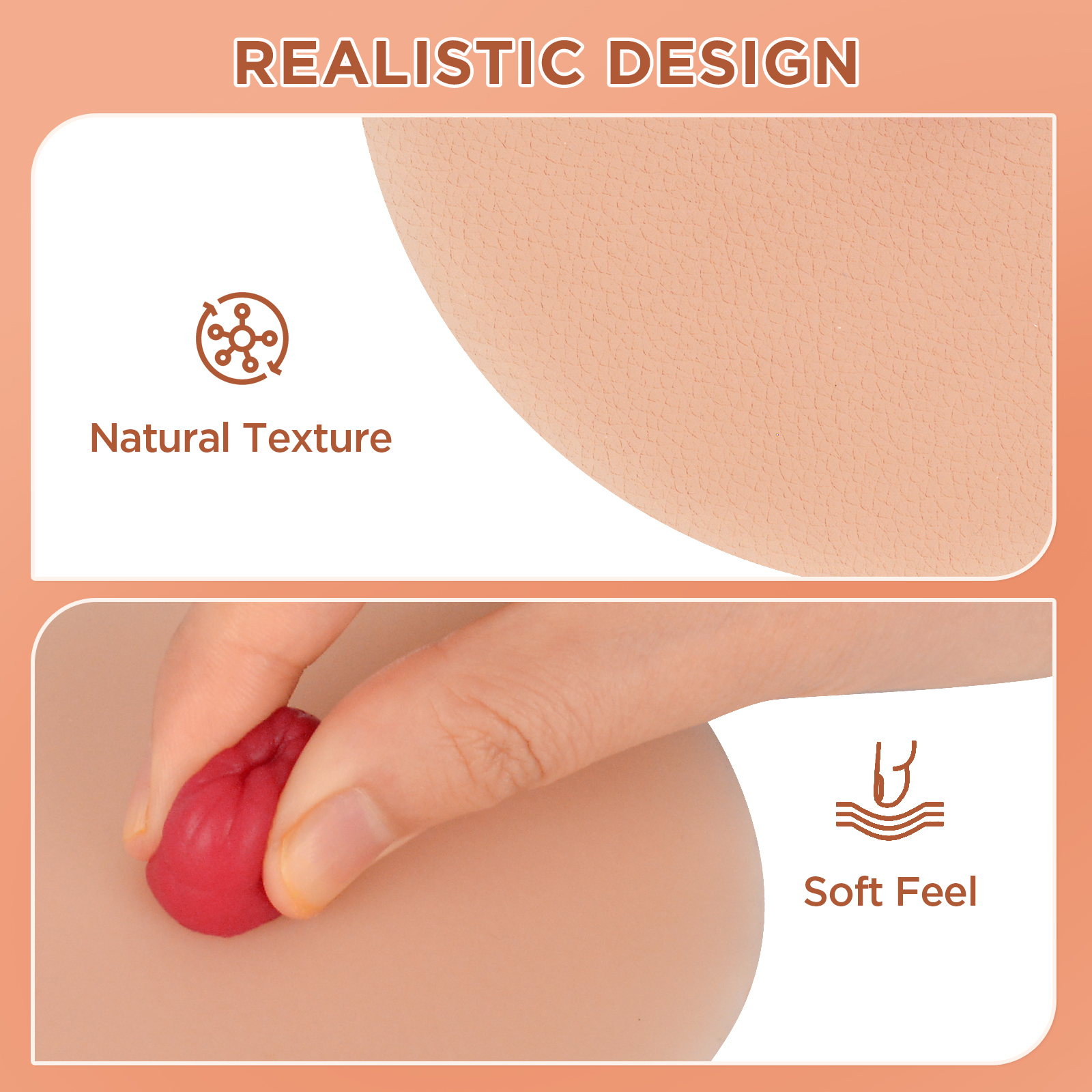
Realistic Texture and Handling
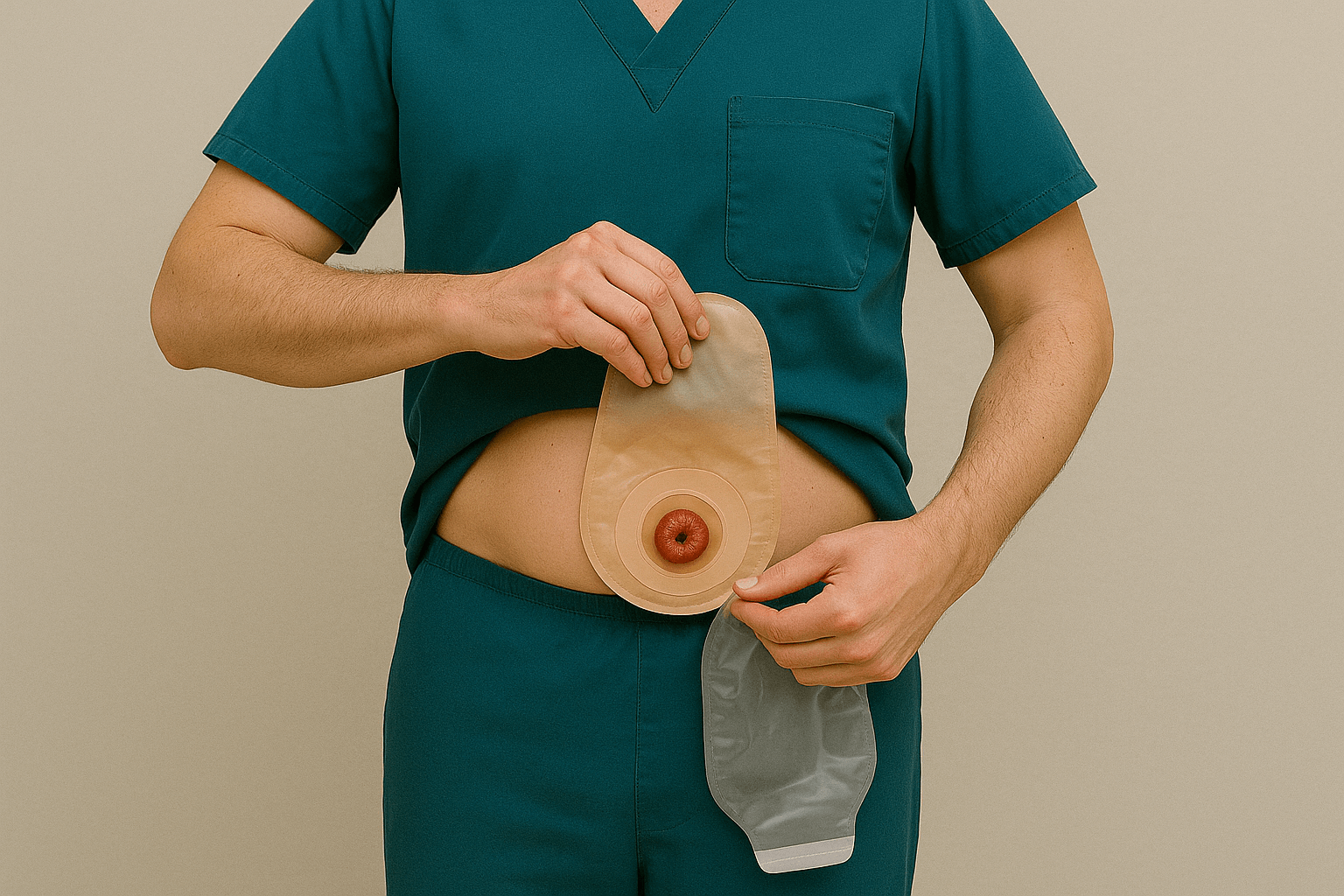
The model should allow students to practice:
- Appliance placement
- Wafer fitting
- Skin protection techniques
Realistic materials help students develop better hand skills and confidence.
2. Versatility for Different Teaching Scenarios
Nursing programs often teach students at different skill levels and in different learning environments.
A versatile ostomy model should support:
- Classroom Demonstrations
Educators can demonstrate procedures clearly while explaining each step.
- Skills Lab Practice
Students can practice independently or in small groups.
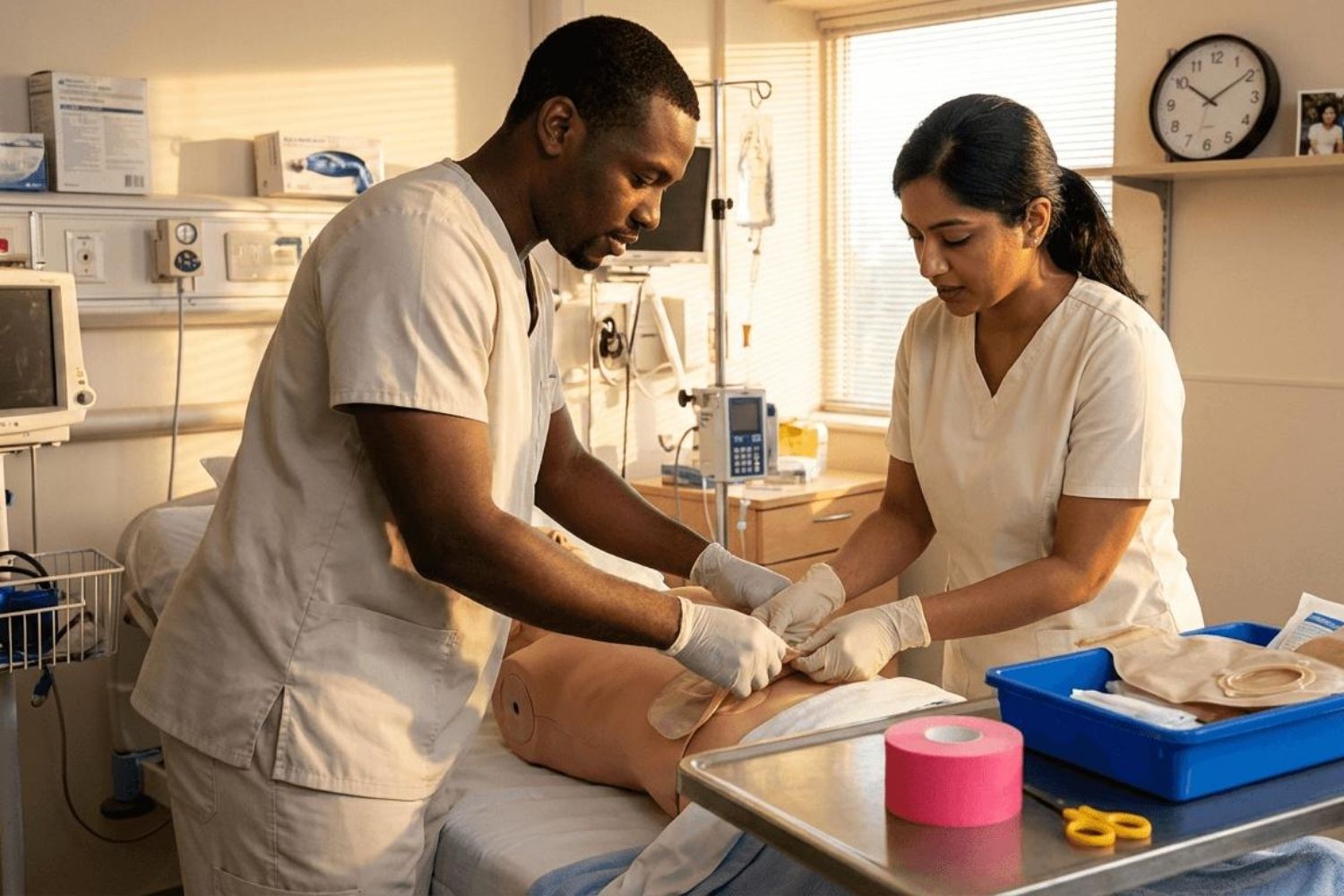
- Simulation-Based Ostomy Care Training
Models can be integrated into patient-care scenarios that include assessment, decision-making, and communication.
For example, tabletop models are useful for structured demonstrations, while wearable ostomy trainers provide more realistic bedside-care practice.
3. Support for Multiple Ostomy Care Skills
The best ostomy training models should allow students to practice a complete care process, not only one procedure.
Important skills include:
- Assessing stoma condition
- Measuring stoma size
- Preparing surrounding skin
- Applying and removing pouches
- Checking appliance fit
- Preventing leakage and irritation
A model that supports multiple procedures provides greater educational value and long-term usability.
4. Durability for Repeated Training Use
Nursing education programs often require equipment that can be used by many students over multiple semesters.
When evaluating durability, consider:
- Material quality
- Ease of cleaning
- Resistance to repeated appliance changes
- Long-term classroom use
Reliable training equipment helps schools maximize their investment and maintain consistent skills training.
5. Suitable for Different Student Skill Levels
A good ostomy simulator should support learners from beginner to advanced levels.
For beginner nursing students:
- Understanding ostomy anatomy
- Learning basic pouch changes
- Practicing assessment techniques
For advanced learners:
- Complex patient scenarios
- Clinical decision-making
- Patient education practice
Flexible training tools allow educators to use the same equipment throughout different courses.
6. Ease of Teaching and Evaluation
For nursing educators, practical teaching features are also important.
Consider whether the model supports:
- Clear instructor demonstrations
- Group learning activities
- Student assessment
- Skills competency evaluation
Models that work well with ostomy nursing skills checklists and structured assessments can improve the overall effectiveness of nursing education programs.
Adhensive vs Tabletop vs Wearable Ostomy Training Models
Different teaching environments may require different types of simulation models.
| Feature | Adhesive Ostomy Model | Desktop Ostomy Simulator | Wearable Ostomy Trainer |
|---|---|---|---|
| Classroom demonstration | Good | Excellent | Good |
| Group teaching | Good | Excellent | Good |
| Individual practice | Good | Excellent | Excellent |
| Bedside simulation | Good | Good | Excellent |
| Different body positions | Good | Excellent | Excellent |
Many nursing programs choose a combination of both to provide comprehensive training experiences.
Choosing Ostomy Models for Nursing Education Programs
Before purchasing, educators should ask:
- Does the model support my curriculum?
The model should match the procedures and skills students need to learn.
- Can students practice repeatedly?
Hands-on repetition is essential for developing confidence.
- Does it simulate realistic patient care?
The closer the training experience is to real situations, the better prepared students will be.
- Can it support different teaching methods?
The best models should work for demonstrations, practice sessions, and assessments.
How MedEduQuest Ostomy Models Support Healthcare Training
MedEduQuest develops ostomy training models designed for:
- Nursing schools
- Simulation laboratories
- Healthcare training programs
- Professional education workshops
The models support practical training of:
- Stoma assessment
- Appliance management
- Skin care techniques
- Patient education skills
By combining realistic design with flexible teaching applications, MedEduQuest helps educators create effective ostomy care learning experiences.
Final Checklist for Choosing an Ostomy Care Model
Before selecting a training model, consider:
☐ Realistic anatomy and materials
☐ Support for multiple ostomy types
☐ Ability to practice complete care procedures
☐ Suitable for different student levels
☐ Durable for repeated classroom use
☐ Easy demonstration and assessment
Conclusion
Choosing the right ostomy care model can significantly improve the quality of nursing education.
The best training models combine realism, flexibility, durability, and educational value to help students develop practical skills and confidence.
By selecting simulation equipment that matches their teaching goals, nursing educators can create more effective learning experiences and better prepare future healthcare professionals.
.jpg?w=1600&h=1600)
.jpg?w=1600&h=1600)
.jpeg?w=1600&h=1600)
.jpeg?w=1600&h=1600)
.jpeg?w=1600&h=1600)
.jpeg?w=1600&h=1600)
.jpg?w=1000&h=1000)
.jpg?w=1000&h=1000)
.jpeg?w=1500&h=1500)
.jpeg?w=1500&h=1500)
.jpeg?w=1600&h=1600)
.jpeg?w=1600&h=1600)
.jpg?w=1600&h=1600)
.jpg?w=1600&h=1600)
.jpg?w=1500&h=1500)
.jpg?w=1500&h=1500)
.jpg?w=1500&h=1500)
.jpg?w=1500&h=1500)
.jpg?w=1500&h=1500)
.jpg?w=1500&h=1500)
.jpg?w=1500&h=1500)
.jpg?w=1500&h=1500)