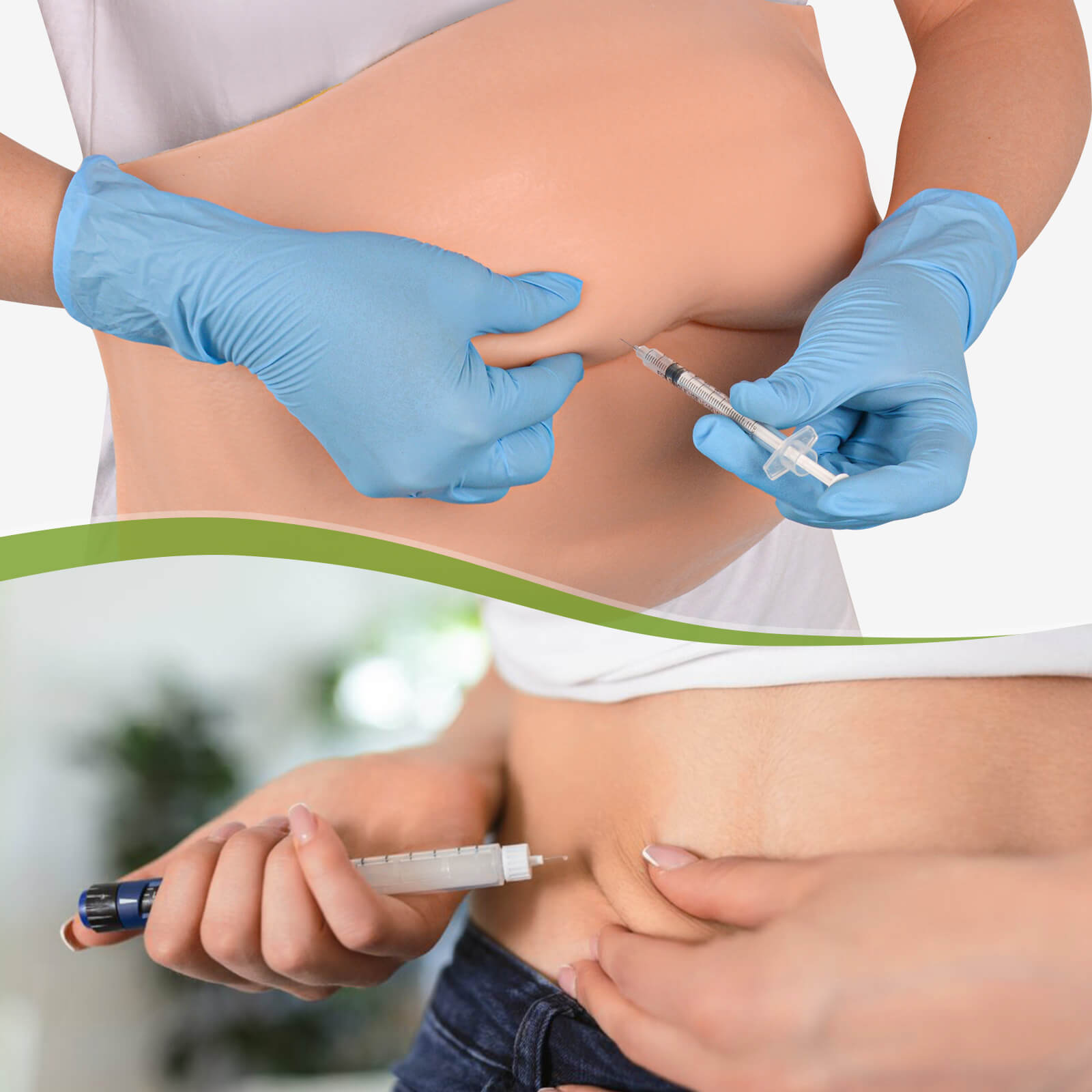
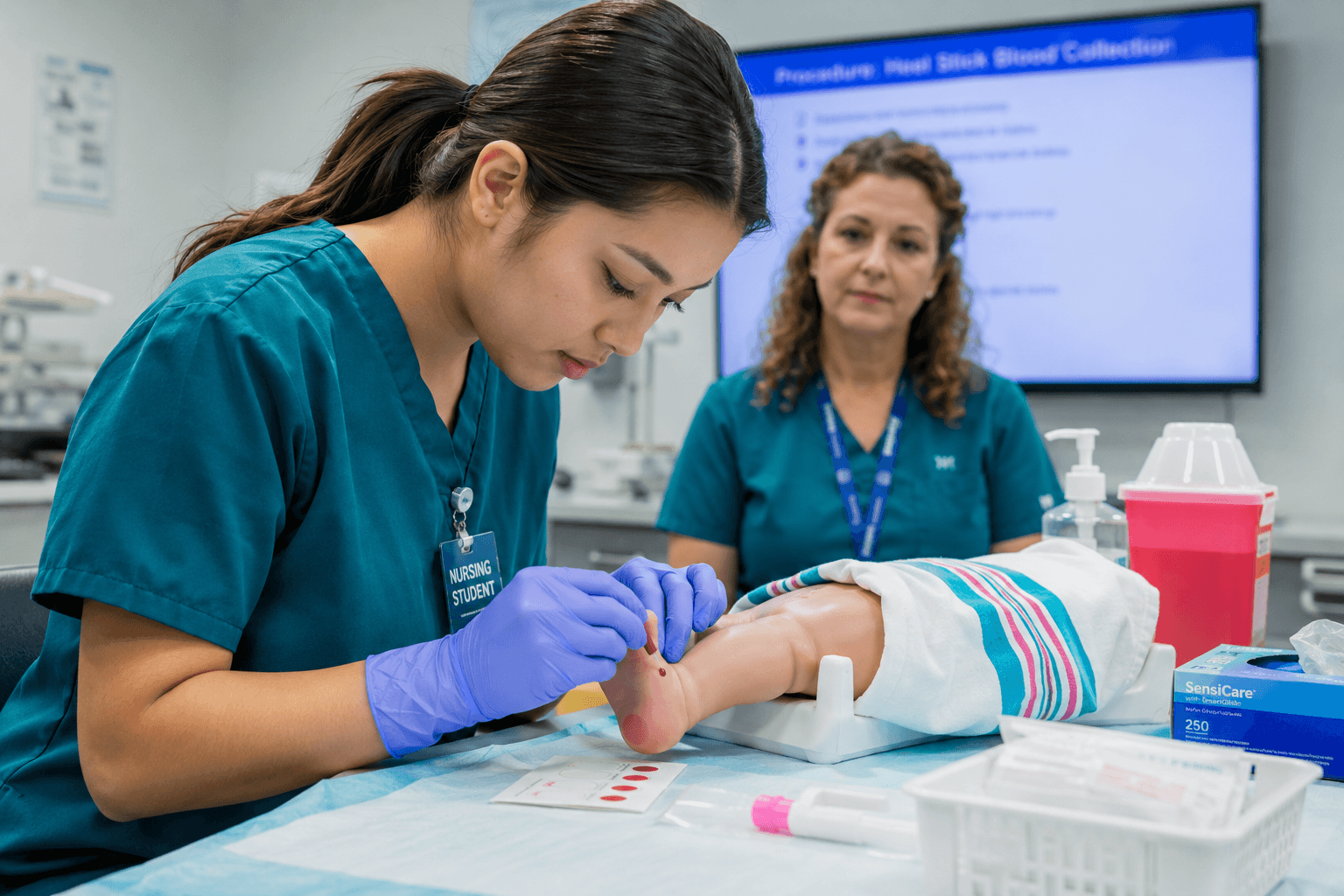
Der Neugeborenen-Fersenstichtest ist eines der am häufigsten durchgeführten Verfahren in der neonatologischen Versorgung. Auch bekannt als Fersenstichtest oder Neugeborenen-Blutspot-Screening, wird er verwendet, um Kapillarblutproben zur frühzeitigen Erkennung von Stoffwechsel-, genetischen und endokrinen Störungen zu entnehmen. Da die Anatomie von Neugeborenen empfindlich ist und die Blutentnahme präzise Techniken erfordert, benötigen Gesundheitsfachkräfte oft wiederholte Übung, bevor sie das Verfahren in realen klinischen Umgebungen durchführen.
In diesem Leitfaden behandeln wir:
- Was ein Neugeborenen-Fersenstichtest ist
- Warum die Blutspotentnahme wichtig ist
- Schritt-für-Schritt-Fersenstichverfahren
- Häufige Fehler während der Entnahme
- Warum Simulationstraining die Lernergebnisse verbessert
Was ist ein Neugeborenen-Fersenstichtest?
Ein Neugeborenen-Fersenstichtest, auch bekannt als Fersenstichtest oder Neugeborenen-Blutspot-Screening, umfasst die Entnahme von Kapillarblut aus der Ferse eines Säuglings. Das Verfahren wird häufig in den ersten Tagen nach der Geburt durchgeführt, um Stoffwechsel- und genetische Störungen wie PKU und andere Erkrankungen zu screenen.
Warum ist die Blutentnahme durch Fersenstich wichtig?
Die Blutspotentnahme bei Neugeborenen spielt eine entscheidende Rolle in der präventiven pädiatrischen Versorgung. Viele angeborene Störungen zeigen in den ersten Lebenstagen nur wenige sichtbare Anzeichen. Frühes Screening ermöglicht es den Anbietern, Bedingungen zu identifizieren, bevor irreversible Komplikationen auftreten.
Die Vorteile des Neugeborenen-Fersenstichtests umfassen:
- Frühe Krankheitsentdeckung
- Schnellere medizinische Intervention
- Standardisierte Neugeborenen-Screening-Workflows
- Verbesserte langfristige Gesundheitsergebnisse
- Bessere Unterstützung für Programme zur neonatologischen Versorgung
Für Pflegekräfte und pädiatrische Auszubildende ist das Erlernen der richtigen Fersenstichtechnik ebenfalls eine wichtige klinische Kompetenz.
Schritt-für-Schritt-Neugeborenen-Fersenstichverfahren
Ein erfolgreiches Fersenstichverfahren erfordert eine ordnungsgemäße Vorbereitung und sorgfältige Handhabung. Nachfolgend finden Sie eine vereinfachte Übersicht, die häufig in Schulungs- und Bildungseinrichtungen verwendet wird.
Schritt 1: Bestimmen Sie die richtige Punktionsstelle
Wählen Sie den empfohlenen Punktionsbereich auf der medialen oder lateralen Plantarfläche der Ferse.
Vermeiden Sie:
- Mitte der Ferse
- Bereich der hinteren Krümmung
- Bereiche mit Blutergüssen oder Hautreizungen
Die richtige Standortwahl hilft, das Verletzungsrisiko zu verringern und die Blutentnahme zu verbessern.
Schritt 2: Bereiten Sie die Haut vor und reinigen Sie sie
Reinigen Sie den ausgewählten Bereich mit genehmigten antiseptischen Verfahren und lassen Sie ihn vollständig trocknen.
Eine ordnungsgemäße Vorbereitung hilft, Kontaminationen zu reduzieren und die Probenqualität zu verbessern.
Schritt 3: Führen Sie die Fersenpunktion durch
Verwenden Sie eine geeignete Sicherheitslanzette und führen Sie die Punktion gemäß den institutionellen Richtlinien durch.
Die richtige Punktionstiefe und -positionierung sind entscheidend für einen erfolgreichen Blutfluss.
-1800x.webp?w=1000&h=1000)
Schritt 4: Fördern Sie den Blutfluss
Nach der Punktion kann sanfter Druck helfen, die Blutfreisetzung zu stimulieren.
Vermeiden Sie übermäßiges Drücken, da dies:
- Hämolyse verursachen kann
- Proben mit Gewebeflüssigkeit verdünnen kann
- Die Probenqualität beeinträchtigen kann
-1800x.webp?w=1600&h=1600)
Schritt 5: Sammeln Sie Blutspot-Proben
Lassen Sie Blutstropfen natürlich entstehen und tragen Sie sie gemäß den Entnahmestandards auf Filterpapier auf.
Eine angemessene Blutsättigung verbessert die Genauigkeit der Laboranalyse.
Schritt 6: Vervollständigen Sie die Nachsorge nach dem Verfahren
Wenden Sie geeignete Nachsorgemaßnahmen an und dokumentieren Sie das Verfahren gemäß den institutionellen Protokollen.
Häufige Fehler beim Fersenstich
Fersenstichverfahren mögen einfach erscheinen, aber Anfänger stoßen häufig auf Herausforderungen, die die Probenqualität und die Verfahrensgenauigkeit beeinträchtigen.
Häufige Fehler sind:
1. Falsche Auswahl der Punktionsstelle
Eine schlechte Standortwahl erhöht die Verfahrensschwierigkeit und kann das Risiko für den Patienten erhöhen.
2. Übermäßiges Drücken
Zu viel Druck kann die Blutzusammensetzung verändern und die Probenqualität verringern.
3. Unzureichende Bildung von Blutspots
Eine unzureichende Proben-Sättigung kann eine Wiederholung der Entnahme erforderlich machen.
4. Falsche Platzierung der Lanzette
Eine falsche Positionierung kann zu ineffektiven Punktionen und schlechtem Blutfluss führen.
5. Unvollständiger Verfahrensablauf
Einige Lernende konzentrieren sich nur auf die Punktionstechnik und übersehen die Schritte zur Vorbereitung und Blutentnahme.
Aufgrund dieser Herausforderungen ist wiederholtes Üben vor der klinischen Platzierung äußerst vorteilhaft.
Warum Simulation im Fersenstichtraining wichtig ist
Das Erlernen der Blutentnahme bei Neugeborenen direkt an Patienten kann sowohl für Lernende als auch für Säuglinge stressig sein. Simulationbasierte Bildung bietet Möglichkeiten für wiederholtes Üben in kontrollierten Umgebungen.
Viele Pflegeschulen und Gesundheitsprogramme integrieren mittlerweile Säuglings-Fersen-Simulatoren in die Schulung von neonatalen Fähigkeiten.
Simulationbasiertes Üben bietet mehrere Vorteile:
- Wiederholtes praktisches Training
- Sicheres Lernen ohne Patientenrisiko
- Vollständiges Üben des Verfahrensablaufs
- Verbessertes Vertrauen vor der klinischen Platzierung
- Standardisierte Fähigkeitenbewertung
Anstatt nur durch Beobachtung zu lernen, können die Studierenden aktiv üben und ihre Technik verfeinern.
Empfohlenes Trainingswerkzeug für den Fersenstich bei Säuglingen
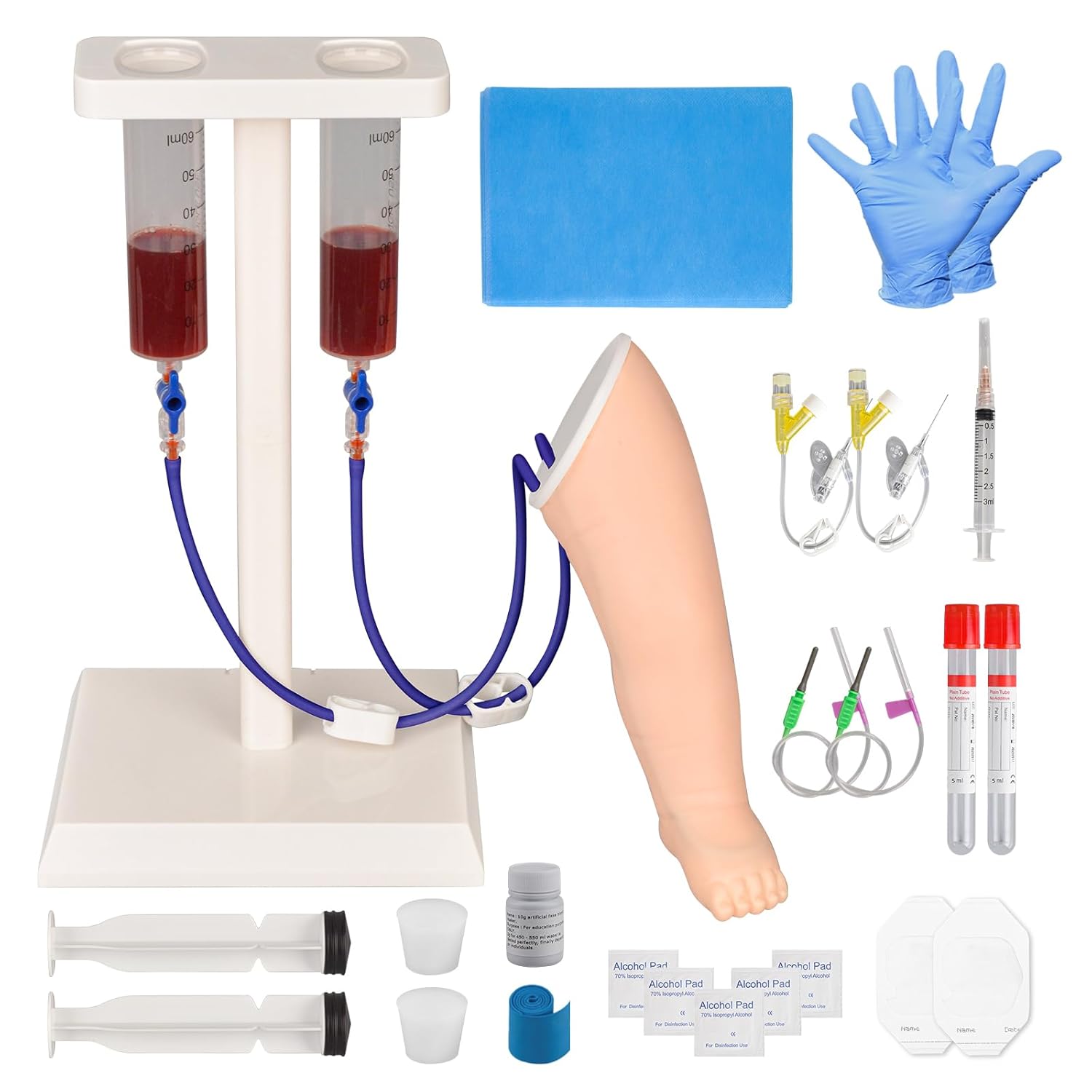
Für Pädagogen und Gesundheitsprogramme, die ein realistisches Trainingsmodell für die Blutentnahme bei Neugeborenen suchen, unterstützt unser Säuglings-Fersenstich-Simulatordas wiederholte Üben vollständiger Fersenstich-Workflows.
Er ist konzipiert für:
✔ Neugeborenen-Fersenstichverfahren
✔ Training zur Blutspotentnahme
✔ Simuliertes Üben des Kapillarblutflusses
✔ Bildung im Bereich Neugeborenenscreening
✔ Pflegefähigkeiten-Labore und OSCE-Stationen
Der Simulator verfügt über eine realistische Anatomie der Säuglingsferse und einen nachfüllbaren Blutbehälter, der den Lernenden hilft, die Verfahrensschritte zu verstehen, bevor sie in echte klinische Umgebungen eintreten.
Häufig gestellte Fragen
Q1: Was ist der Unterschied zwischen Fersenstich und Fersenpik?
Fersenstich und Fersenpik werden häufig synonym verwendet. Fersenstich wird häufiger in der Pflegeausbildung und klinischen Schulung verwendet, während Fersenpik oft in der Kommunikation mit Patienten verwendet wird.
Q2: Wo sollte ein Neugeborenen-Fersenstich durchgeführt werden?
Die Punktion sollte auf der medialen oder lateralen Plantarfläche der Ferse durchgeführt werden, wobei der zentrale Bereich zu vermeiden ist.
Q3: Warum werden Blutspots bei Neugeborenen gesammelt?
Blutspots helfen, Stoffwechsel- und genetische Störungen während der Neugeborenenscreening-Programme zu erkennen.
Q4: Können Studierende Fersenstichverfahren vor der klinischen Platzierung üben?
Ja. Säuglings-Fersen-Simulatoren ermöglichen es Lernenden, Blutentnahmeverfahren wiederholt in kontrollierten Bildungsumgebungen zu üben.
Q5: Was ist ein Säuglings-Fersen-Simulator?
Ein Säuglings-Fersen-Simulatorist ein Trainingsmodell, das für das Üben von neonatalen Fersenstichverfahren und Blutspotentnahmen entwickelt wurde.
.jpeg?w=1500&h=1500)
.jpeg?w=1600&h=1600)
.jpeg?w=1500&h=1500)
.jpeg?w=1600&h=1600)
.jpeg?w=1600&h=1600)
.jpeg?w=1600&h=1600)
.jpeg?w=1600&h=1600)
.jpeg?w=1600&h=1600)
.jpeg?w=1600&h=1600)
.jpeg?w=1600&h=1600)
.jpg?w=1600&h=1600)
.jpg?w=1600&h=1600)
.jpg?w=1600&h=1600)
.jpg?w=1600&h=1600)
.jpg?w=1600&h=1600)
.jpg?w=1600&h=1600)
.jpg?w=1000&h=1000)
.jpg?w=1000&h=1000)
.jpeg?w=1500&h=1500)



.jpg?w=1500&h=1500)
.jpg?w=1600&h=1600)
.jpg?w=1600&h=1600)
.jpg?w=1600&h=1600)
.jpeg?w=1600&h=1600)
.jpg?w=1600&h=1600)
.jpg?w=1600&h=1600)