

Skin Cancer Model for Medical & Dermatology Training
MEQ03148
$79.99 USD
Shipping calculated at checkout.
Quantity
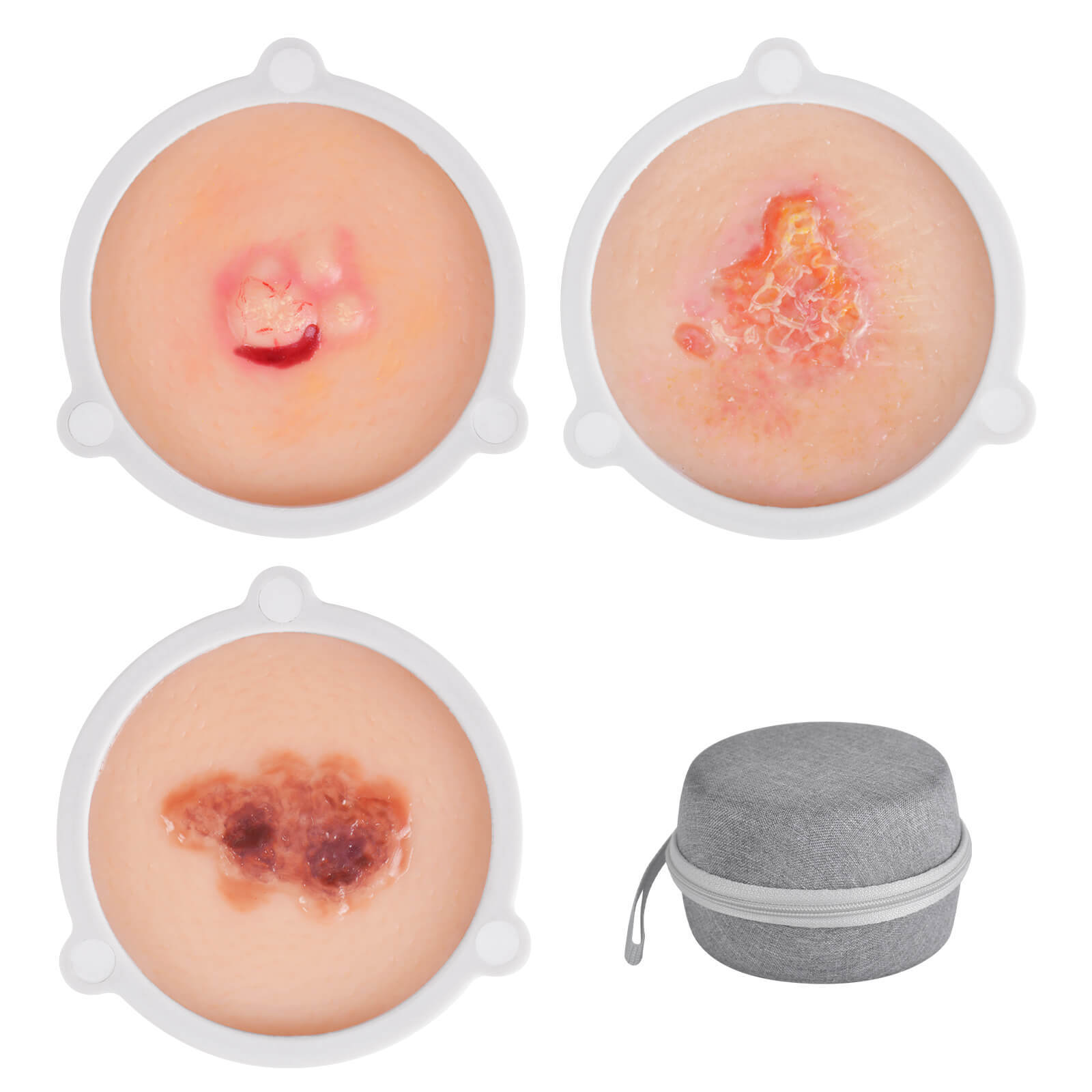
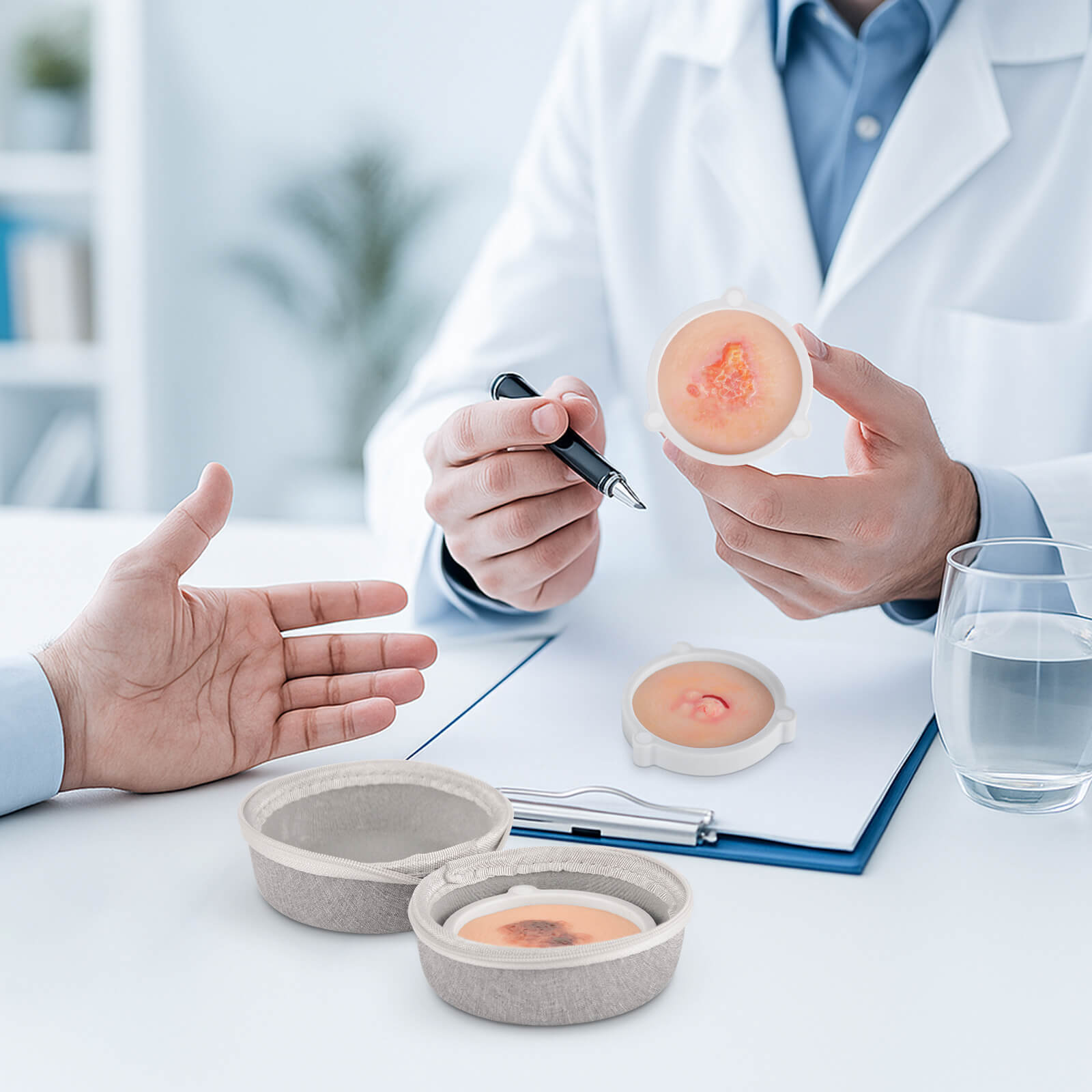
The Skin Cancer Model is a professional dermatology education tool designed to demonstrate the visual characteristics of common skin lesions. Featuring melanoma, basal cell carcinoma, and squamous cell carcinoma, it helps students, educators, and healthcare providers improve lesion identification skills, support clinical teaching, and enhance patient understanding of skin cancer.
Key Features:
- Realistic Skin Cancer Identification Training
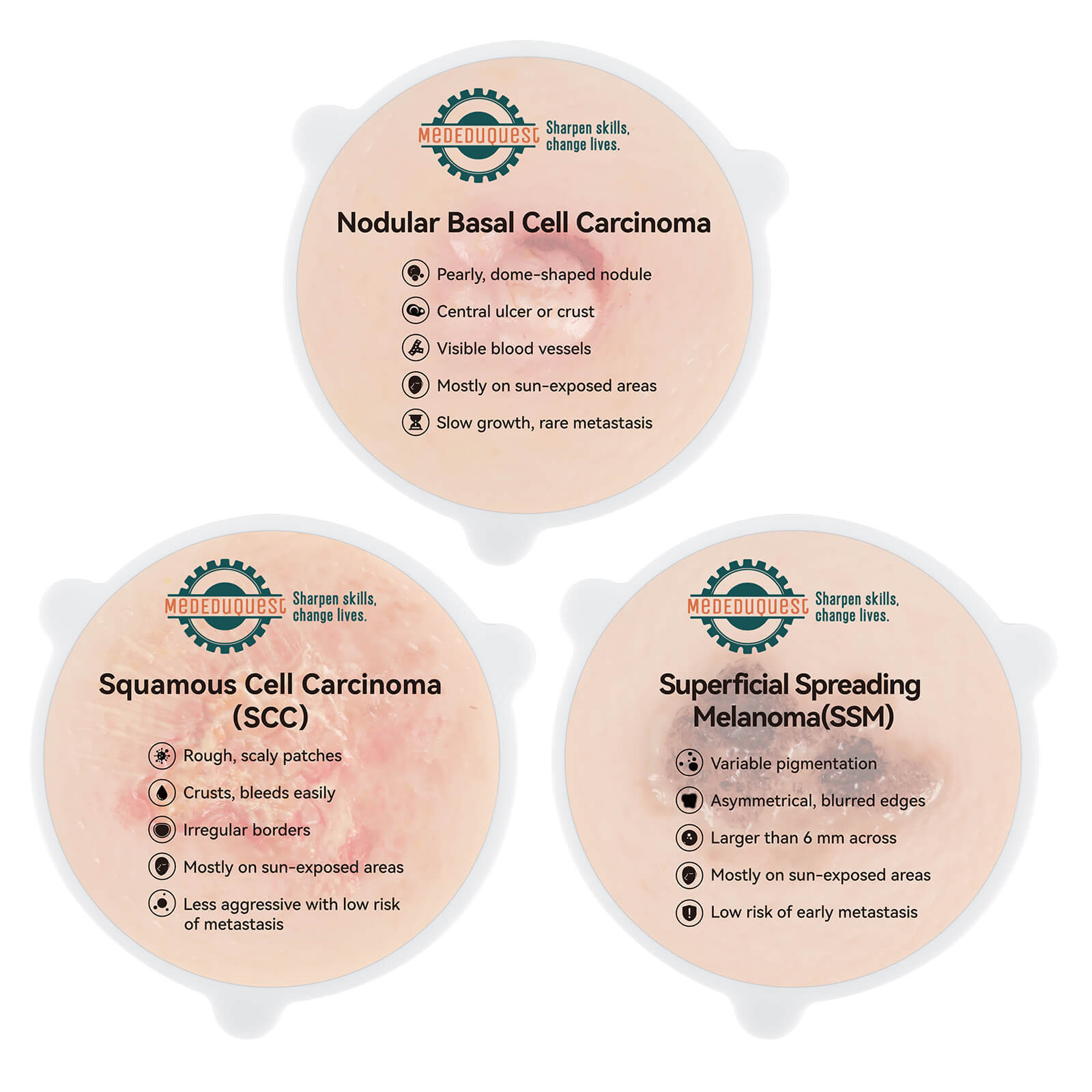
The model demonstrates three common forms of skin cancer, Superficial Spreading Melanoma (SSM), Basal Cell Carcinoma (BCC), and Squamous Cell Carcinoma (SCC), alongside benign nevi for side-by-side comparison. It helps learners recognize visual differences between malignant and non-malignant skin lesions.
- Detailed Surface Anatomy & Lesion Characteristics
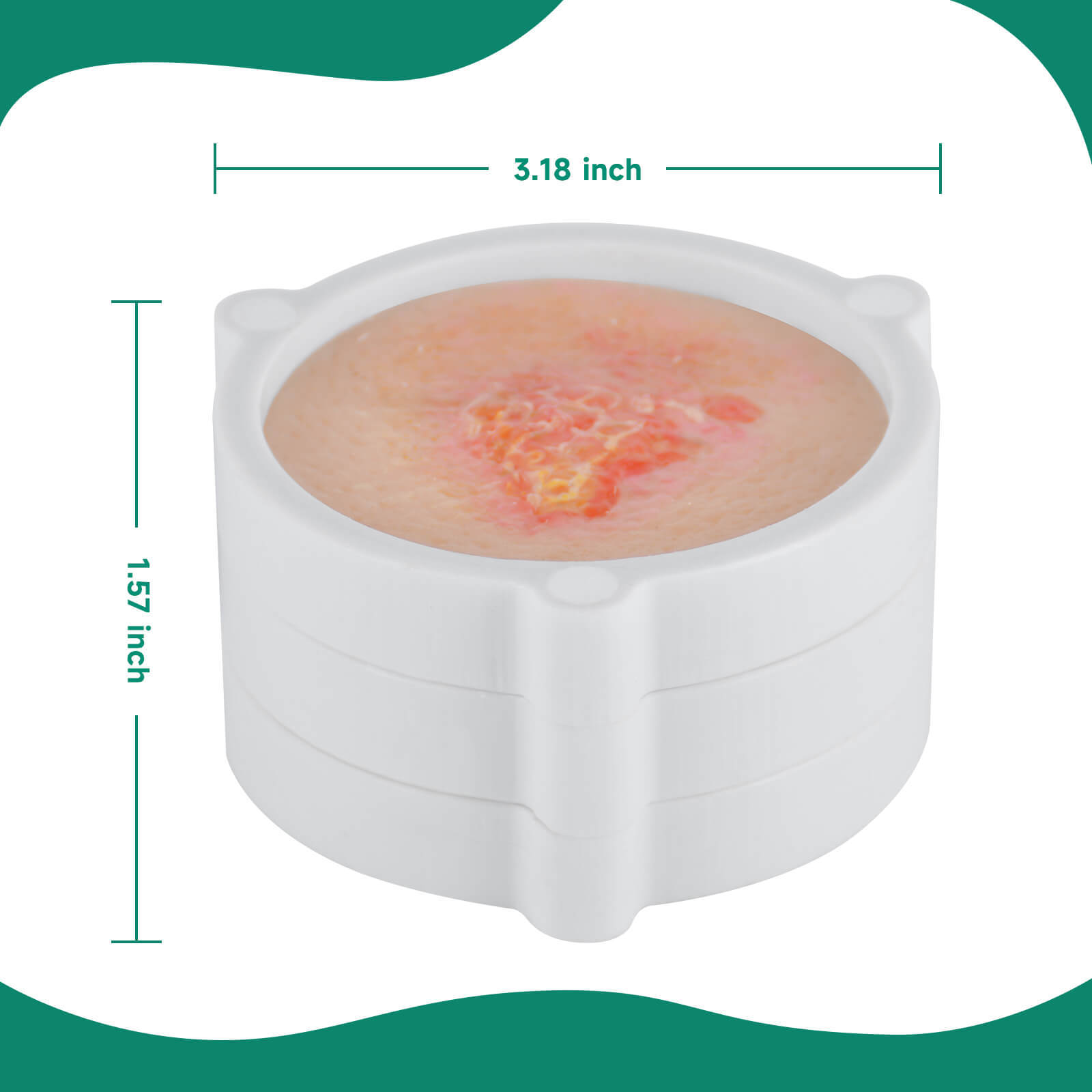
Each lesion accurately reproduces key clinical features such as pigmentation changes, irregular borders, elevation, scaling, and tissue texture. The realistic appearance supports visual assessment and dermatology education.
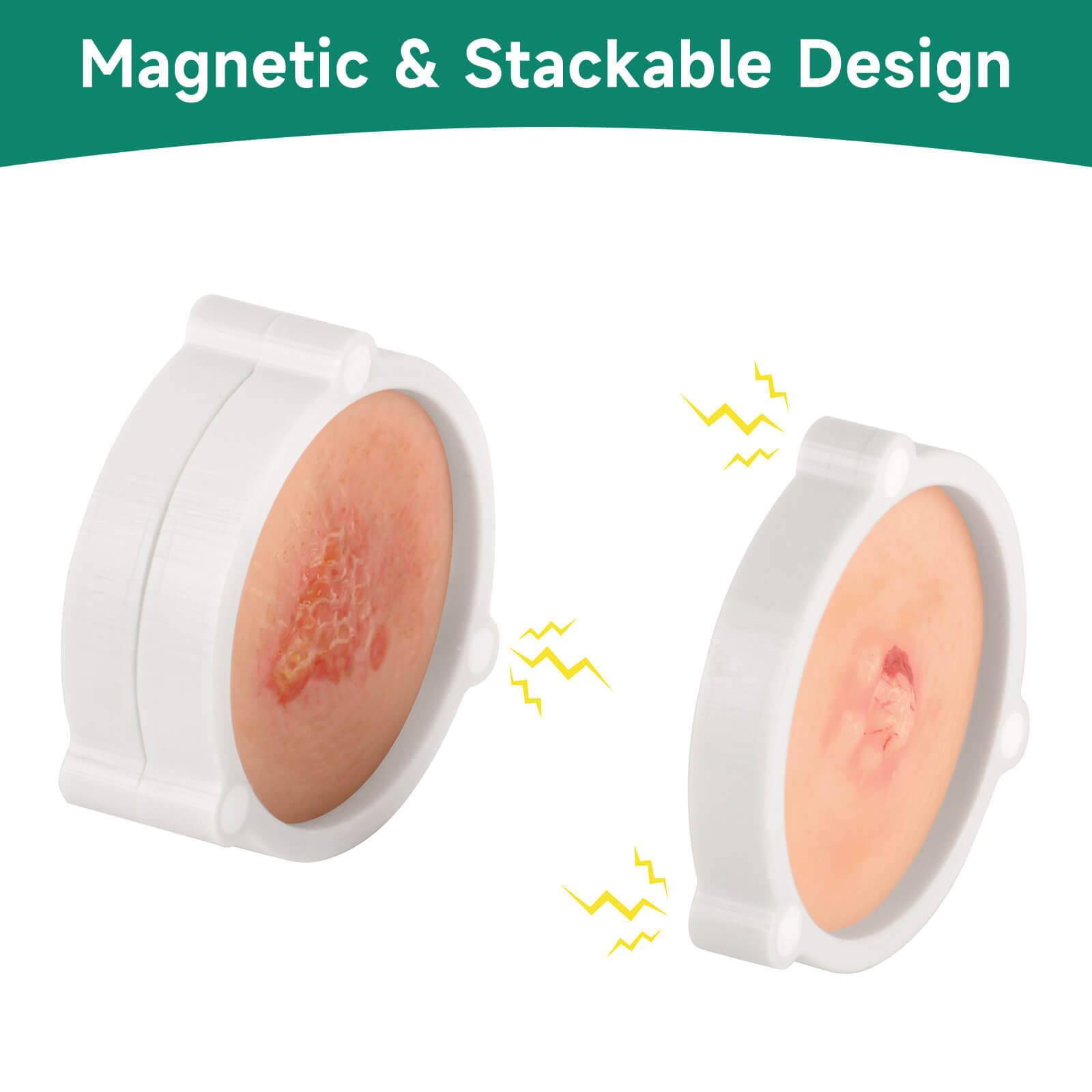
- Magnetic Layered Design
Individual lesion sections can be separated and reassembled using integrated magnets. This layered structure supports step-by-step instruction while making storage and transportation more convenient.
- Medical-Grade Silicone Construction
Made from durable silicone that mimics the appearance and feel of human skin, the model withstands repeated classroom demonstrations, clinical teaching sessions, and patient consultations.
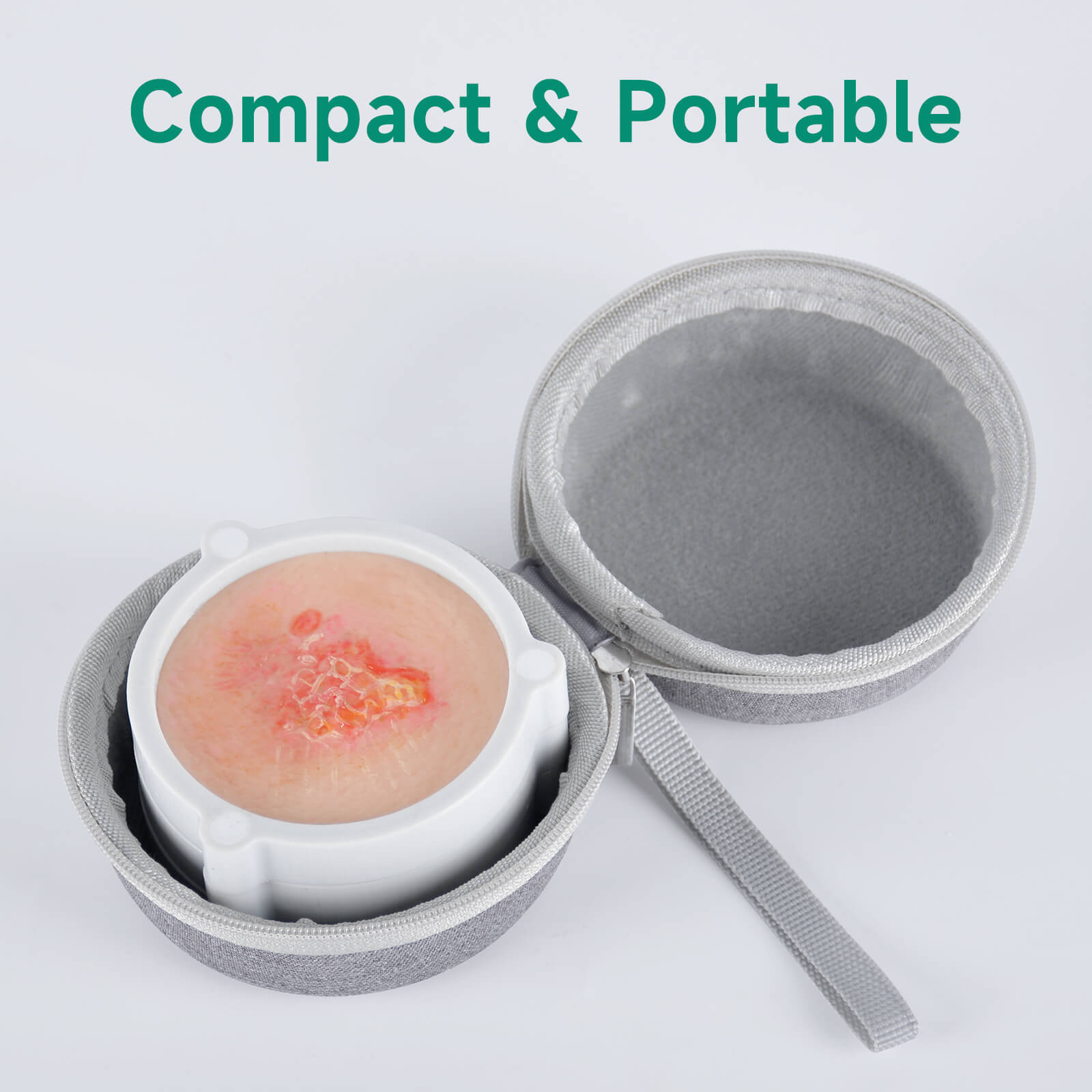
- Portable Teaching Tool
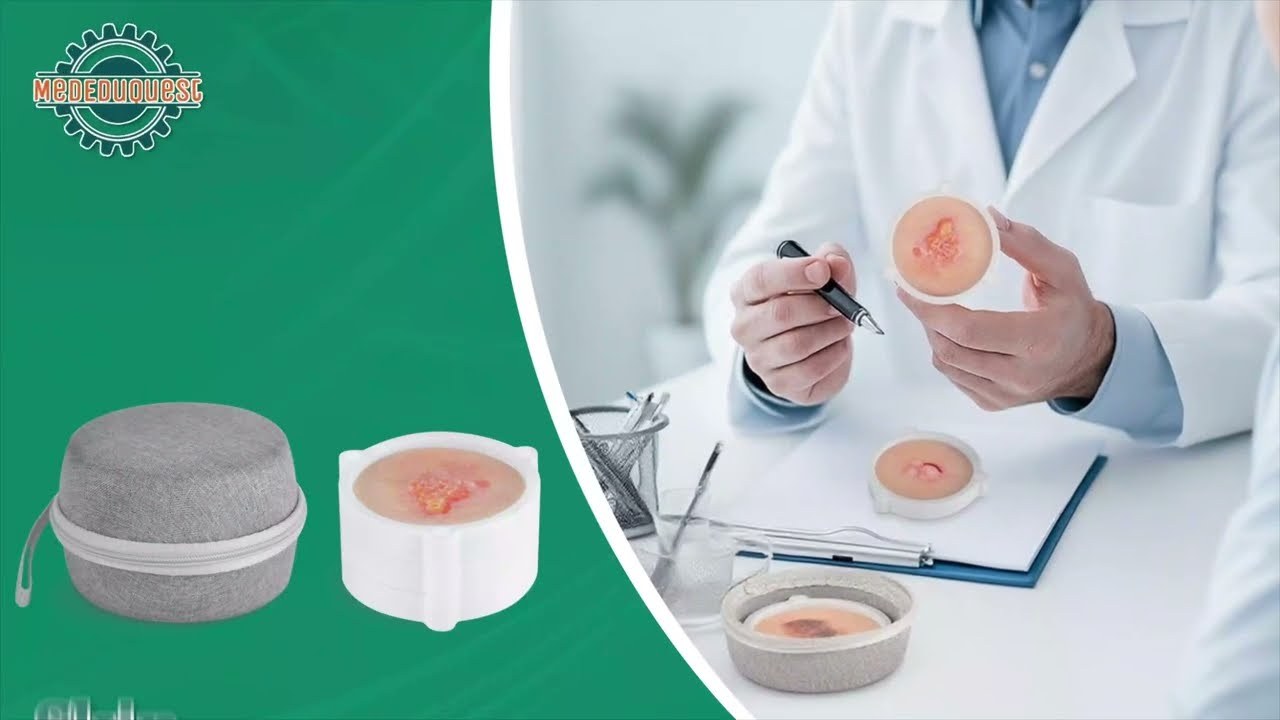
The compact design and protective storage case allow educators and healthcare providers to easily transport the model between classrooms, simulation labs, clinics, and community outreach programs.
- Supports Patient Education & Clinical Communication
The model helps explain skin cancer warning signs, lesion progression, and early detection concepts in a clear visual format, improving patient understanding during consultations and health education activities.
Ideal For:
- Dermatology education
- Medical and nursing schools
- Skin lesion identification training
- Clinical teaching programs
- Patient consultations
- Public health awareness campaigns


📩 Bulk order or customization? Request a Quote →