Thigh Amputation Trauma Trainer
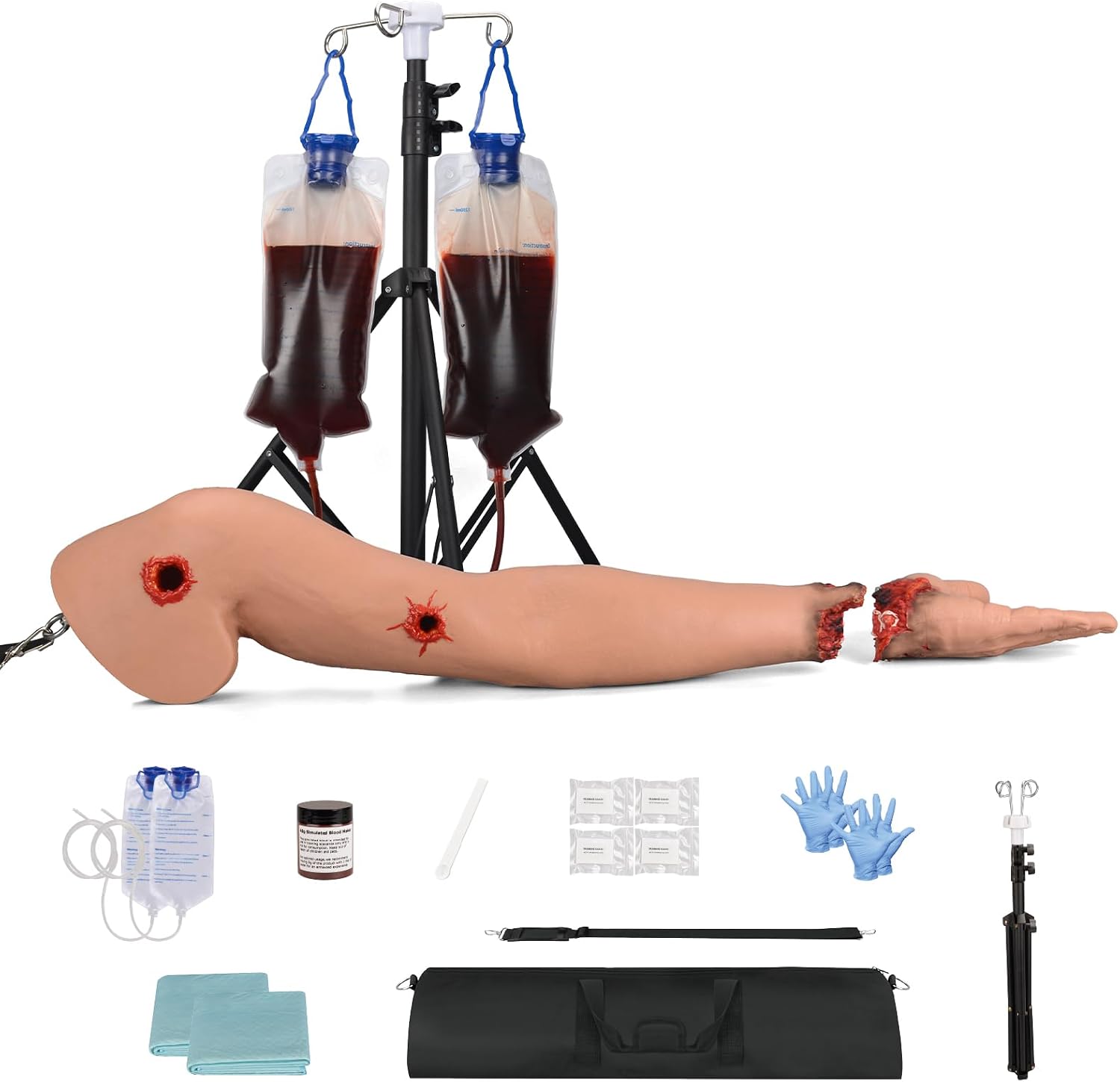
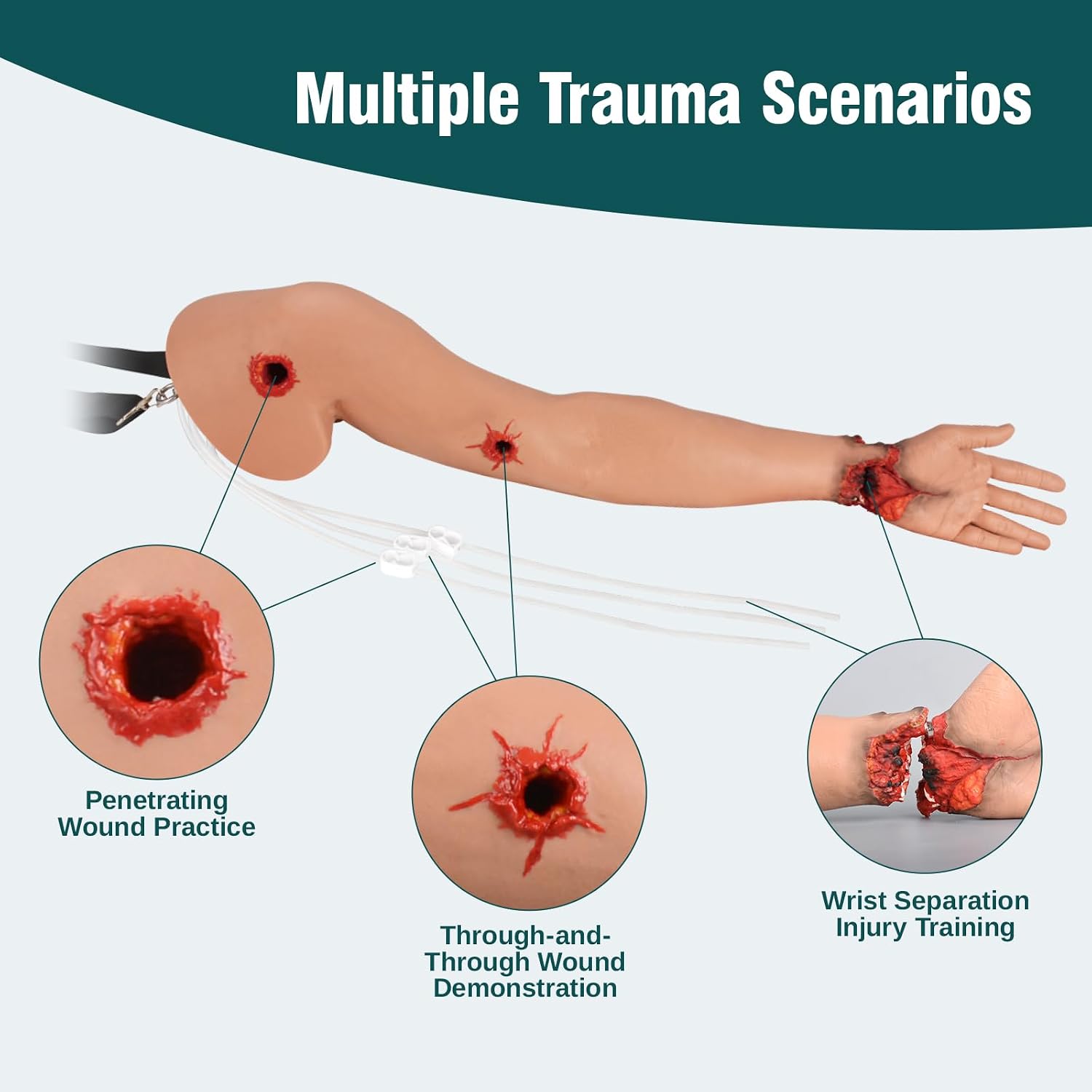
The Thigh Amputation Trauma Trainer simulates a severe blast-related thigh amputation with irregular traumatic wounds, exposed tissue, burn effects, and active bleeding. Designed for hands-on practice in trauma assessment, tourniquet application, and hemorrhage control, it supports realistic battlefield casualty care and emergency medical training.
Features:
-
Blast-Related Thigh Amputation Simulation:
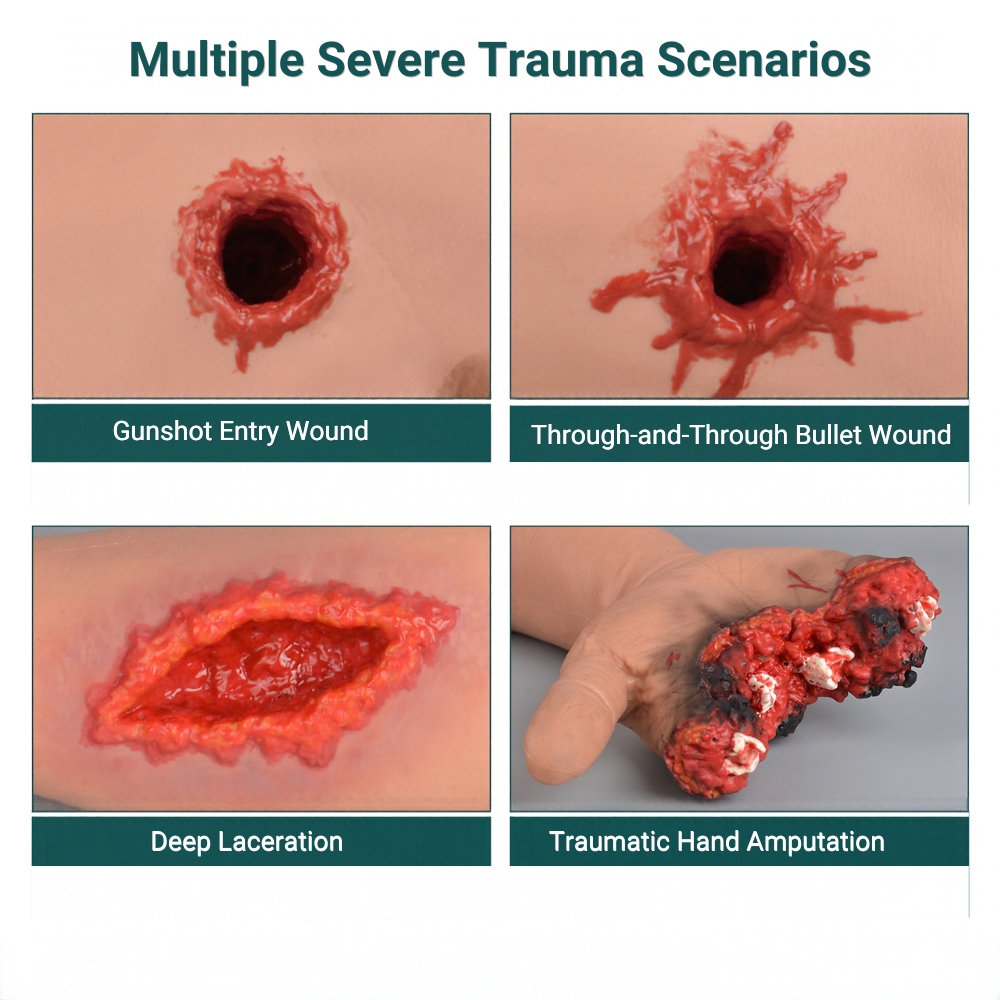
Recreates a severe explosion-related lower extremity injury with irregular wound surfaces, exposed tissue, and burn effects, providing a realistic scenario for traumatic amputation assessment and emergency care training. -
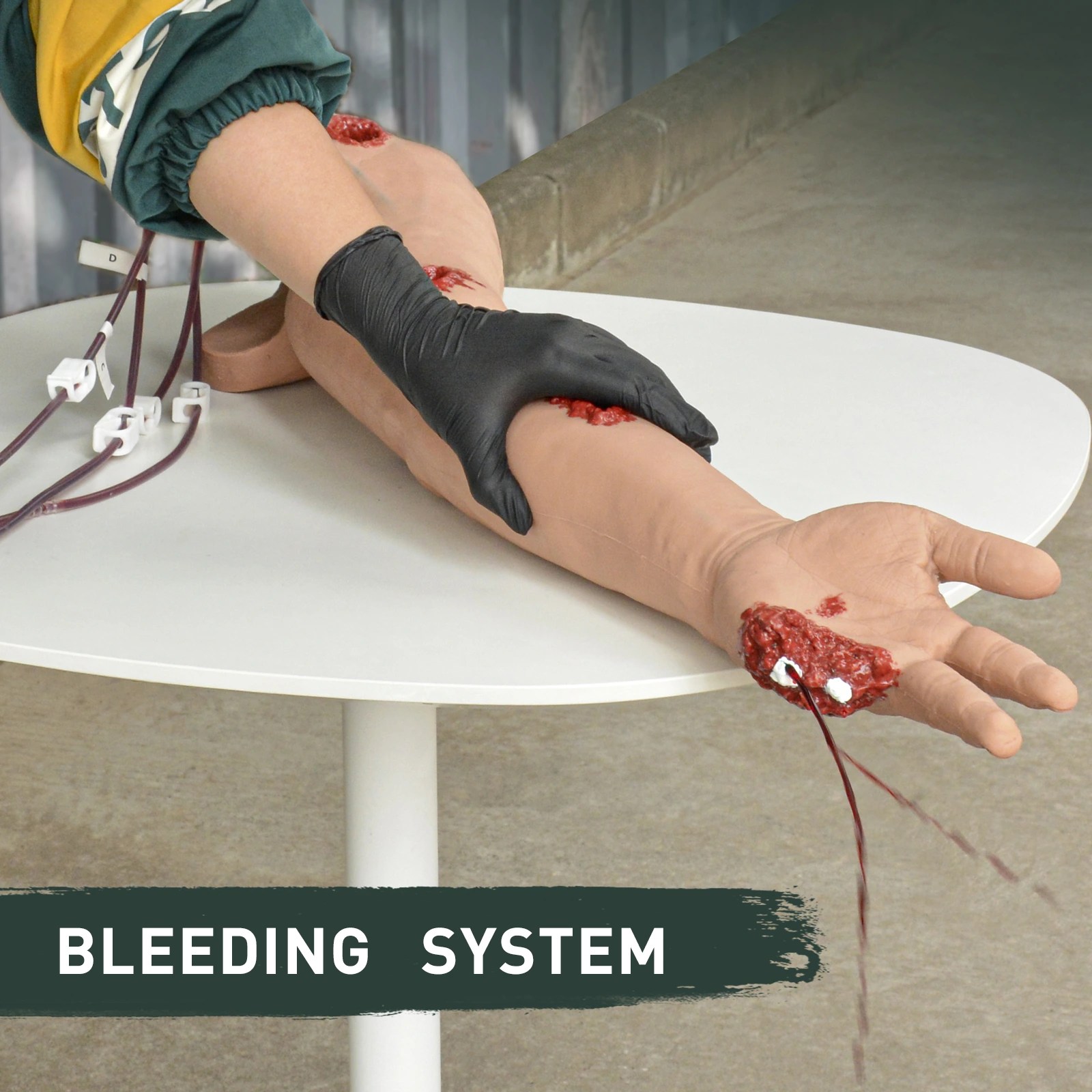
Active Bleeding Simulation:
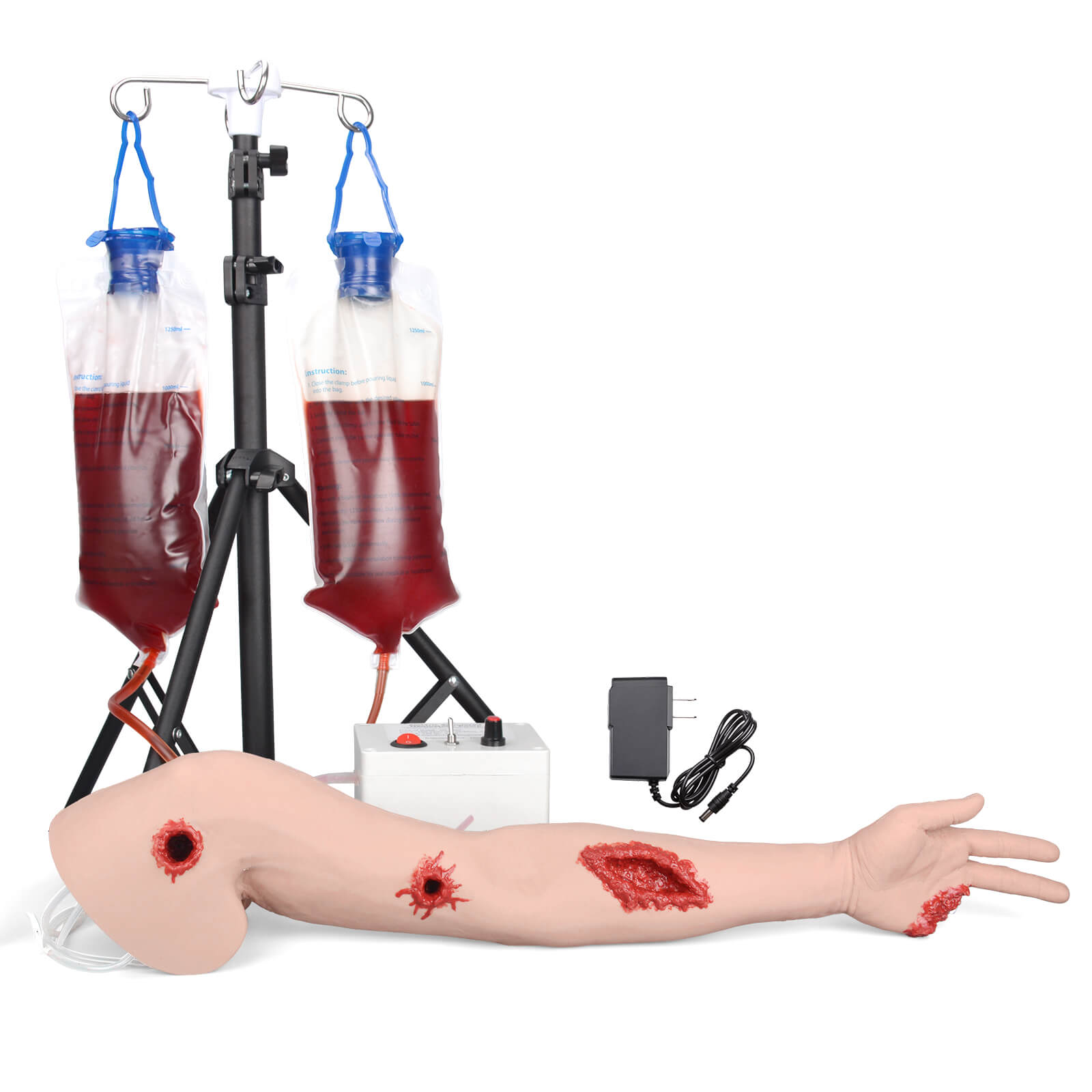
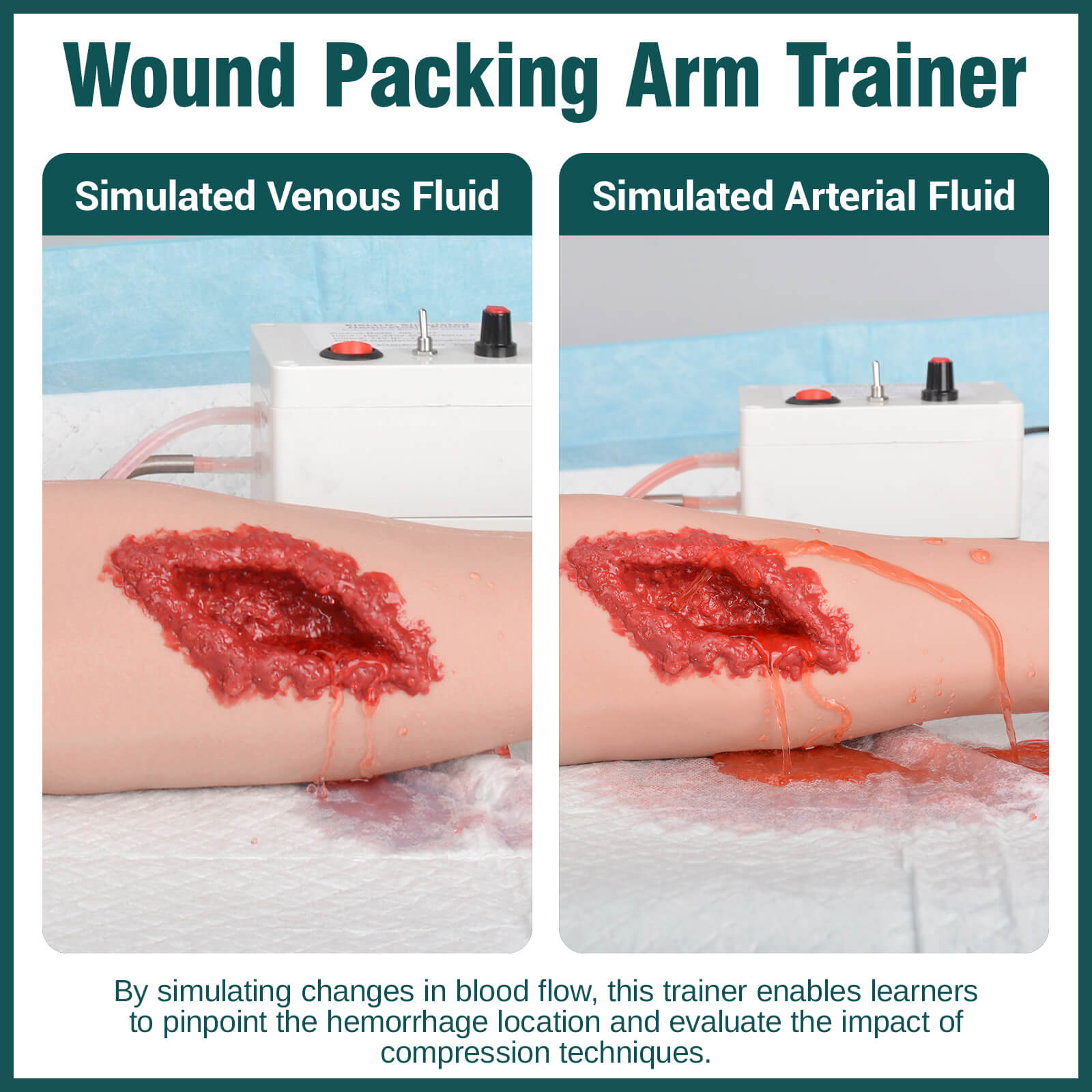
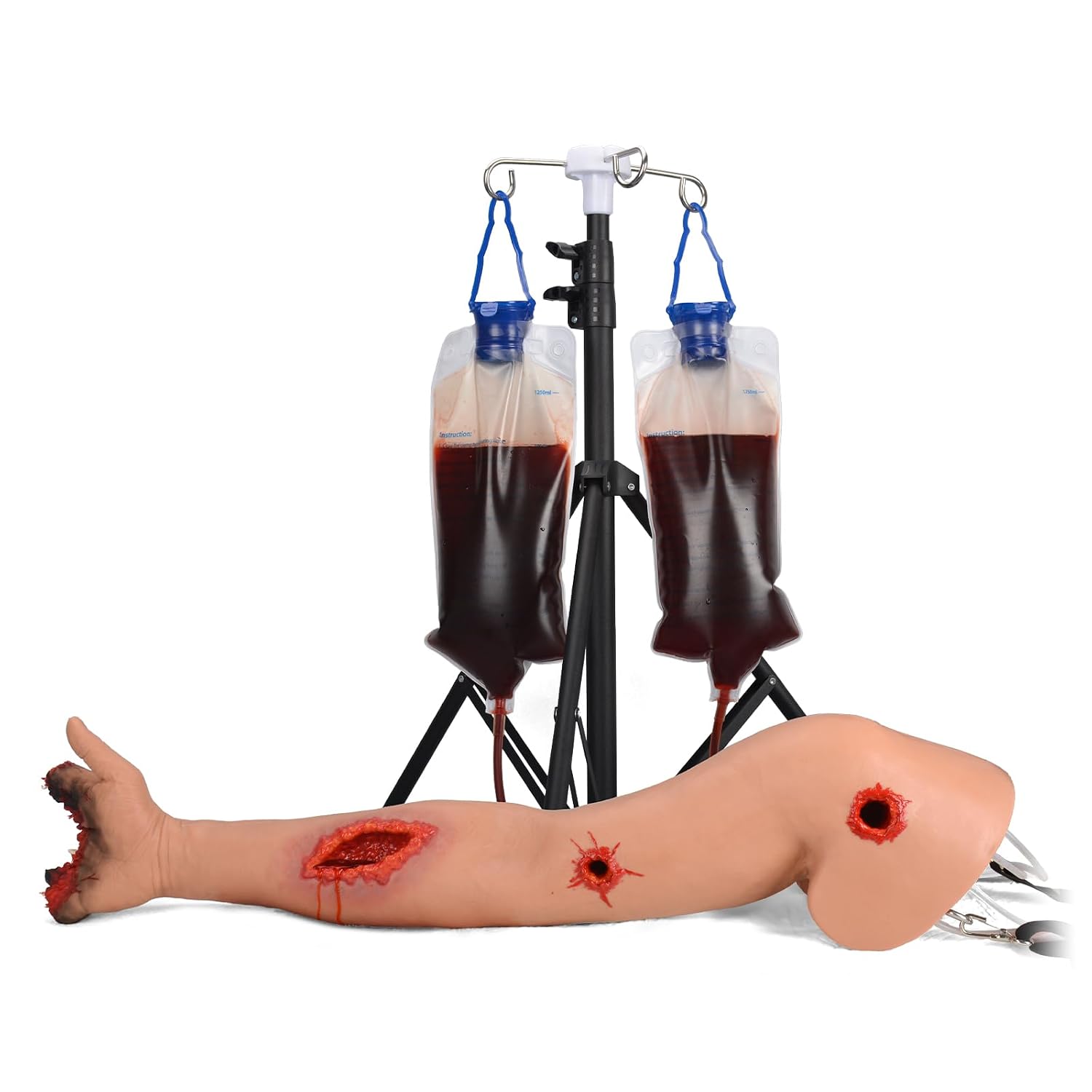
An integrated tubing and reservoir system produces simulated blood flow, allowing learners to practice assessing and controlling severe bleeding during trauma response exercises. -
Tourniquet Application Practice:
Supports repeated tourniquet application, helping learners practice placement, tightening, and securing techniques for severe thigh bleeding. -
Wound Packing and Dressing Practice:
Supports hands-on practice in wound packing and gauze application for traumatic injuries, where the wound structure allows effective packing and compression. -
Durable Silicone Construction:
Made from silicone with realistic texture and wound details, the trainer is designed for repeated use in simulation labs, classrooms, and field-based training. -
Suitable for Tactical and Emergency Medical Training:
Supports practical training scenarios for TCCC, TECC, TEMS, PHTLS, EMS, military medics, and emergency medical professionals.
Kit Includes:
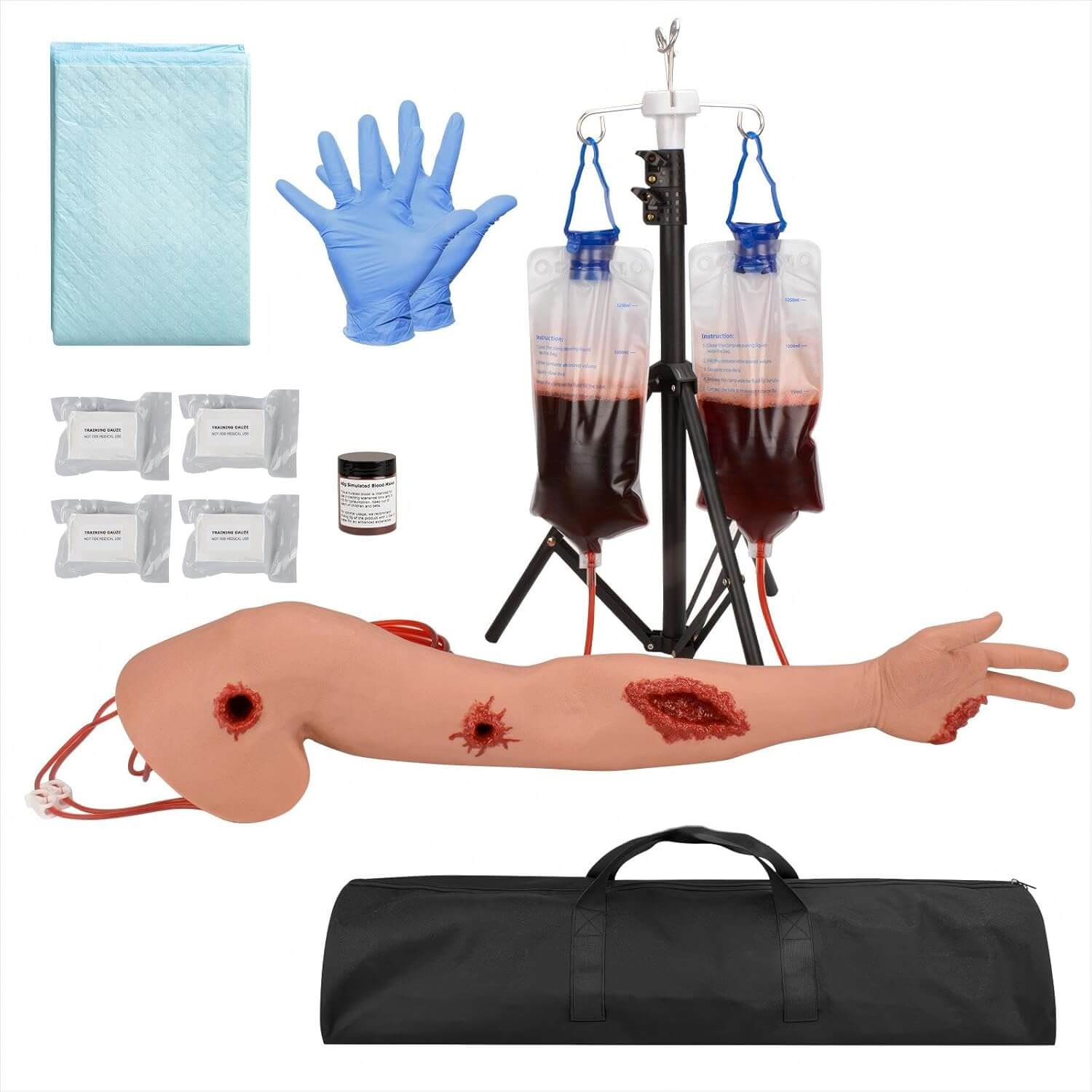
- Thigh Amputation Trainer x1
- Simulated Blood Powder 40g x1
- Robert Clamp x1
- Water Reservoir Bag x1
- Absorbent Cloth x1
- Compressed Gauze x4
- Pair of Gloves x1
- Transparent Case x1
By repeatedly practicing tourniquet application on our product, first responders can significantly enhance their skill proficiency and reaction time, boosting their emergency capabilities and confidence. This practice effectively reduces blood loss risk, prevents secondary injury, and ensures compliance with standard operating procedures. Additionally, team training improves collaboration efficiency. These benefits enable first responders to quickly and accurately control active hemorrhage.