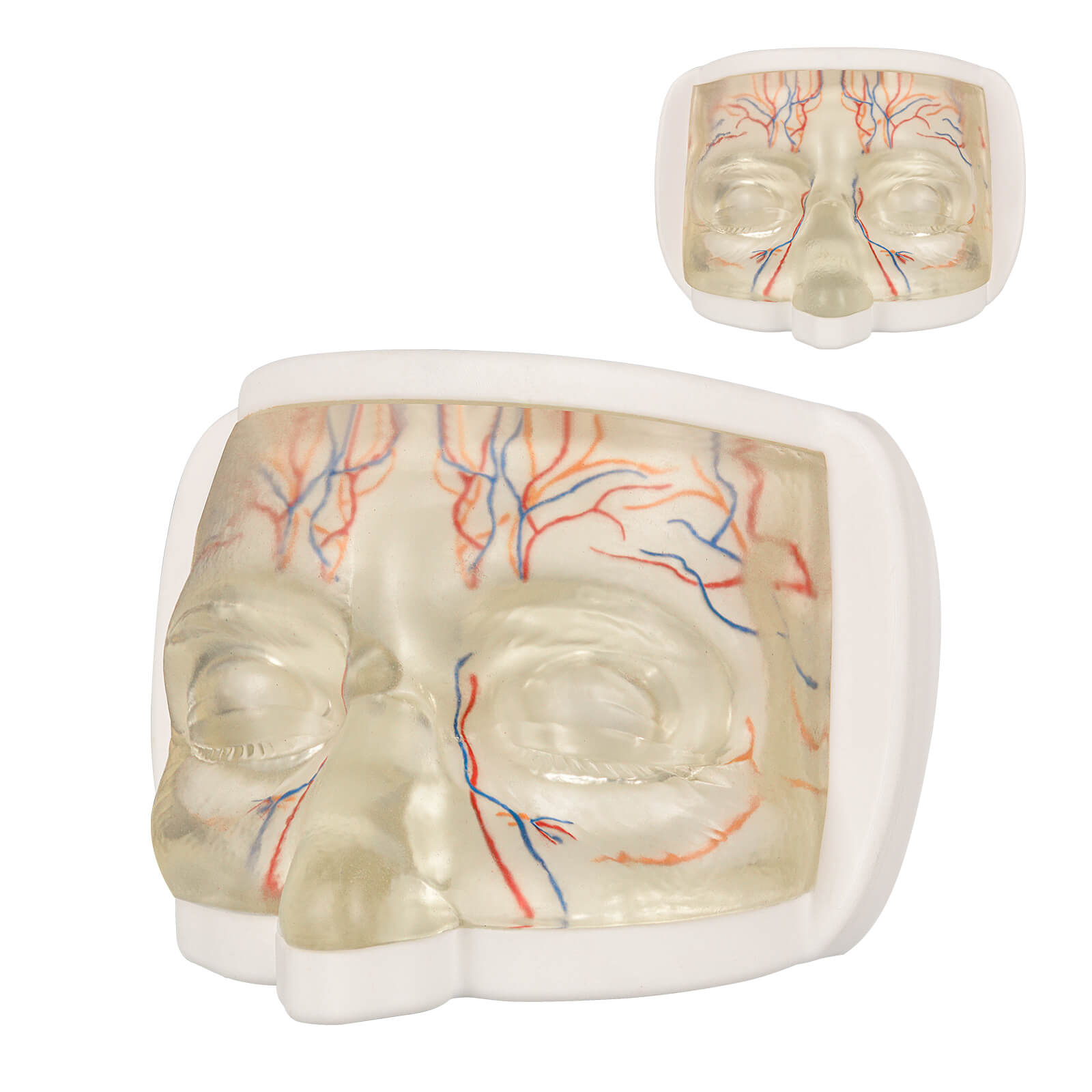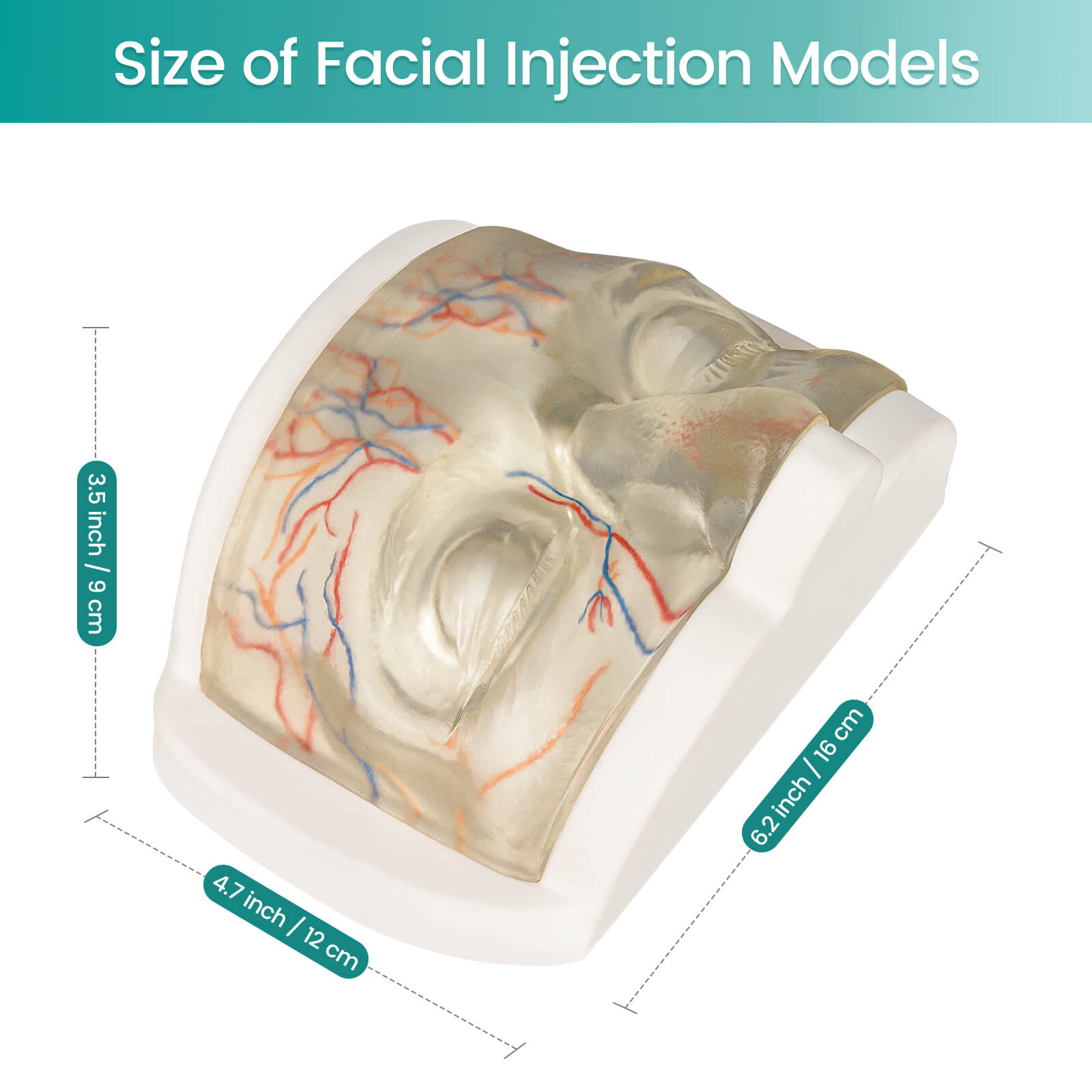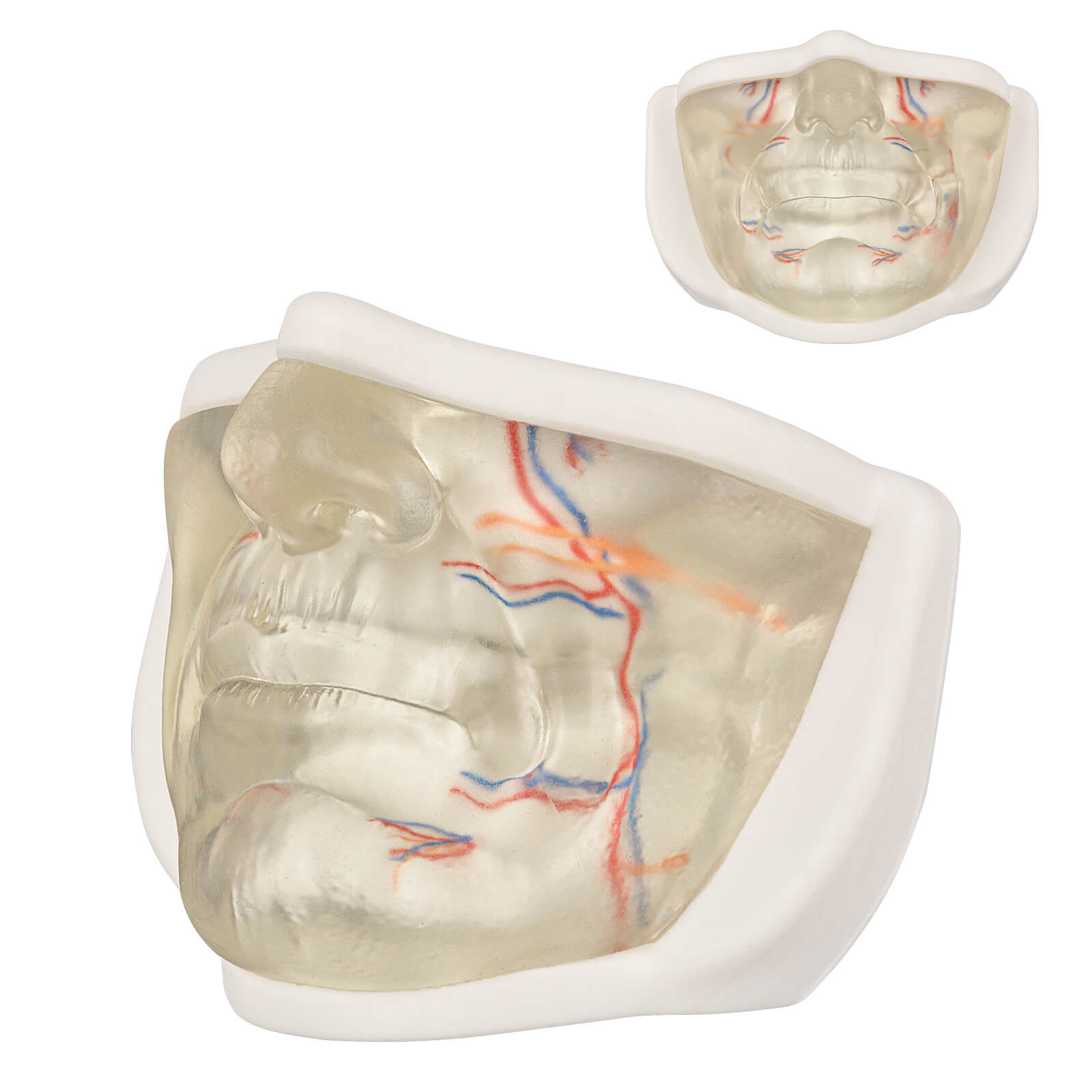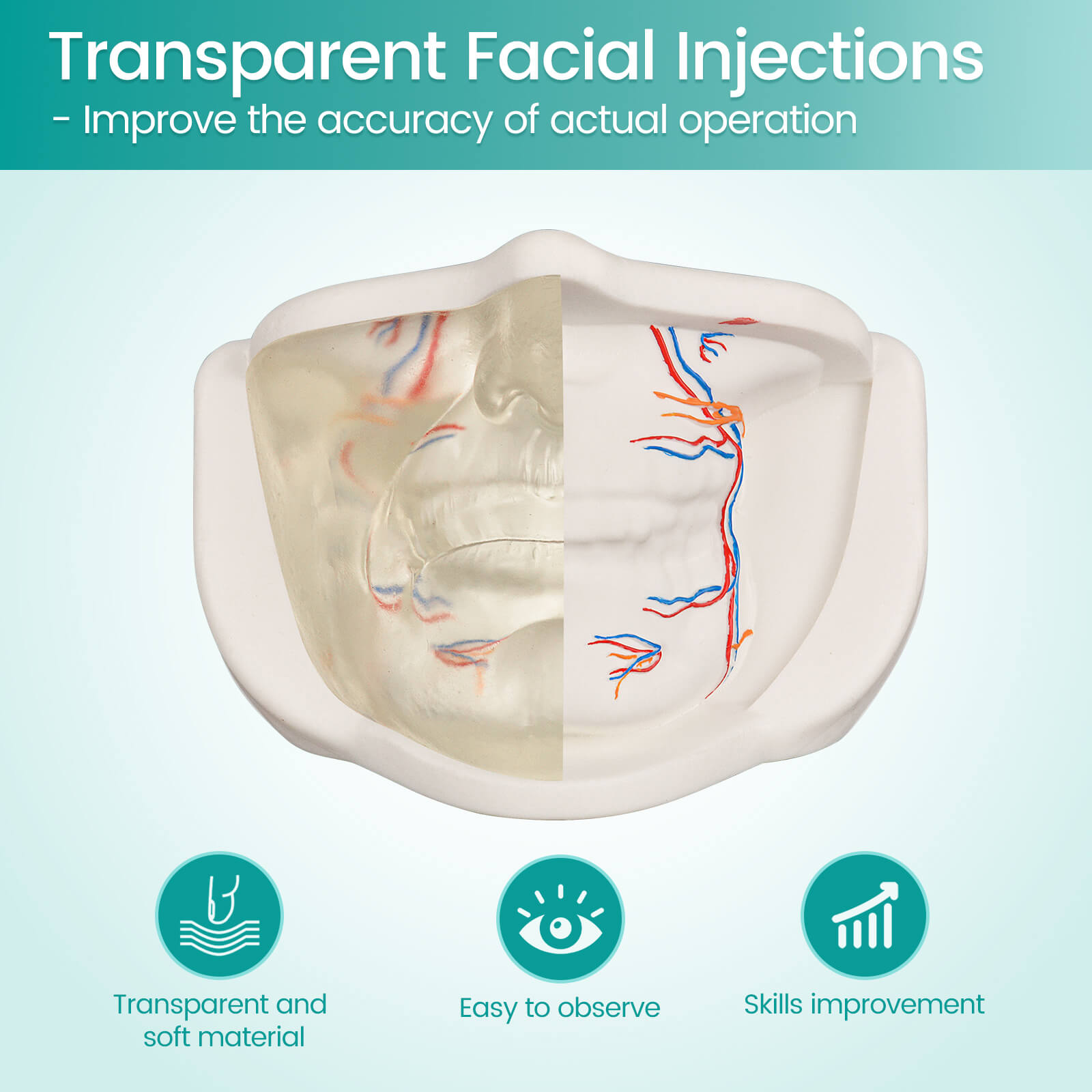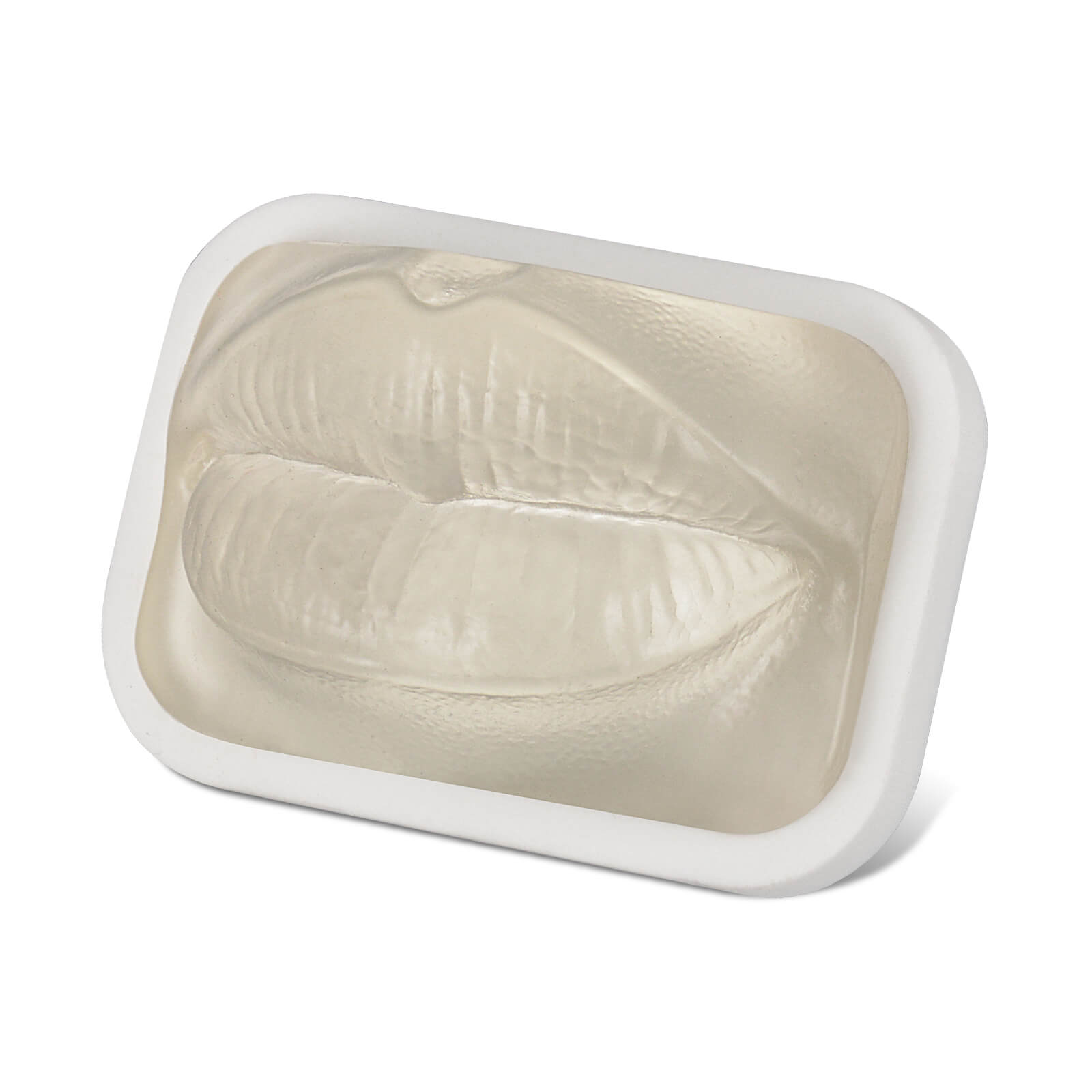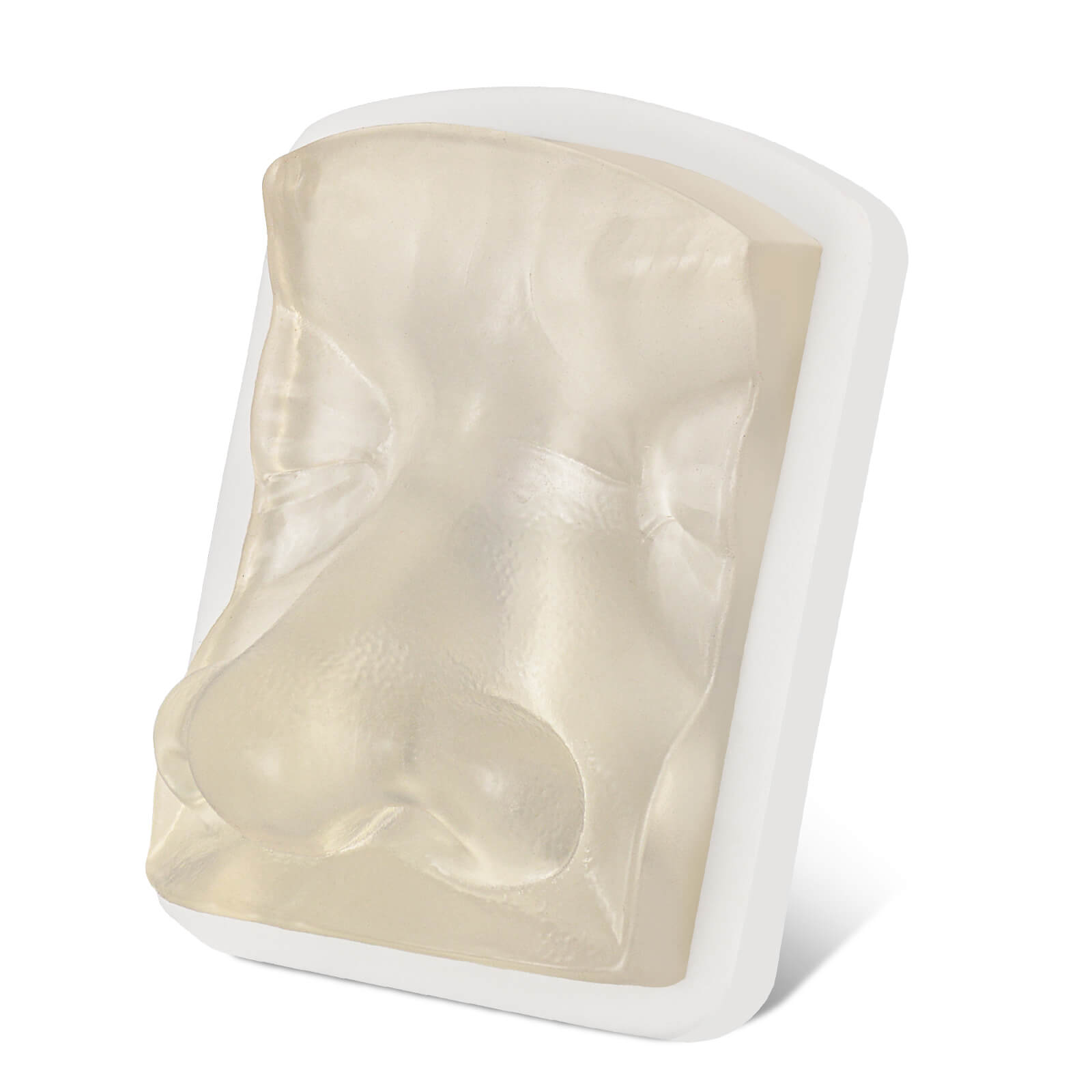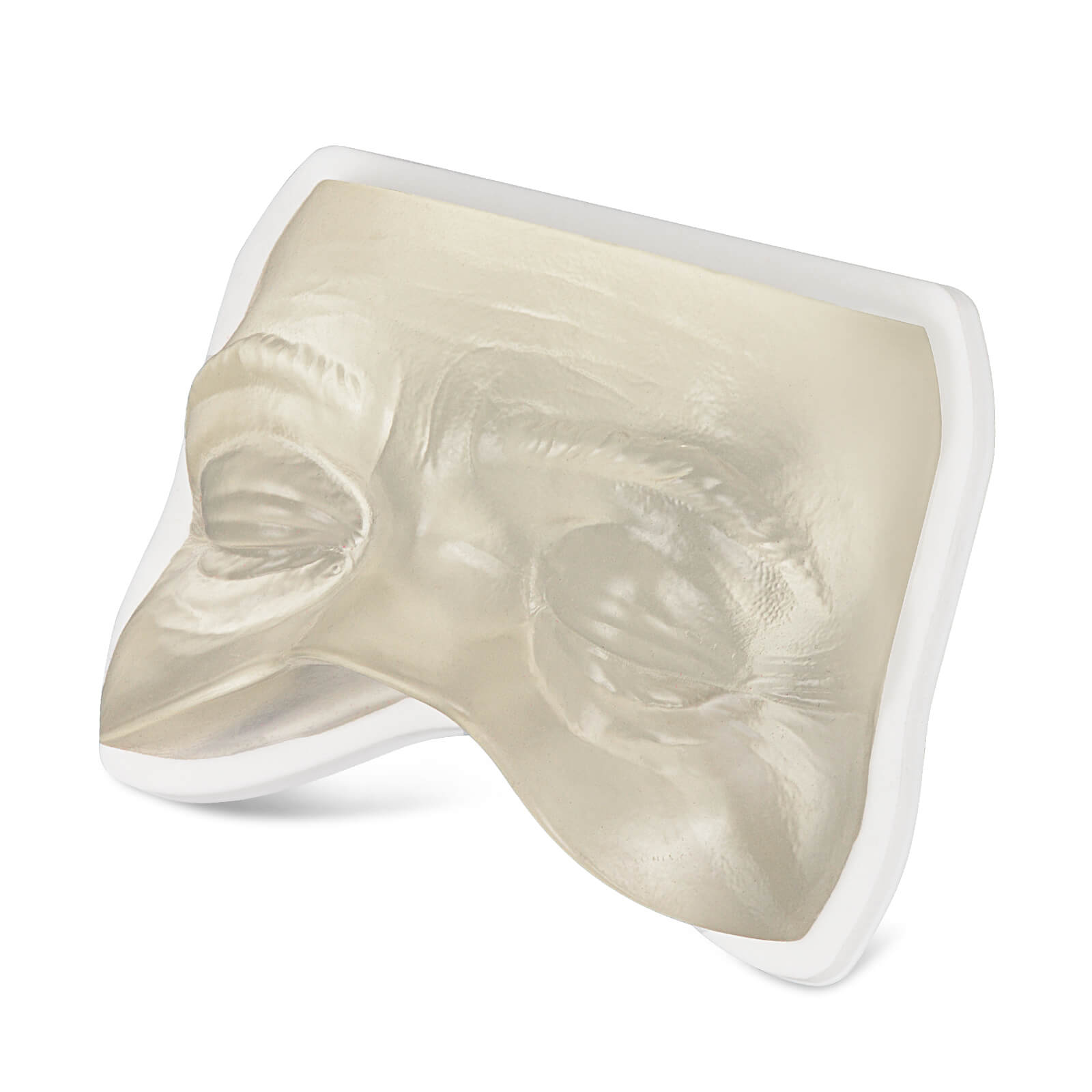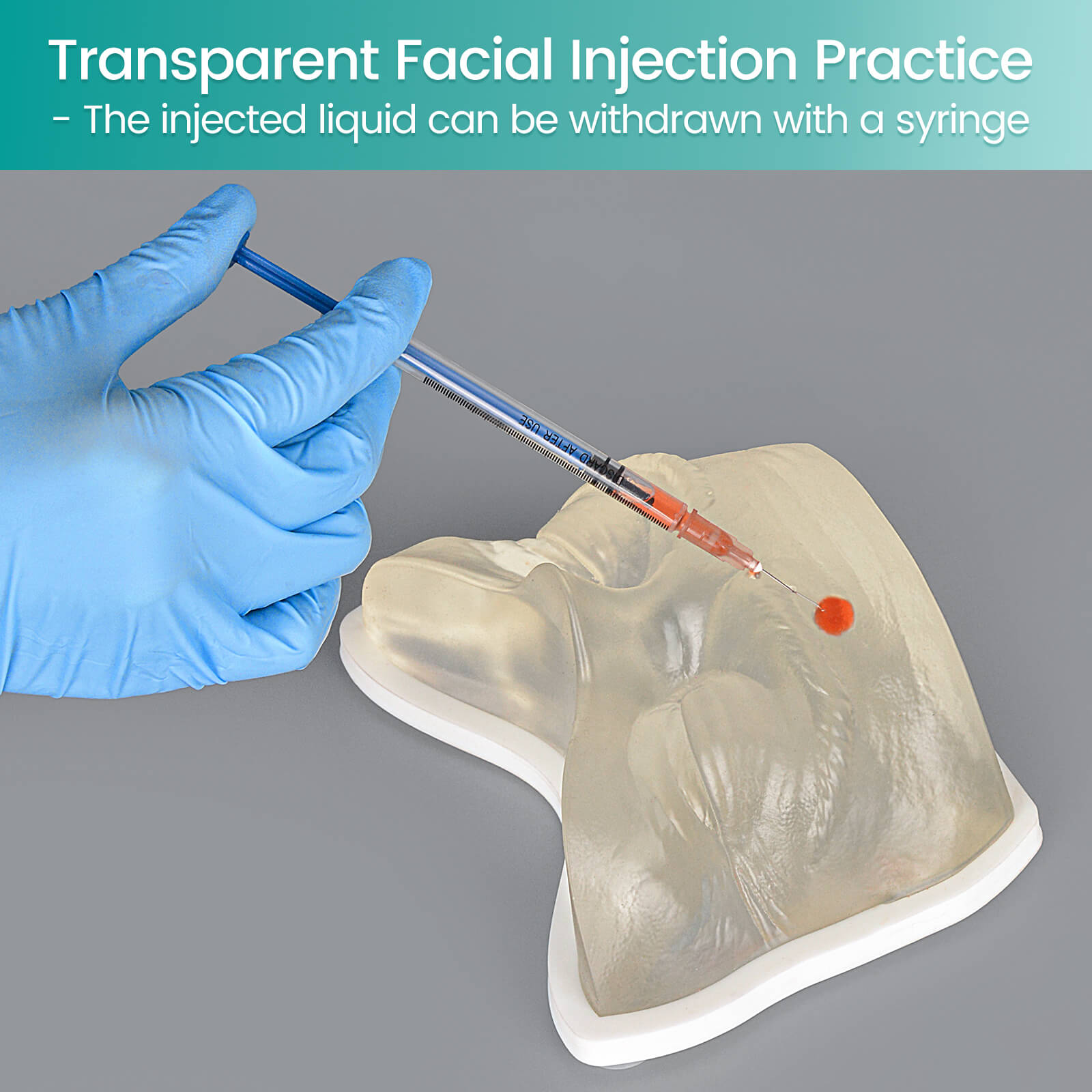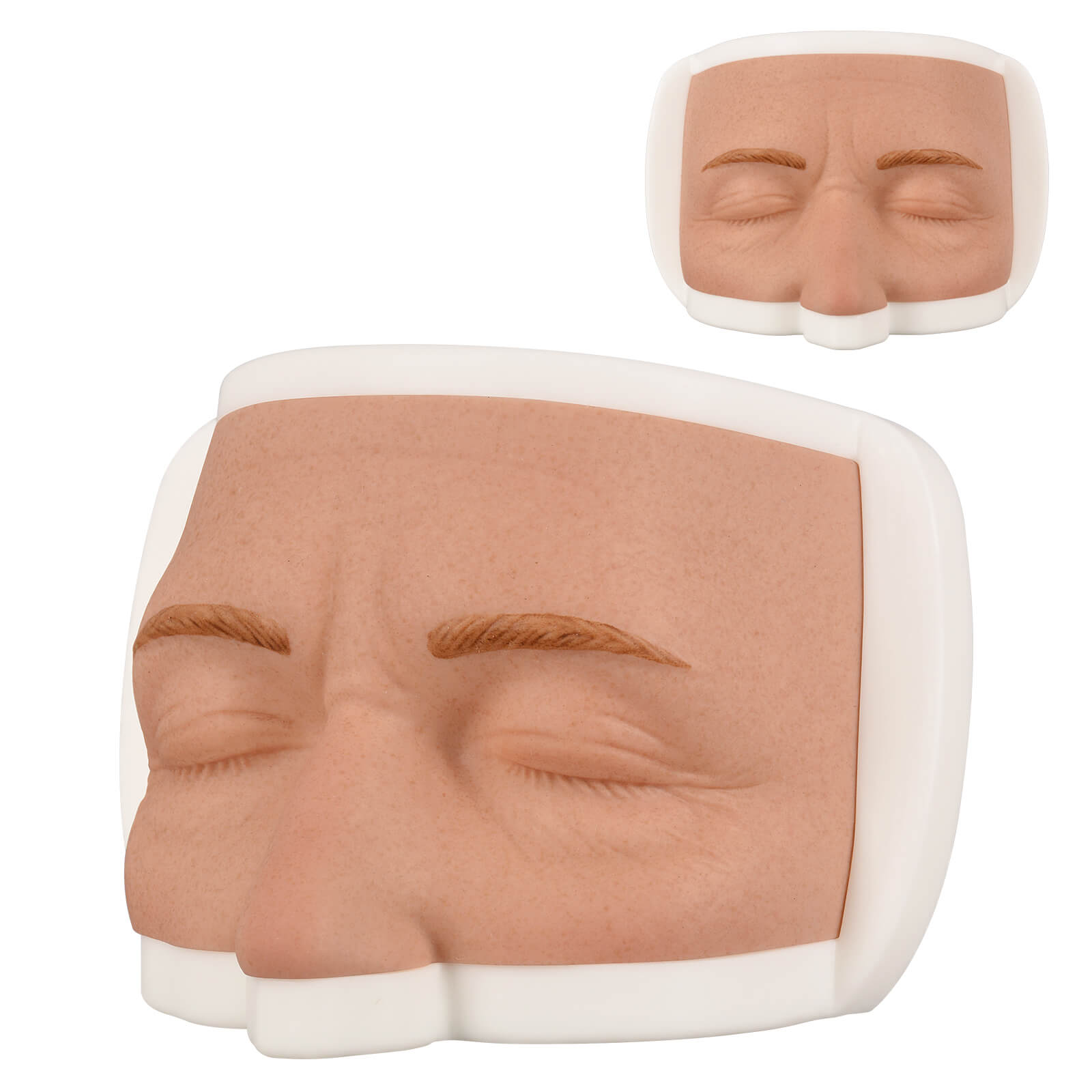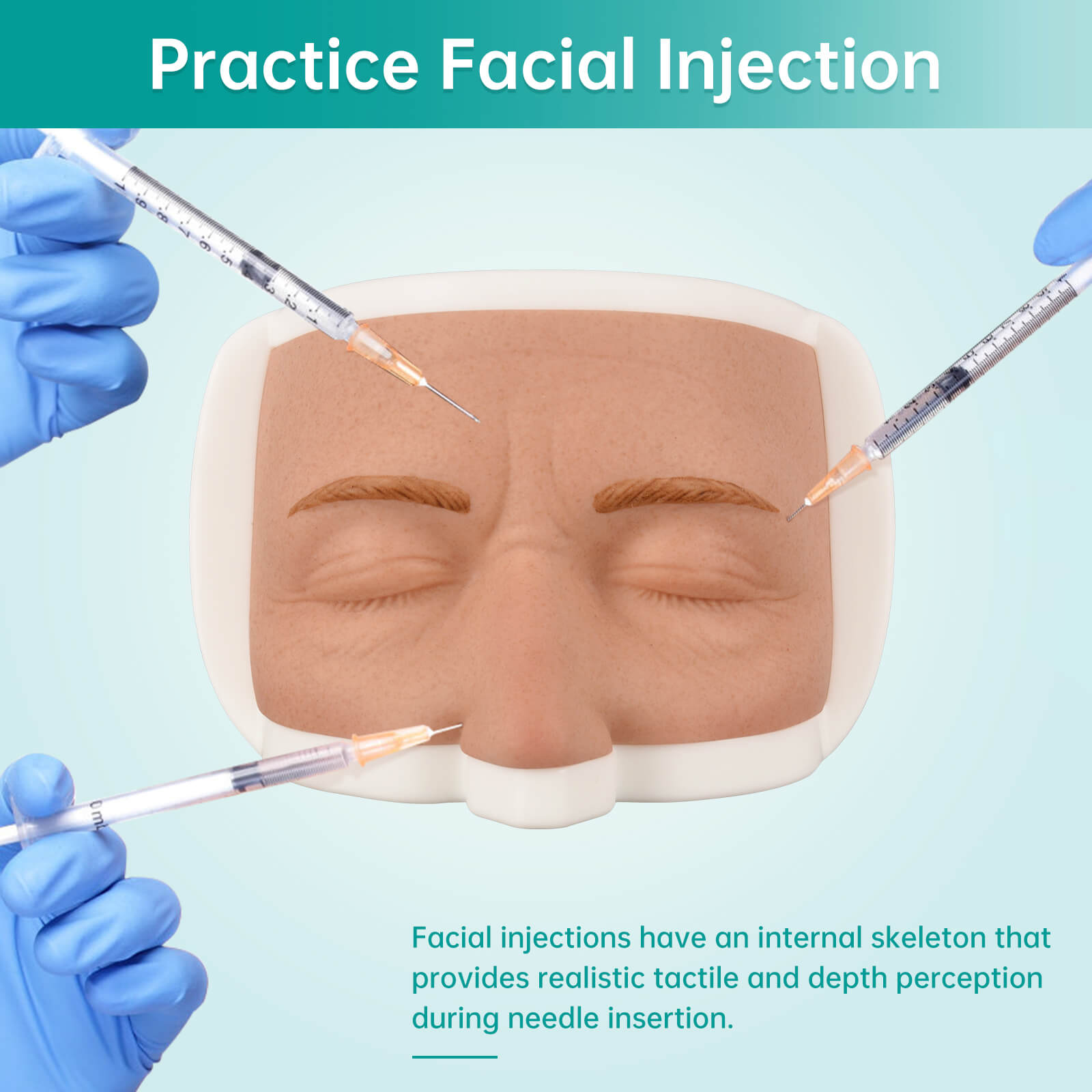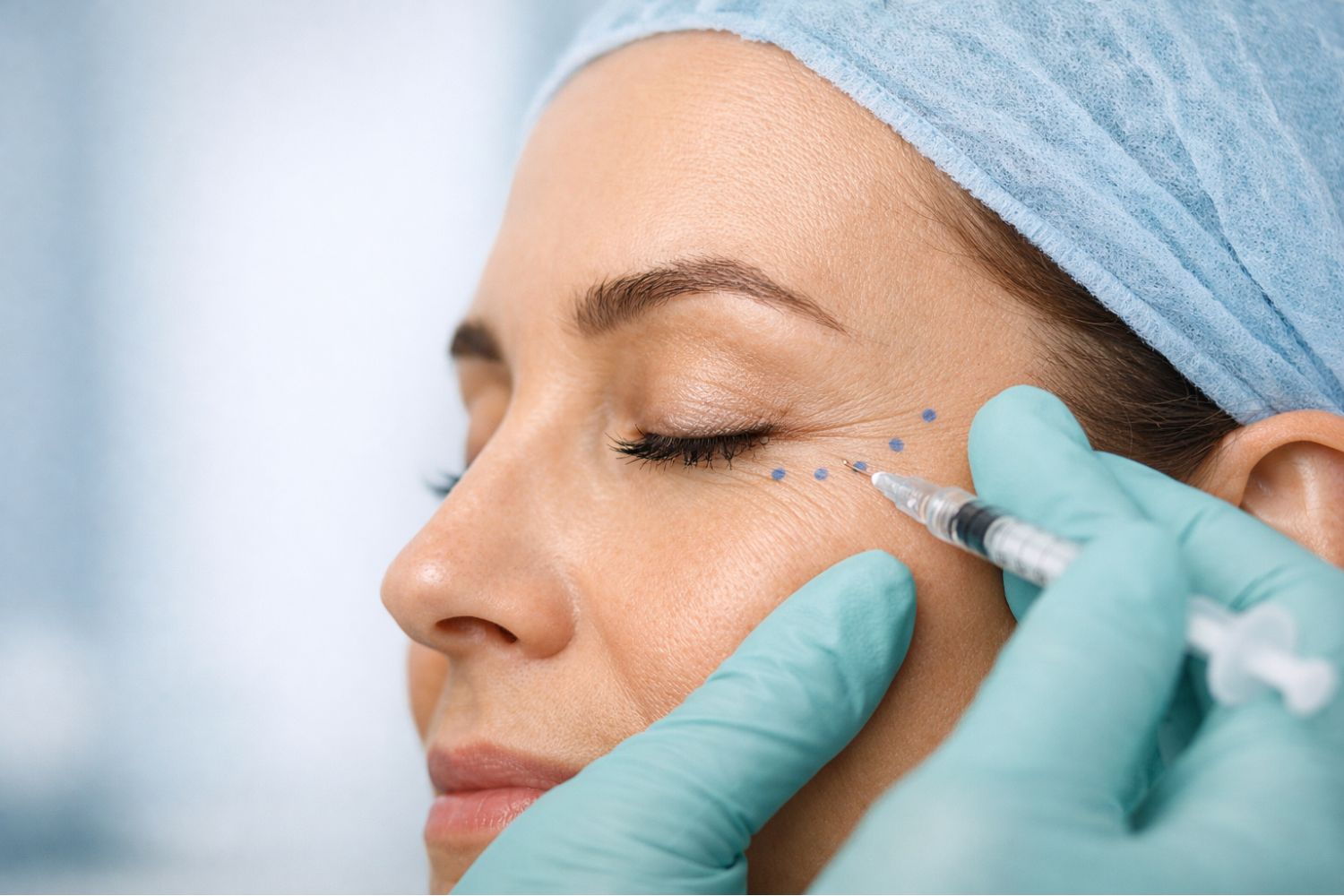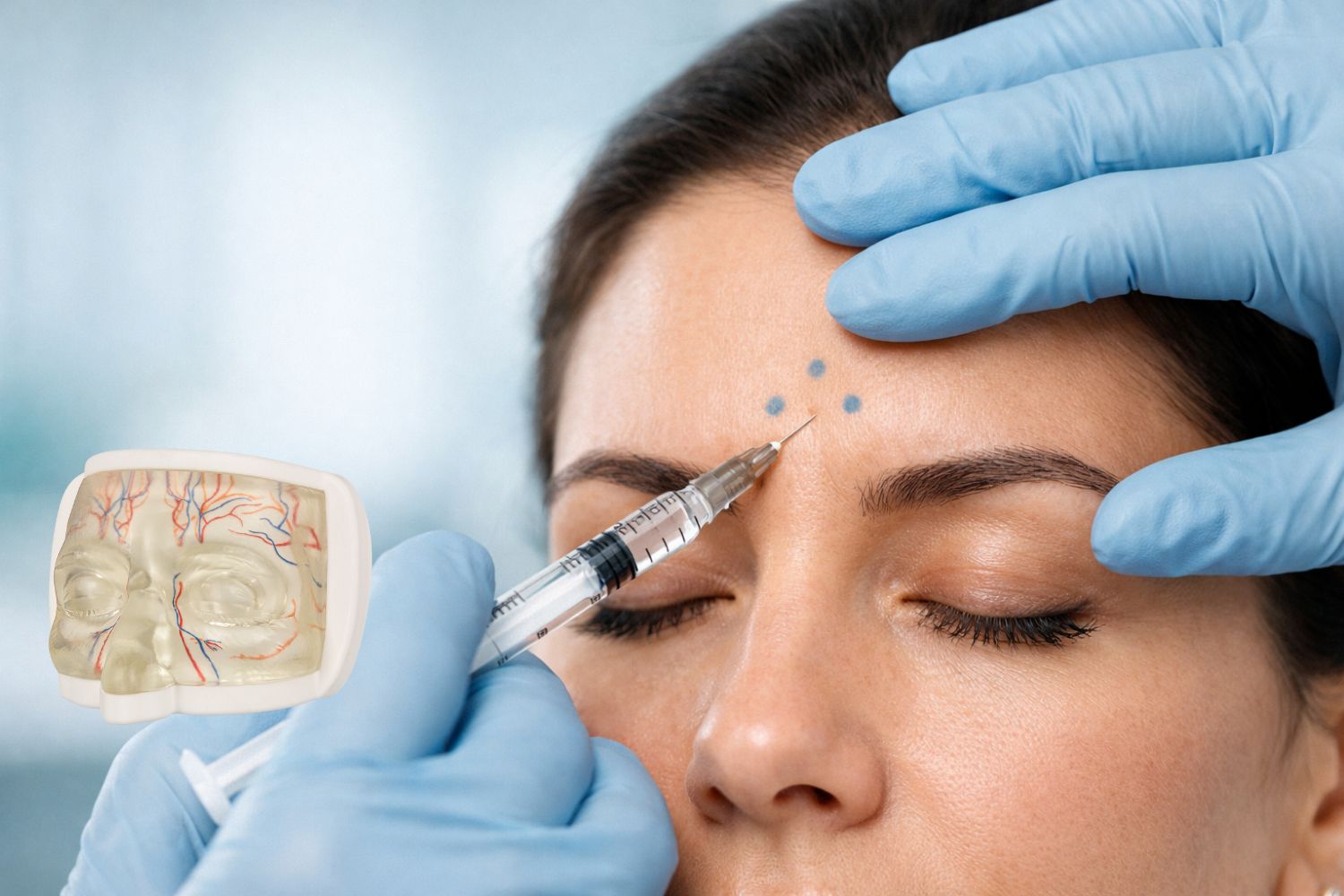
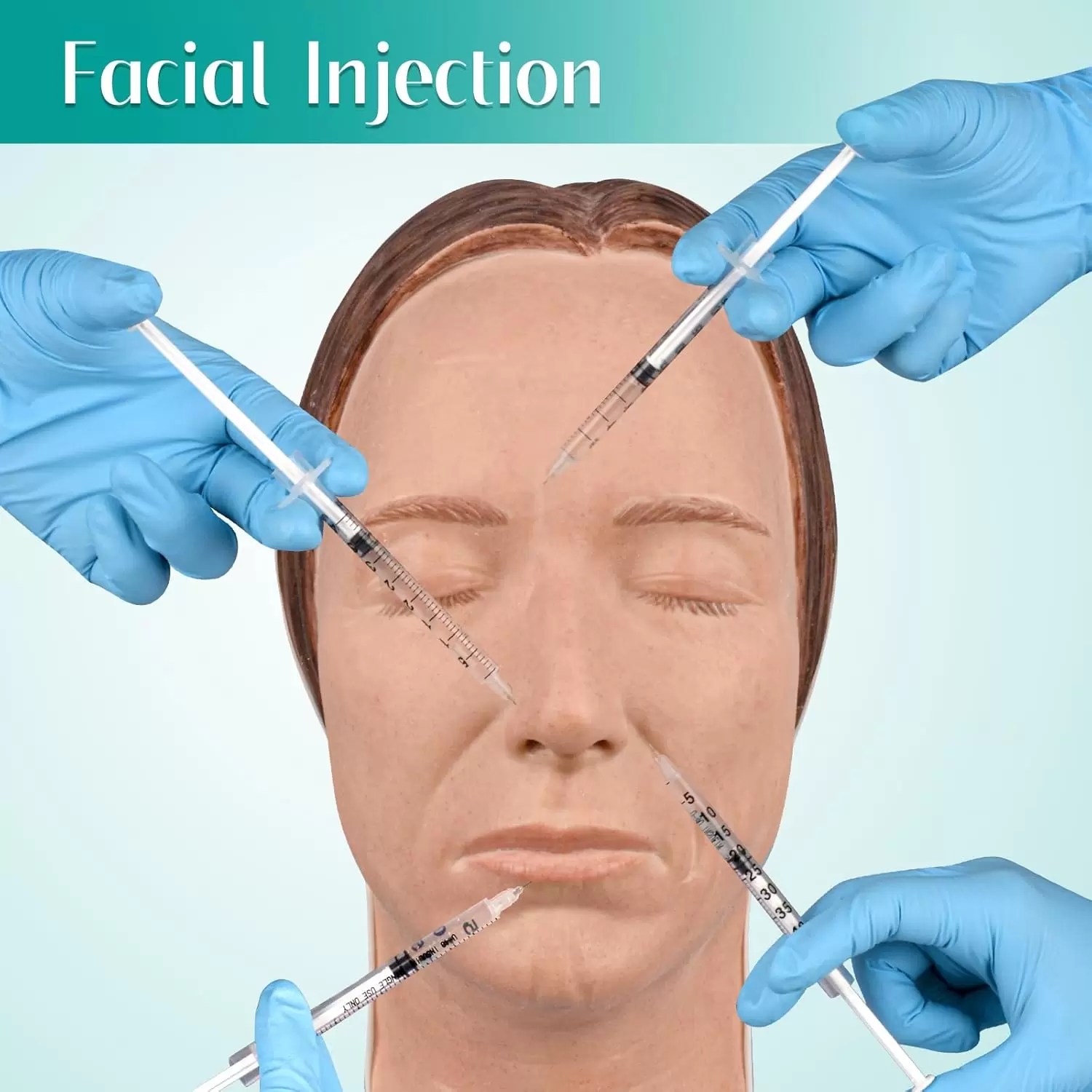
Understanding where to inject, which muscles to target, and the appropriate injection depth is essential for both safety and optimal results. Practicing on realistic facial injection models can help new practitioners build confidence before treating real patients.
Learn safe Botox injection points, depth, and techniques for treating crow's feet. Practice on facial injection models for precision and patient safety.
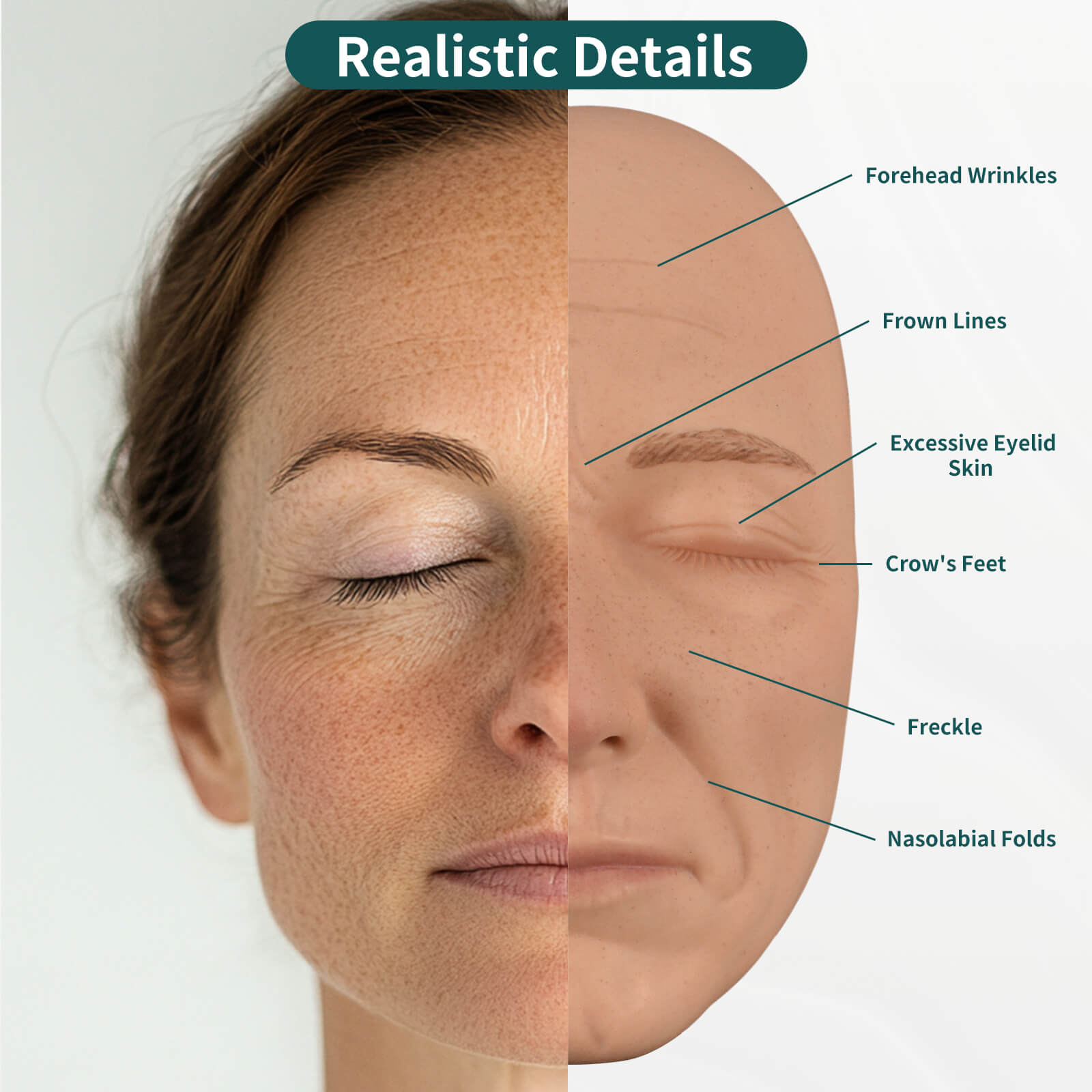
Understanding Crow's Feet Anatomy
Crow's feet primarily form due to the activity of the orbicularis oculi muscle, which encircles the eye and contracts when smiling or squinting.
Key points to consider:
- The orbicularis oculi has lateral fibers extending toward the temples.
- Injection must avoid diffusion into surrounding muscles that control eyelid function.
- Knowledge of underlying vessels, including branches of the temporal and facial arteries, reduces complication risk.
Botox Injection Points for Crow's Feet
Best practice involves multiple, well-spaced points along the lateral orbital rim:
- Lateral Upper Orbital Points – above the zygomatic arch, targeting upper orbicularis fibers.
- Middle Orbital Points – mid-lateral eye area for natural wrinkle smoothing.
- Lower Orbital Points – below the orbital rim, carefully avoiding diffusion toward lower eyelid muscles.
Spacing and dosing depend on muscle strength, patient age, and wrinkle severity. Using a structured approach minimizes asymmetry and preserves natural expression.
How Deep to Inject Botox for Crow's Feet
- Crow's feet injections are generally intradermal to superficial intramuscular.
- Superficial placement ensures effect on dynamic wrinkles while avoiding muscle groups that lift the eyelid.
- Depth control is essential for preventing diffusion-related complications such as lower eyelid ptosis.
Practicing on facial injection models allows injectors to feel resistance and spatial relationships, helping develop reliable depth judgment before clinical use.
Safer Practice with Facial Injection Manikins
For both novice and advanced practitioners, realistic models offer:
- Anatomical guidance of orbital and lateral muscle fibers
- Visualization of injection points and safe zones
- Repeatable practice without patient risk
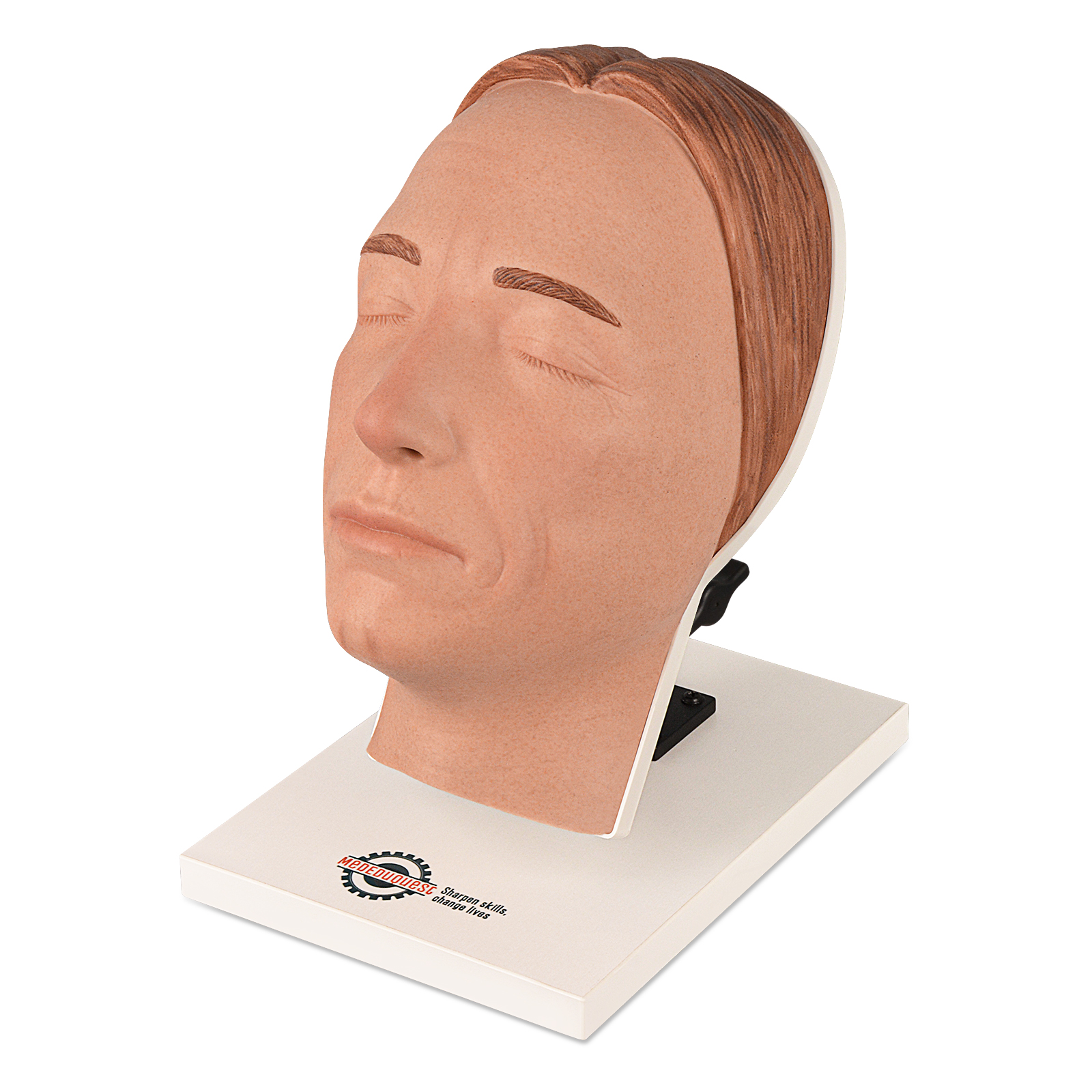
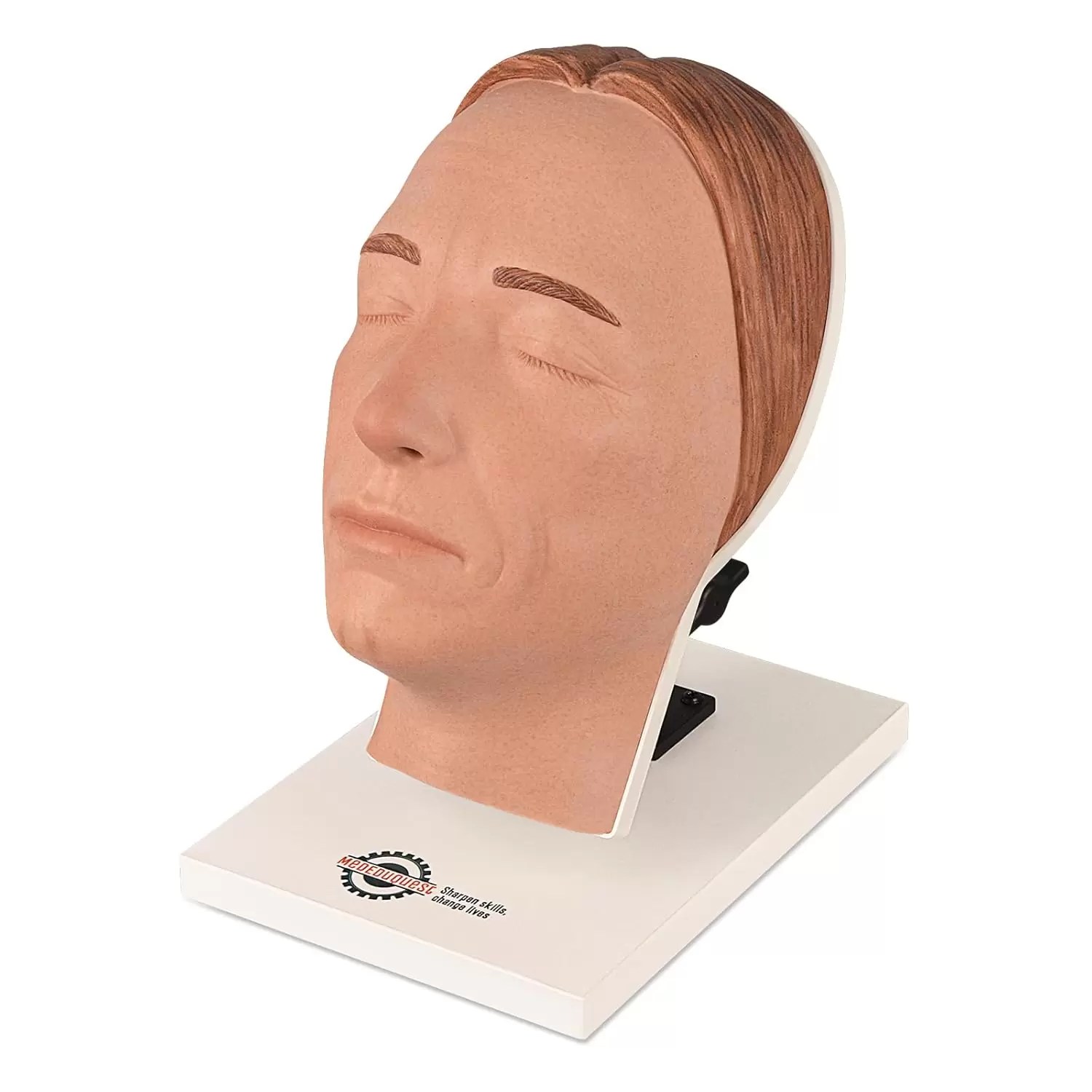
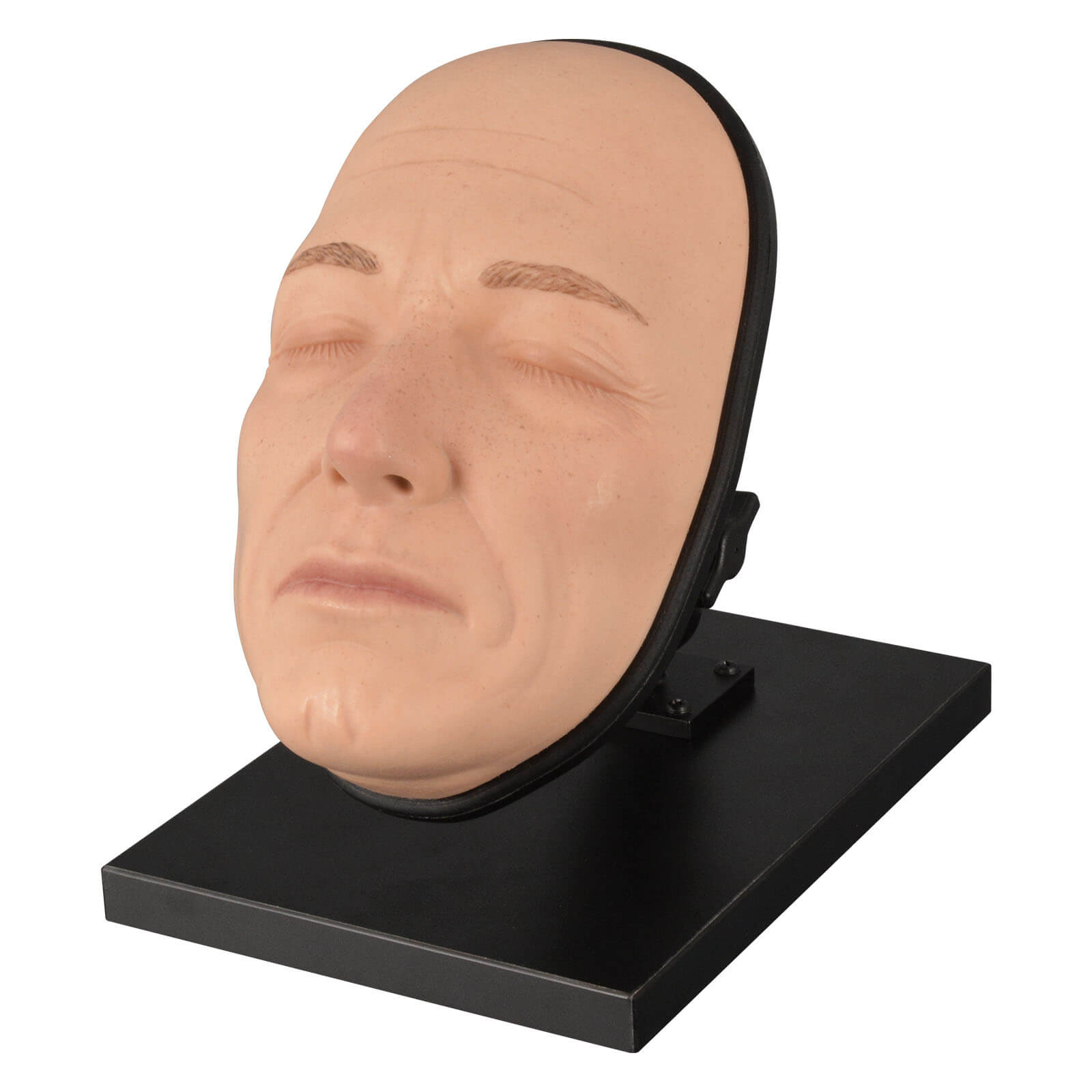
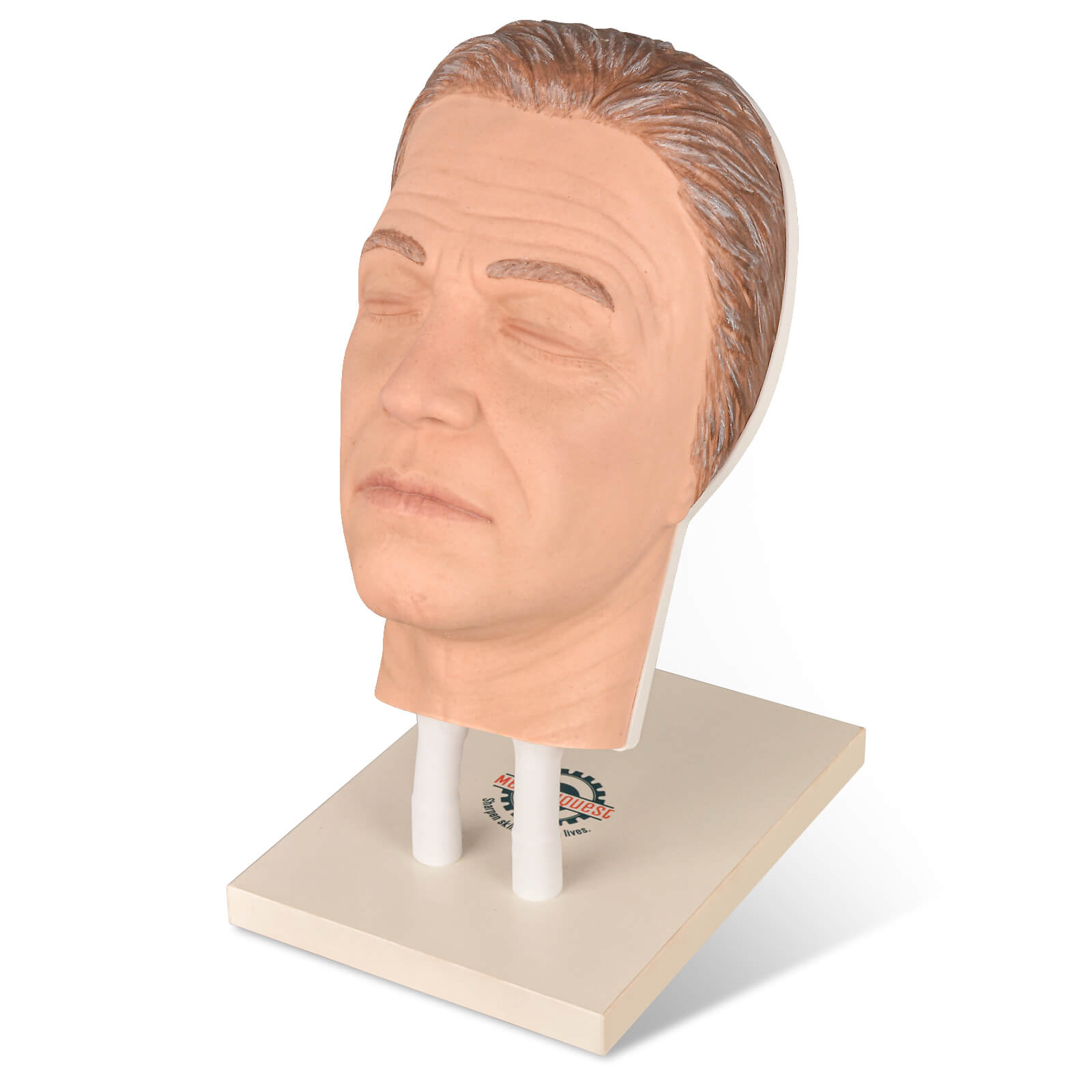
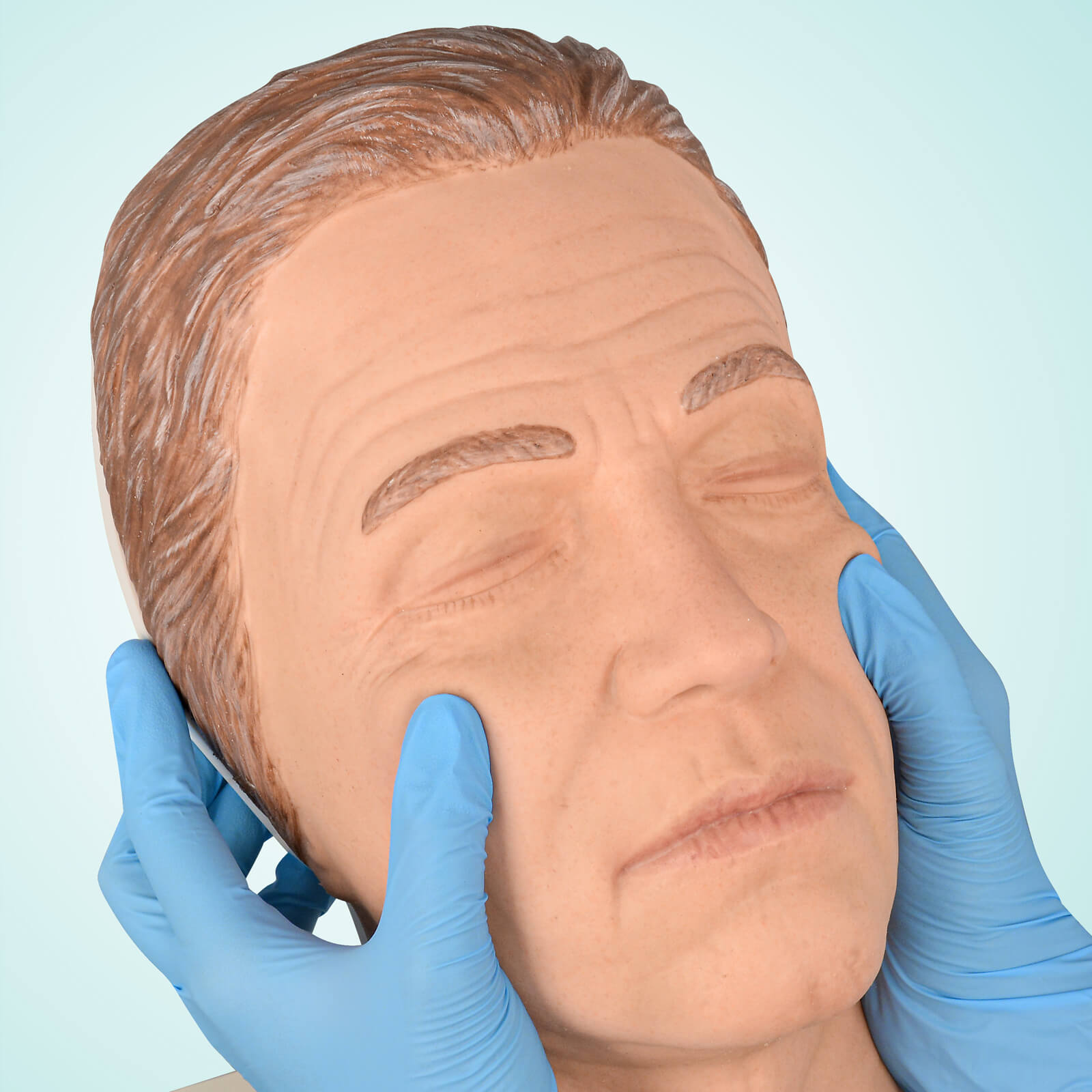
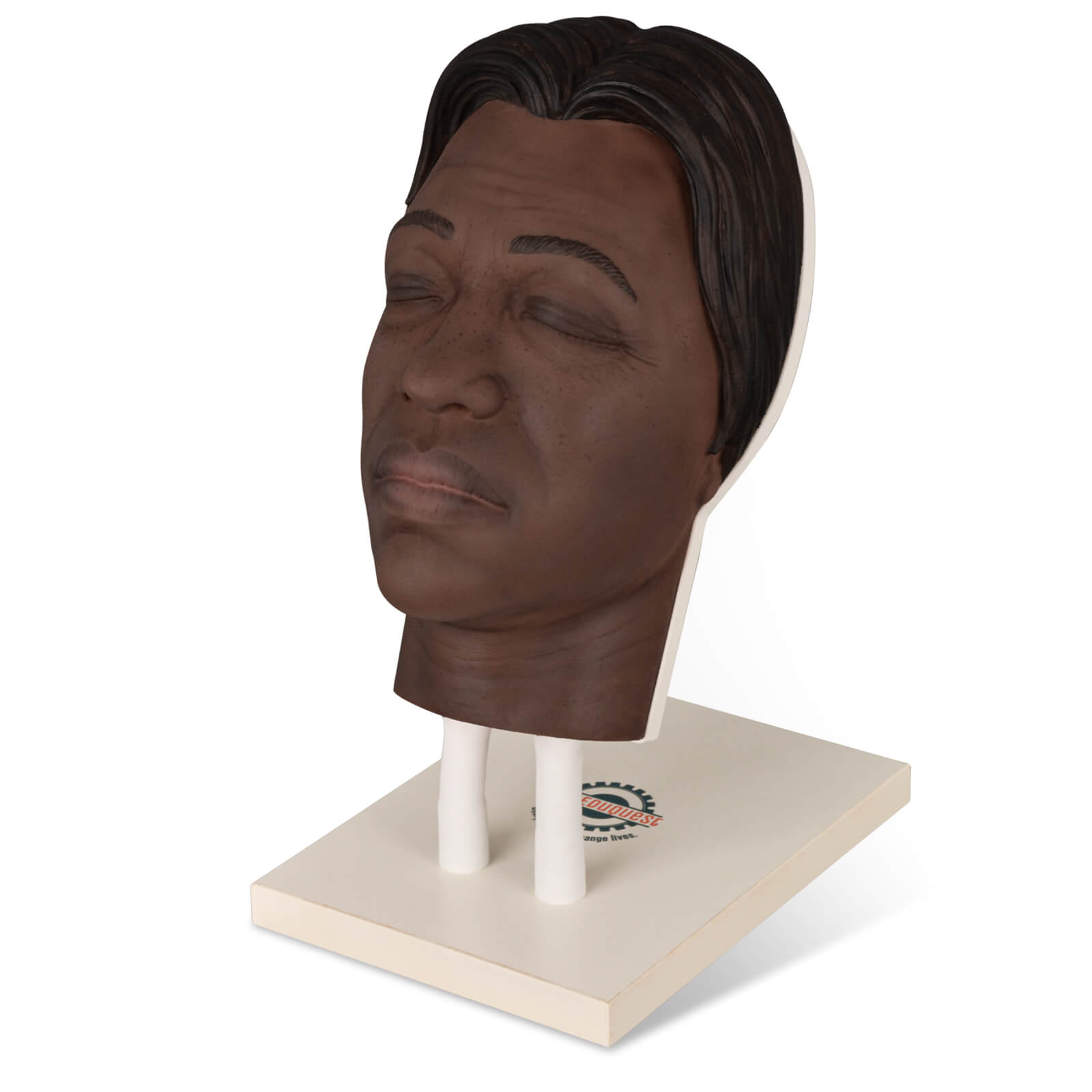
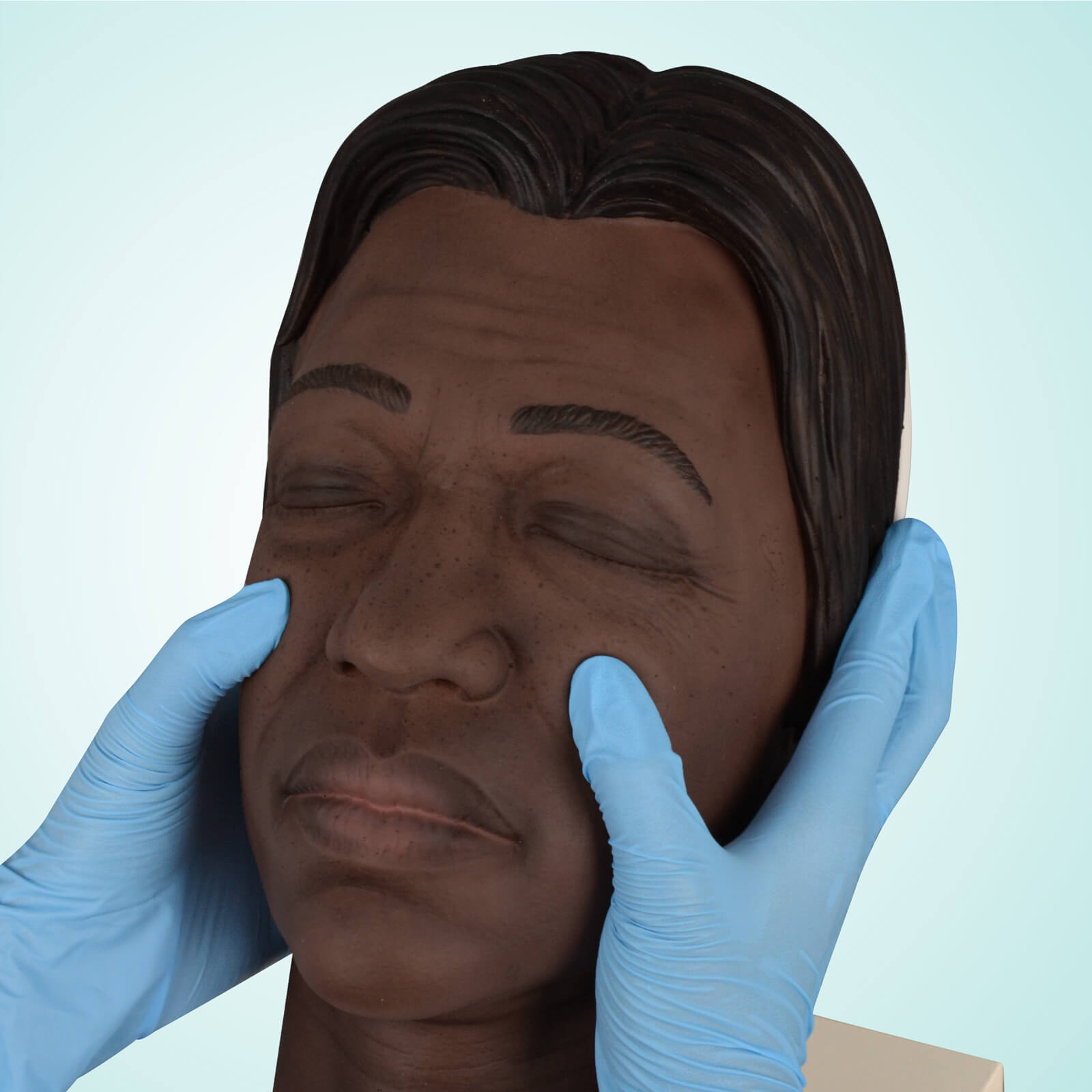
MedEduQuest provides a variety of facial injection mannequins, including transparent upper-face models with simulated blood vessels, ideal for practicing crow's feet injections safely and effectively.
Explore suitable models here:
👉 Facial Injection Manikins Collection
FAQ: Crow's Feet Botox Injection
Q1: Where do you inject for crow's feet?
Along the lateral orbital rim, targeting the orbicularis oculi fibers while avoiding eyelid muscles.
Q2: Which injection is best for crow's feet?
A multi-point approach spaced evenly along the lateral eye area provides natural, symmetrical results.
Q3: What are the landmarks for Botox crow's feet?
Lateral orbital rim, zygomatic arch, and mid-lateral eye area are primary landmarks.
Q4: Which muscle is injected for crow's feet?
The orbicularis oculi is the primary muscle responsible for crow’s feet.
Q5: How deep to inject Botox in crow's feet?
Generally superficial intramuscular or intradermal; avoid deeper injection to prevent eyelid complications.
Q6: Where to give Botox for crow's feet safely?
Stick to lateral points, maintain proper spacing, and avoid diffusion toward eyelid elevators.
.jpeg?w=1500&h=1500)
.jpeg?w=1500&h=1500)
.jpeg?w=1600&h=1600)
.jpeg?w=1600&h=1600)