The newborn heel stick test is one of the most commonly performed procedures in neonatal care. Also known as a heel prick test or newborn blood spot screening, it is used to collect capillary blood samples for early detection of metabolic, genetic, and endocrine disorders. Because newborn anatomy is delicate and blood collection requires precise technique, healthcare learners often need repeated practice before performing the procedure in real clinical settings.
In this guide, we'll cover:
- What a newborn heel stick test is
- Why blood spot collection matters
- Step-by-step heel stick procedures
- Common mistakes during collection
- Why simulation training improves learning outcomes
What Is a Newborn Heel Stick Test?
A newborn heel stick test, also known as a heel prick test or newborn blood spot screening, involves collecting capillary blood from an infant's heel. The procedure is commonly performed within the first days after birth to screen for metabolic and genetic disorders including PKU and other conditions.
Why Is Heel Stick Blood Collection Important?
Newborn blood spot collection plays a critical role in preventive pediatric care. Many congenital disorders show few visible signs during the first days of life. Early screening allows providers to identify conditions before irreversible complications occur.
Benefits of newborn heel stick testing include:
- Early disease detection
- Faster medical intervention
- Standardized newborn screening workflows
- Improved long-term health outcomes
- Better support for neonatal care programs
For nursing students and pediatric trainees, learning the correct heel stick technique is also an important clinical competency.
Step-by-Step Newborn Heel Stick Procedure
A successful heel stick procedure requires proper preparation and careful handling. Below is a simplified overview commonly used in training and educational settings.
Step 1: Identify the Correct Puncture Site
Select the recommended puncture area on the medial or lateral plantar surface of the heel.
Avoid:
- Center of the heel
- Posterior curvature area
- Areas with bruising or skin irritation
Correct site selection helps reduce injury risk and improve blood collection.
Step 2: Prepare and Clean the Skin
Clean the selected area using approved antiseptic procedures and allow it to dry completely.
Proper preparation helps reduce contamination and improves sample quality.
Step 3: Perform Heel Puncture
Use an appropriate safety lancet and perform the puncture according to institutional guidelines.
Proper puncture depth and positioning are essential for successful blood flow.
-1800x.webp?w=1000&h=1000)
Step 4: Encourage Blood Flow
After puncture, gentle pressure may help stimulate blood release.
Avoid excessive squeezing because it may:
- Cause hemolysis
- Dilute specimens with tissue fluid
- Affect sample quality
-1800x.webp?w=1600&h=1600)
Step 5: Collect Blood Spot Samples
Allow blood droplets to form naturally and apply them onto filter paper according to collection standards.
Adequate blood saturation improves laboratory analysis accuracy.
Step 6: Complete Post-Procedure Care
Apply appropriate post-procedure care and document the procedure according to institutional protocols.
Common Heel Stick Mistakes
Heel stick procedures may appear simple, but beginners frequently encounter challenges that affect sample quality and procedural accuracy.
Common errors include:
1. Incorrect puncture site selection
Poor site selection increases procedural difficulty and may increase patient risk.
2. Excessive squeezing
Applying too much pressure can alter blood composition and reduce specimen quality.
3. Inadequate blood spot formation
Insufficient sample saturation may require repeat collection.
4. Improper lancet placement
Incorrect positioning can lead to ineffective punctures and poor blood flow.
5. Incomplete procedural workflow
Some learners focus only on puncture technique while overlooking preparation and blood collection steps.
Because of these challenges, repeated practice before clinical placement is highly beneficial.
Why Simulation Matters in Heel Stick Training
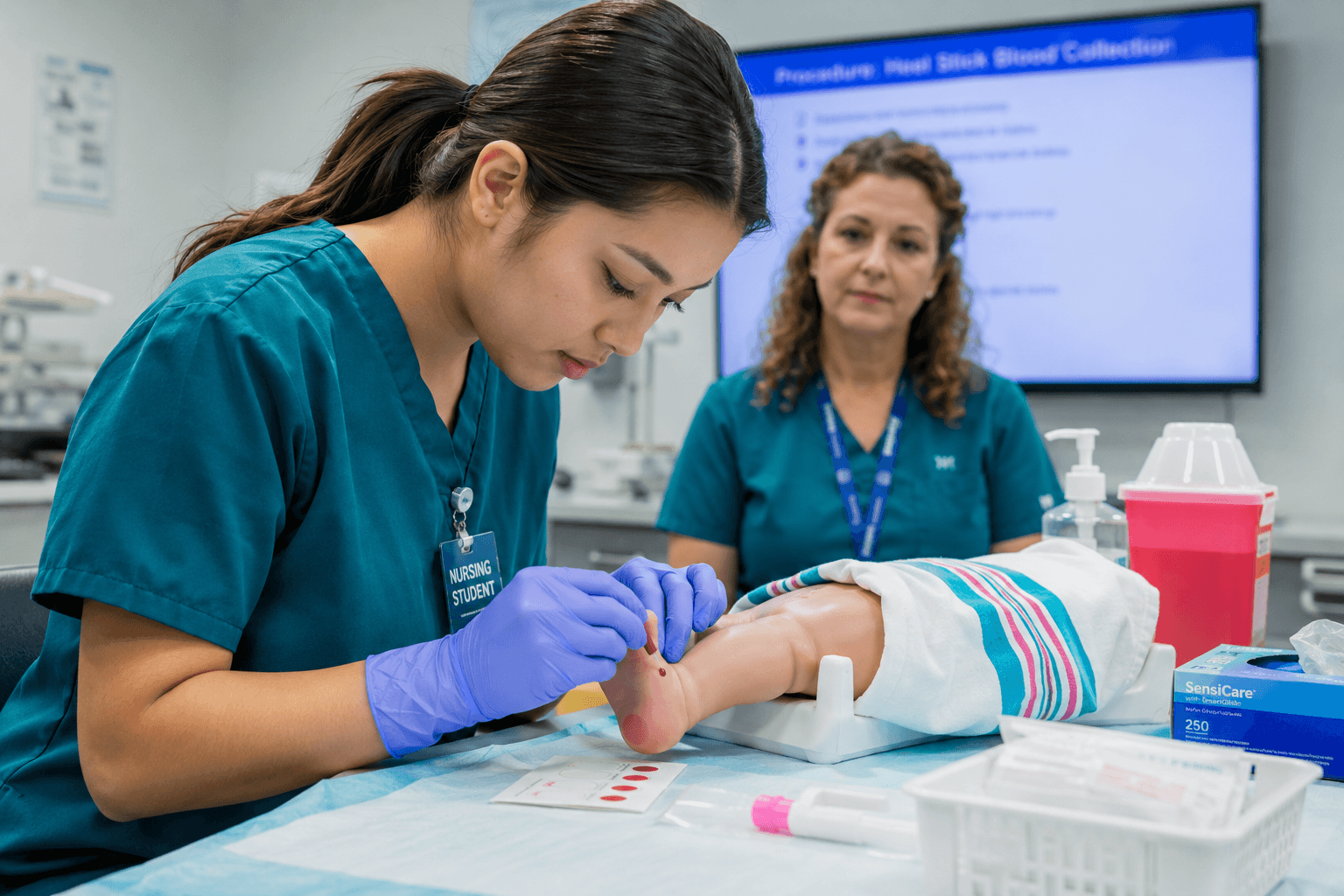
Learning neonatal blood collection directly on patients can be stressful for both learners and infants. Simulation-based education provides opportunities for repeated practice in controlled environments.
Many nursing schools and healthcare programs now incorporate infant heel simulators into neonatal skills training.
Simulation-based practice offers several advantages:
- Repeated hands-on training
- Safe learning without patient risk
- Complete procedural workflow practice
- Improved confidence before clinical placement
- Standardized skills assessment
Instead of learning only through observation, students can actively practice and refine technique.
Recommended Infant Heel Stick Training Tool
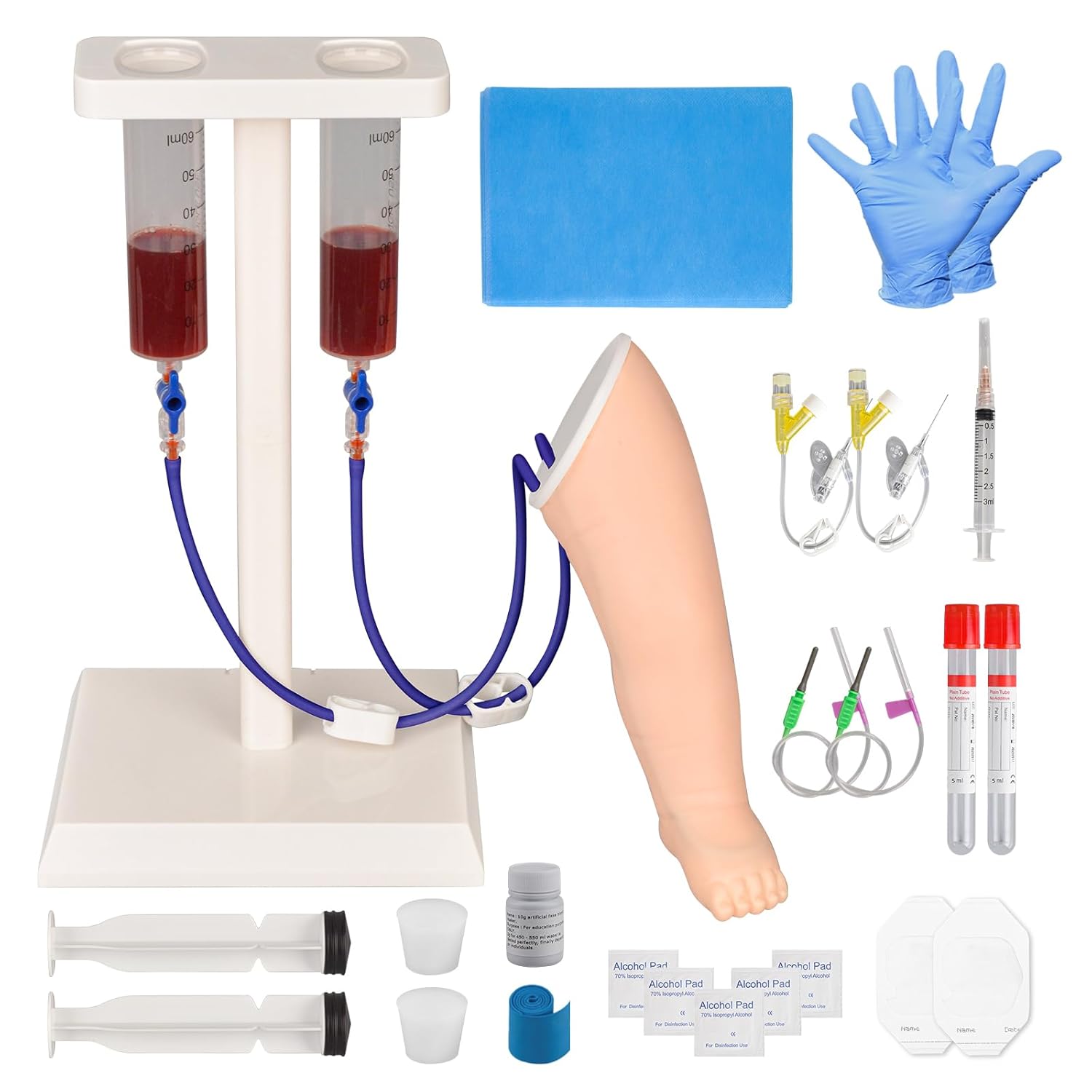
For educators and healthcare programs seeking a realistic neonatal blood collection trainer, our Infant Heel Stick Simulator supports repeated practice of complete heel stick workflows.
It is designed for:
✔ Newborn heel stick procedures
✔ Blood spot collection training
✔ Simulated capillary blood flow practice
✔ Neonatal screening education
✔ Nursing skills labs and OSCE stations
The simulator features realistic infant heel anatomy and a refillable blood reservoir that helps learners understand procedural steps before entering real clinical settings.
Frequently Asked Questions
Q1: What is the difference between heel stick and heel prick?
Heel stick and heel prick are commonly used interchangeably. Heel stick is more frequently used in nursing education and clinical training, while heel prick is often used in patient-facing communication.
Q2: Where should a newborn heel stick be performed?
The puncture should be performed on the medial or lateral plantar surface of the heel while avoiding the central area.
Q3: Why are newborn blood spots collected?
Blood spots help detect metabolic and genetic disorders during newborn screening programs.
Q4: Can students practice heel stick procedures before clinical placement?
Yes. Infant heel simulators allow learners to practice blood collection procedures repeatedly in controlled educational environments.
Q5: What is an infant heel simulator?
An infant heel simulator is a training model designed for practicing neonatal heel stick procedures and blood spot collection.
.jpeg?w=1500&h=1500)
.jpeg?w=1600&h=1600)
.jpeg?w=1500&h=1500)
.jpeg?w=1600&h=1600)
.jpeg?w=1600&h=1600)
.jpeg?w=1600&h=1600)
.jpeg?w=1600&h=1600)
.jpeg?w=1600&h=1600)
.jpeg?w=1600&h=1600)
.jpeg?w=1600&h=1600)
.jpg?w=1600&h=1600)
.jpg?w=1600&h=1600)
.jpg?w=1600&h=1600)
.jpg?w=1600&h=1600)
.jpg?w=1600&h=1600)
.jpg?w=1600&h=1600)
.jpg?w=1000&h=1000)
.jpg?w=1000&h=1000)
.jpeg?w=1500&h=1500)



.jpg?w=1500&h=1500)
.jpg?w=1600&h=1600)
.jpg?w=1600&h=1600)
.jpg?w=1600&h=1600)
.jpeg?w=1600&h=1600)
.jpg?w=1600&h=1600)
.jpg?w=1600&h=1600)