
Choosing a urinary catheterization trainer starts with your training requirements, not the product name. The right model depends on who you are training, which anatomy you need, and how much hands-on functionality learners require.
For a nursing school, skills lab, hospital education program, or simulation center, consider these four questions:
- Are you training adults, infants, or geriatric patients?
- Do you need male, female, or both anatomies?
- Do learners need anatomy demonstration, catheter insertion practice, or functional simulation?
- Will the model be used by one learner at a time or by a larger group?
Once these requirements are clear, you can narrow down the right type of trainer.
1. Choose the Patient Population First
The first decision is the patient population your learners need to represent.
Adult Catheterization
For routine adult catheterization training, you can choose from male, female, or combined male and female models.
If your curriculum covers both anatomies, a male and female set or interchangeable simulator may be more practical than purchasing only one type.
Infant Catheterization
If you teach pediatric or neonatal nursing, choose an infant-specific trainer rather than relying on an adult model.
MedEduQuest offers:
- Infant Male Catheterization Trainer
- Infant Female Catheterization Trainer
- Infant Male & Female Urinary Catheterization Trainer
These options allow programs to match the trainer to the patient population being taught.
Geriatric Female Catheterization
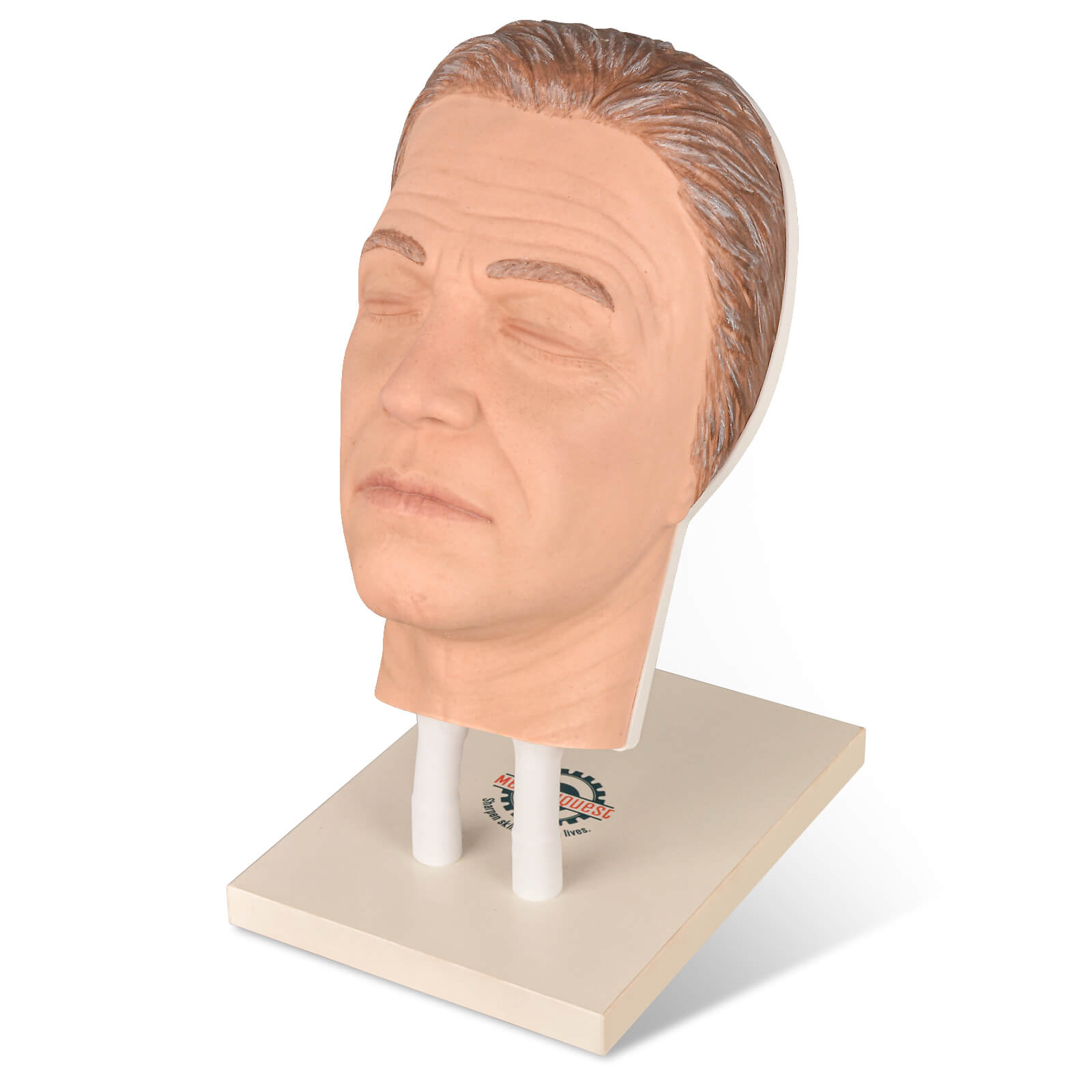
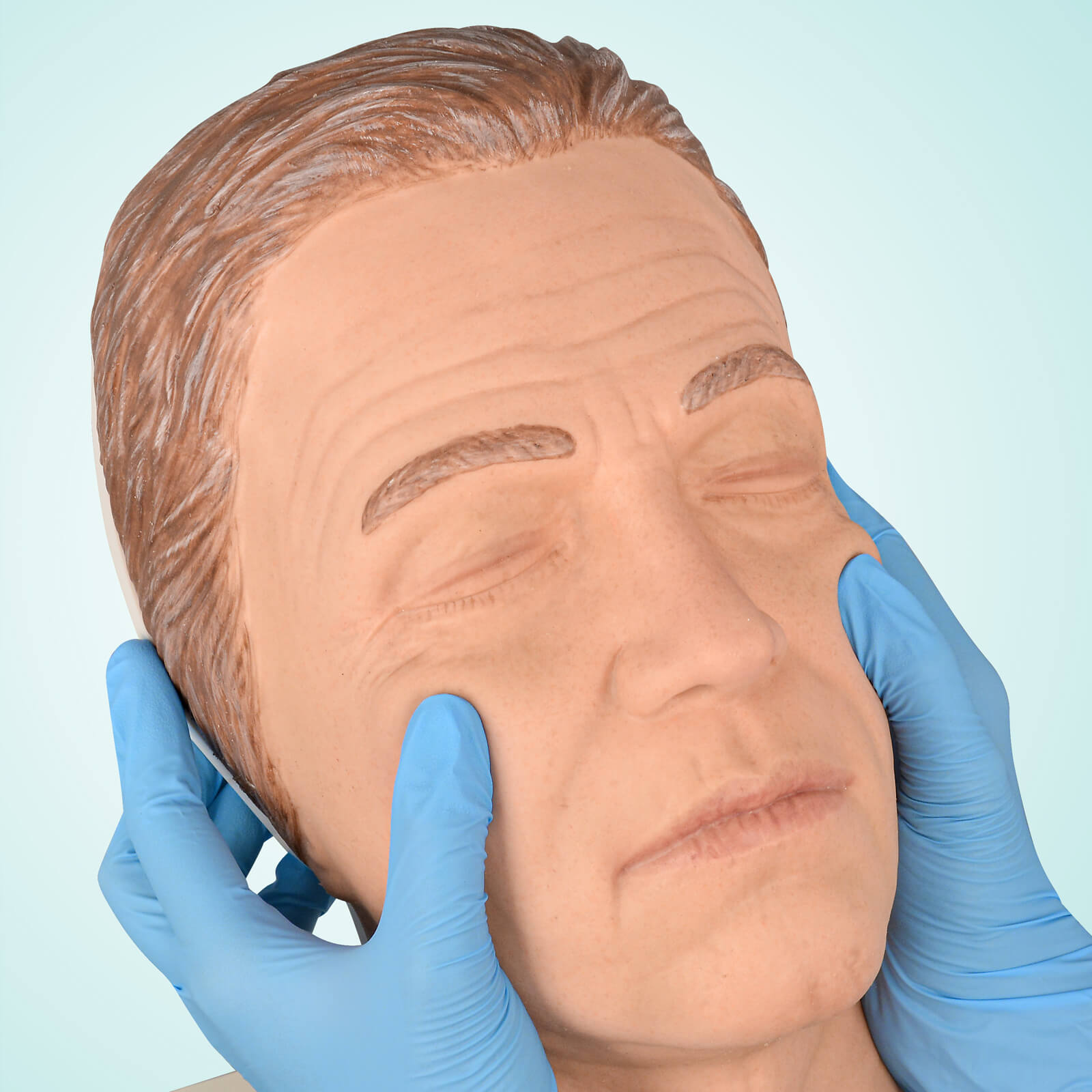
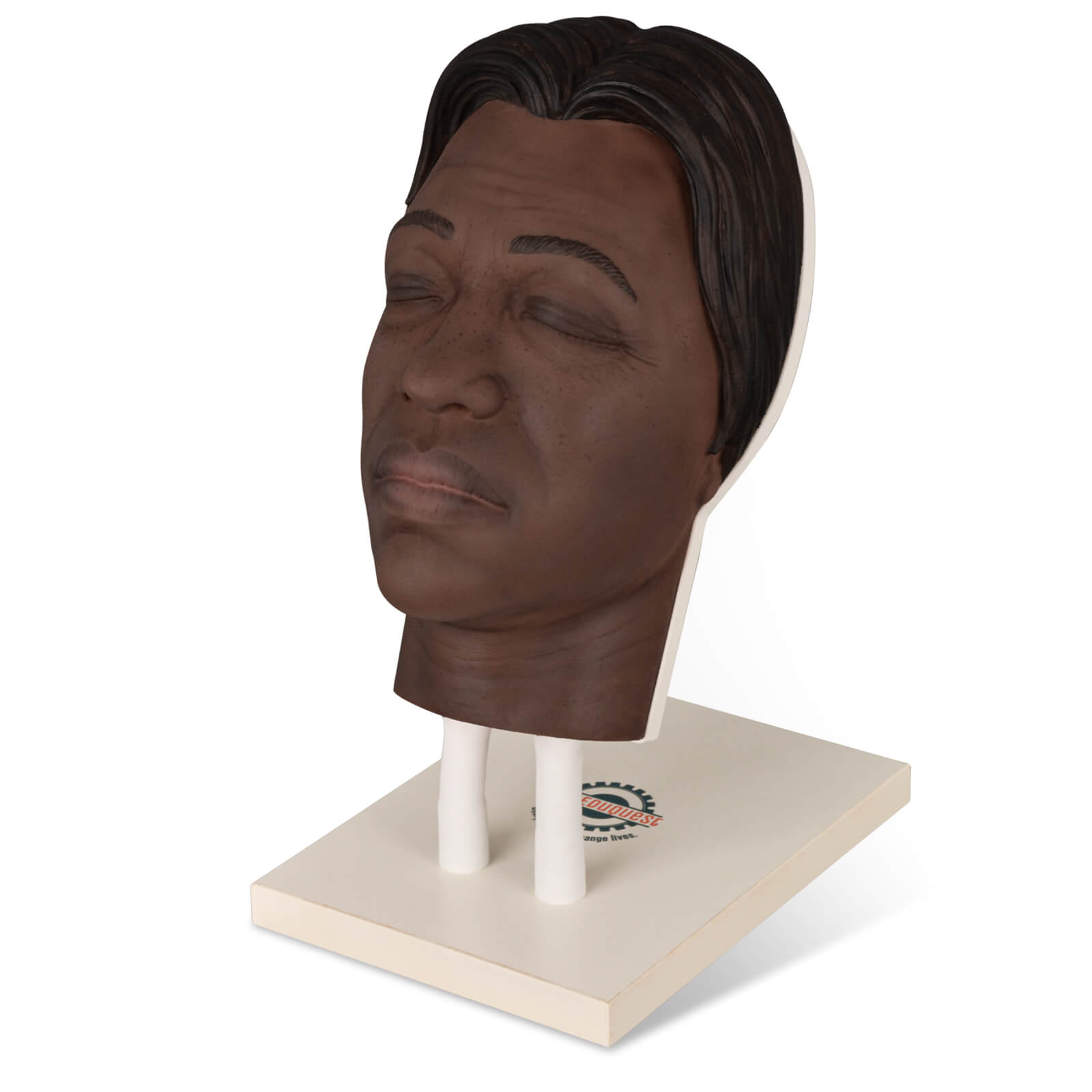
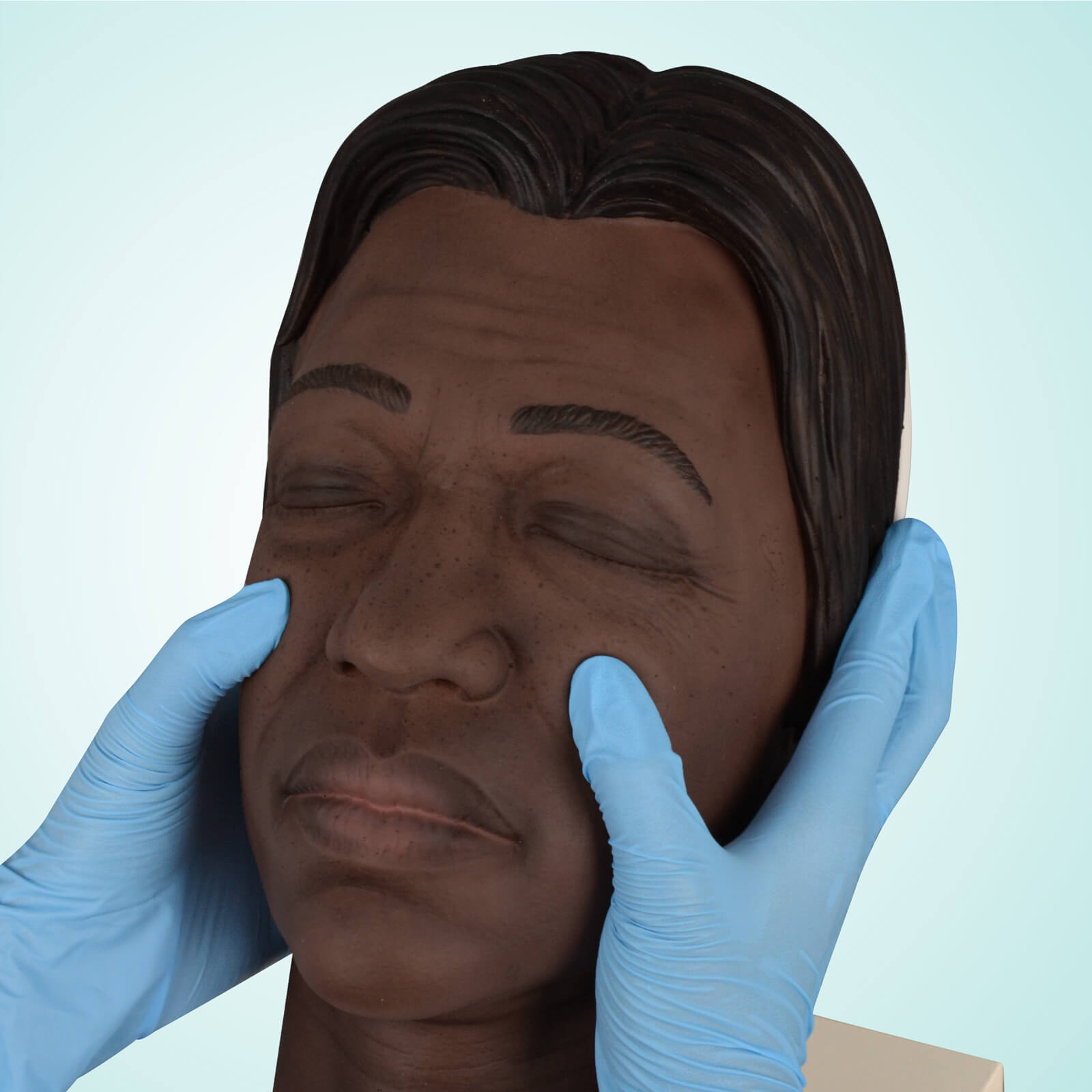
For geriatric nursing education, a dedicated female trainer can provide more relevant practice than a standard adult female model.
The Geriatric Female Catheterization Trainer is designed around anatomical changes associated with older female patients, making it a useful option when geriatric catheterization is part of the curriculum.
2. Decide How Much Hands-On Practice You Need
Not every catheterization trainer is designed for the same level of practice.
Anatomy and Visual Teaching
If your main objective is to teach urinary anatomy, identify structures, and demonstrate the catheter pathway, an anatomy model may be enough.
Choose this type when you need:
- Classroom demonstration
- Anatomical identification
- Catheter pathway visualization
- Male or female anatomy teaching
- A compact model for instructor-led instruction
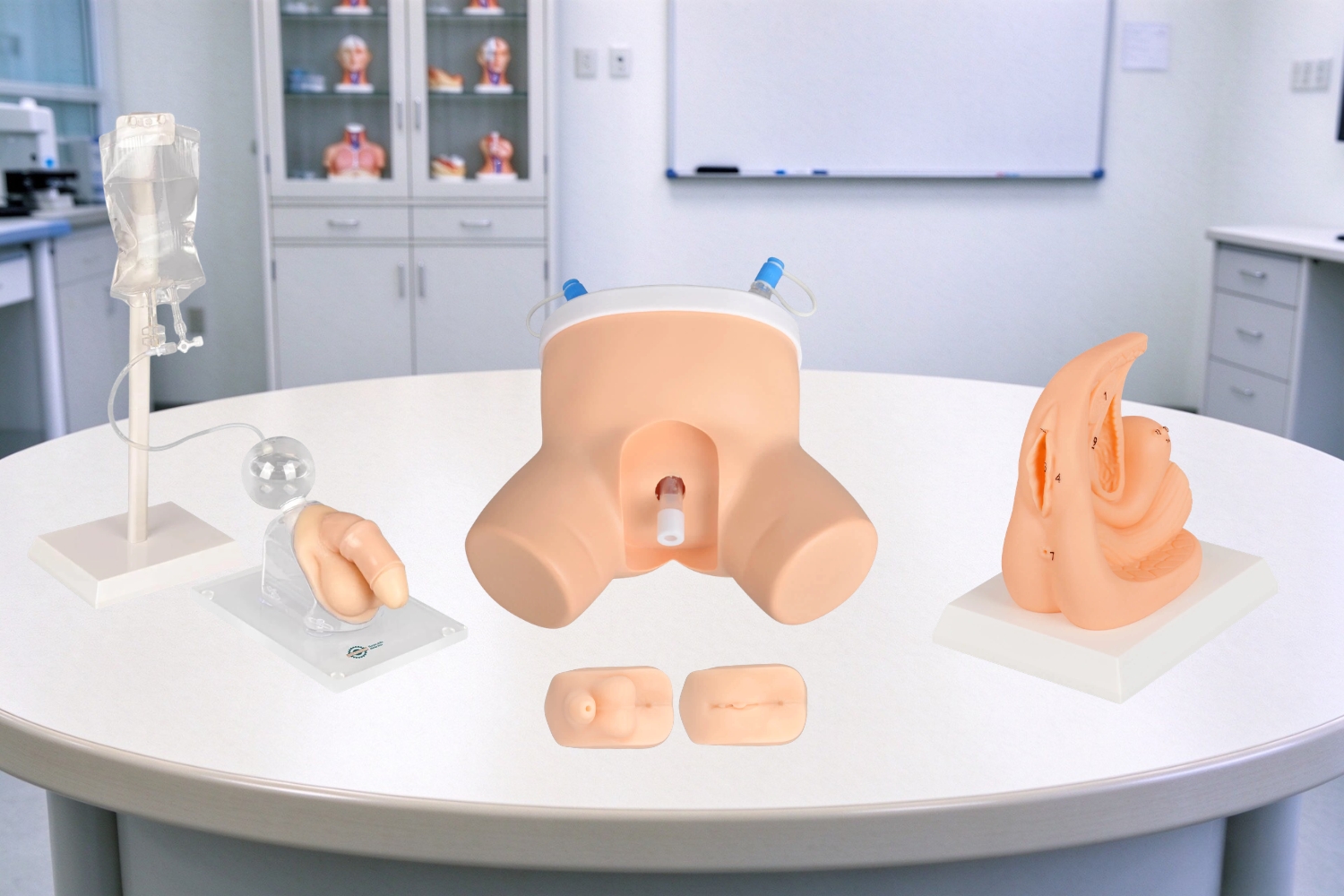
MedEduQuest offers male and female catheterization models with labeled structures, as well as a male and female training model set. The collection also includes models designed for visual catheter insertion practice.
Catheter Insertion Practice
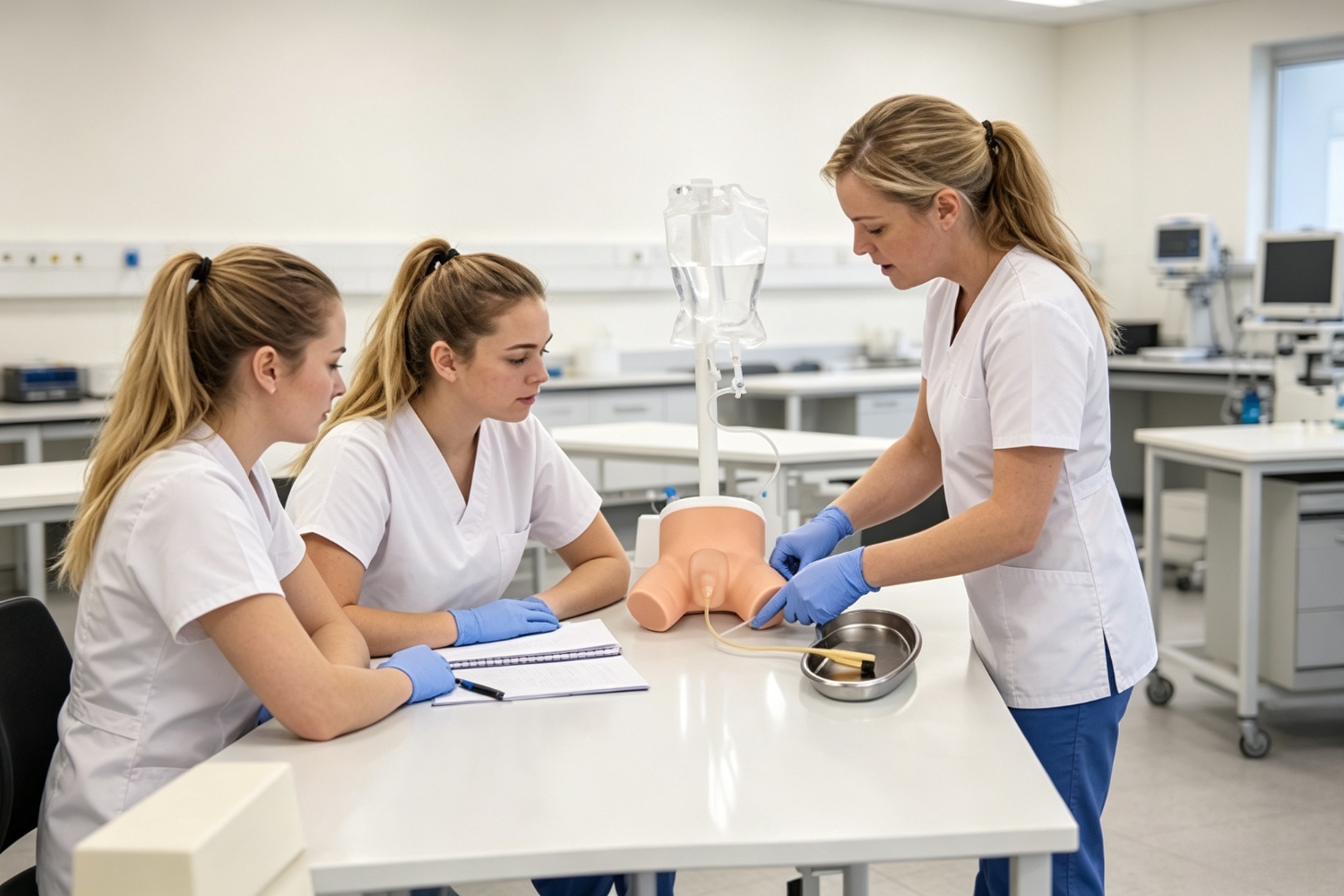
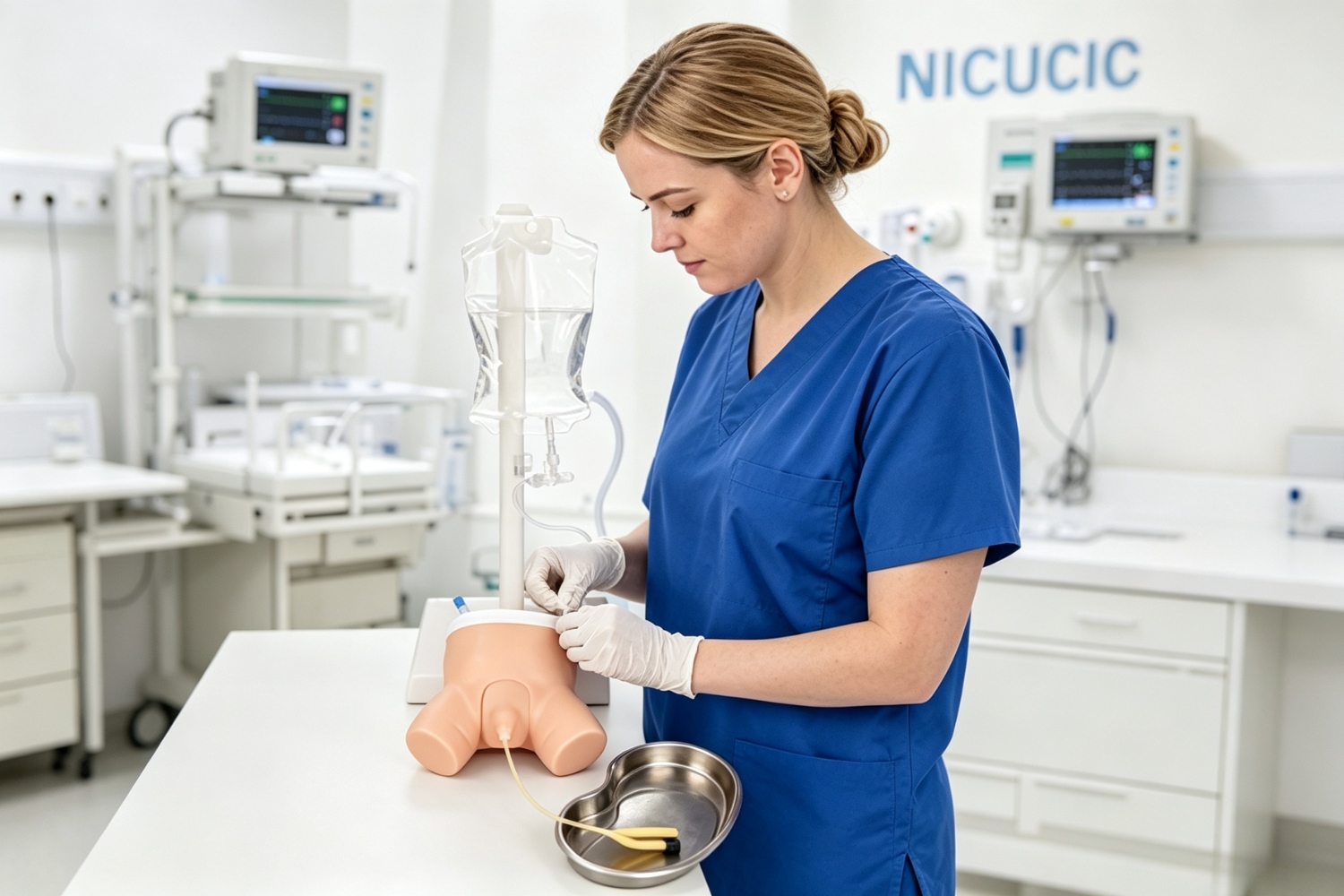
If students need to repeatedly perform catheter insertion, choose an insertion trainer rather than an anatomy-only model.
Look for:
- Realistic catheter insertion
- Clear anatomical landmarks
- Catheter positioning
- Appropriate tactile resistance
- Easy setup for repeated practice
MedEduQuest offers male, female, and combined silicone insertion trainer options.
Functional Catheterization Practice
If learners need visible feedback during the procedure, choose a trainer with functional features.
For example, the Male Urethral Catheterization Training Kit has a transparent base that allows learners to observe catheter placement, balloon inflation, and simulated urine flow. Its flexible silicone anatomy is designed for repeated hands-on practice.
3. Choose Male, Female, or Both
Your curriculum should determine whether you need one anatomy or both.
Male Only
A dedicated male trainer is suitable when male urethral catheterization is the primary training objective.
This can be a practical choice when:
- The course teaches male catheterization separately
- Learners need focused hands-on practice
- You do not need female anatomy
Female Only
A female trainer is appropriate when the program focuses specifically on female catheterization.
A dedicated female model may also make sense when multiple students need to practice the same procedure at the same time.
Male and Female
If learners need both procedures, compare separate trainers with a combined model.
Separate male and female trainers can work well when several learners need simultaneous practice.
Combined or interchangeable models can reduce equipment requirements when the same learners need both anatomies.
The Male & Female Urinary Catheterization Simulator uses interchangeable male and female inserts, allowing both adult anatomies to be taught on one simulator. It also provides visible urine return and supports suprapubic bladder puncture and suprapubic catheter care.
4. Match the Trainer to the Training Environment
Your training setting can help determine how much functionality you actually need.
| Training environment | What to prioritize | Suitable options |
| Nursing classroom | Anatomy, visual demonstration, portability | Anatomy or visual models |
| Nursing skills lab | Repeated insertion practice, durability, feedback | Insertion or functional trainers |
| Simulation center | Multiple procedures, broader functionality | Full simulator |
| Hospital education | Relevant patient populations, repeated use, flexible training | Functional or specialized trainers |
For larger classes, also consider the learner-to-trainer ratio. Several simpler trainers may provide more hands-on practice than one advanced simulator shared among many students.
5. Compare Functionality Before You Buy
The word "trainer" does not tell you exactly what a model can do. Compare the actual features that your curriculum requires.
| Training need | Anatomy model | Insertion trainer | Functional trainer | Full simulator |
| Anatomy teaching | ✓ | ✓ | ✓ | ✓ |
| Catheter pathway demonstration | ✓ | ✓ | ✓ | ✓ |
| Catheter insertion | Model-dependent | ✓ | ✓ | ✓ |
| Catheter positioning | Model-dependent | ✓ | ✓ | ✓ |
| Visual placement feedback | Model-dependent | Model-dependent | ✓ | ✓ |
| Simulated urine return | Usually no | Model-dependent | Model-dependent | ✓ |
| Balloon inflation | Model-dependent | Model-dependent | Model-dependent | Model-dependent |
| Drainage practice | Usually no | Usually no | Model-dependent | ✓ |
| Male & female training | Set-dependent | Set-dependent | Usually single anatomy | ✓ |
| Suprapubic procedures | No | No | Usually no | ✓ |
The exact capabilities vary by model, so always check the individual product specifications before purchasing.
6. Think About Class Size and Usage
For institutional buyers, the number of learners matters almost as much as the model's features.
If a class has many students practicing at the same time, consider:
- How many learners need hands-on practice per session
- How frequently the trainer will be used
- Whether several students can share one model efficiently
- Storage and setup requirements
- Replacement components
- Cleaning and maintenance
For example, a nursing program may use several insertion trainers for routine skills practice and reserve a multifunctional simulator for advanced training or assessment.
7. A Quick Buying Guide
Use your primary training objective as the starting point:
You mainly teach urinary anatomy and catheter pathways
→ Choose an male & female anatomy or visual teaching model.
You need students to practice catheter insertion
→ Choose a male, female, or combined insertion trainer.
You need visible feedback during catheterization
→ Choose a functional trainer with the required feedback features.
You teach both male and female adult catheterization
→ Consider separate trainers or an interchangeable male and female model.
You teach infant catheterization
→ Choose an infant catheterization trainer.
You teach geriatric female catheterization
→ Consider a geriatric female catheterization trainer.
You need multiple adult catheterization and suprapubic procedures
→ Consider a full male and female urinary catheterization simulator.
What to Check Before Ordering
Before choosing a model, confirm:
- Patient population: adult, infant, or geriatric
- Anatomy: male, female, or both
- Practice level: visual demonstration, insertion, or functional simulation
- Feedback: catheter placement, urine return, or other indicators
- Procedures: balloon inflation, drainage, securement, or suprapubic skills
- Class size: number of learners using the models
- Usage: occasional demonstration or frequent skills-lab practice
- Maintenance: cleaning, replacement parts, and storage
The goal is not to buy the model with the most features. It is to choose a trainer that covers the skills your learners actually need to practice.
Explore Urinary Catheterization Trainers
MedEduQuest offers catheterization models for adult, infant, and geriatric training, with options ranging from labeled anatomy models and insertion trainers to functional trainers and a multifunctional male and female simulator.
View All Urinary Catheterization Trainers
For nursing schools, simulation centers, hospitals, and other institutional buyers, contact MedEduQuest if you need help comparing models or planning a bulk purchase.
.jpeg?w=1500&h=1500)
.jpeg?w=1600&h=1600)
.jpeg?w=1500&h=1500)
.jpeg?w=1600&h=1600)
.jpg?w=1600&h=1600)
.jpg?w=1600&h=1600)
.jpg?w=1600&h=1600)
.jpg?w=1600&h=1600)
.jpg?w=1500&h=1500)
.jpg?w=1500&h=1500)
.jpg?w=1600&h=1600)
-0.jpg?w=1500&h=1500)
.jpeg?w=1600&h=1600)
.jpeg?w=1600&h=1600)
.jpeg?w=1600&h=1600)
.jpeg?w=1600&h=1600)
.jpeg?w=1600&h=1600)
.jpeg?w=1600&h=1600)
.jpg?w=1600&h=1600)
.jpg?w=1600&h=1600)
.jpg?w=1000&h=1000)
.jpg?w=1000&h=1000)


.jpeg?w=1500&h=1500)
.jpeg?w=1500&h=1500)

.jpeg?w=1600&h=1600)
.jpeg?w=1600&h=1600)
.jpg?w=1600&h=1600)
.jpg?w=1600&h=1600)
.jpg?w=1500&h=1500)
.jpg?w=1500&h=1500)
.jpg?w=1500&h=1500)
.jpg?w=1500&h=1500)
.jpg?w=1500&h=1500)
.jpg?w=1500&h=1500)
.jpg?w=1500&h=1500)
.jpg?w=1500&h=1500)