
Gunshot wounds (GSWs) are among the most challenging trauma scenarios to manage. In training environments, gunshot wound packing is not about memorizing steps - it's about understanding why packing works, when it's indicated, and how to build correct decision-making through repeated simulation.
This guide focuses on training logic, not live patient instruction, and explains why structured practice with realistic trainers is essential for mastering wound packing in penetrating trauma.
Why Gunshot Wounds Require Specialized Packing Training
Unlike simple lacerations, a gunshot wound often creates:
- A deep, irregular wound channel
- Internal bleeding that is not visible externally
- Tissue cavitation and multiple bleeding points
These characteristics make GSWs ideal, but also demanding scenarios for wound packing training. Learners must practice identifying when packing is appropriate, how it works in combination with direct pressure or a tourniquet, and how to adapt to different wound anatomies.
Training on real patients is not an option. This is where simulation-based wound packing trainers become critical.
What is Gunshot Wound Packing (Training Perspective)
From a training standpoint, gunshot wound packing is about teaching learners to:
- Recognize life-threatening hemorrhage in penetrating trauma
- Understand how packing applies internal pressure at the bleeding source
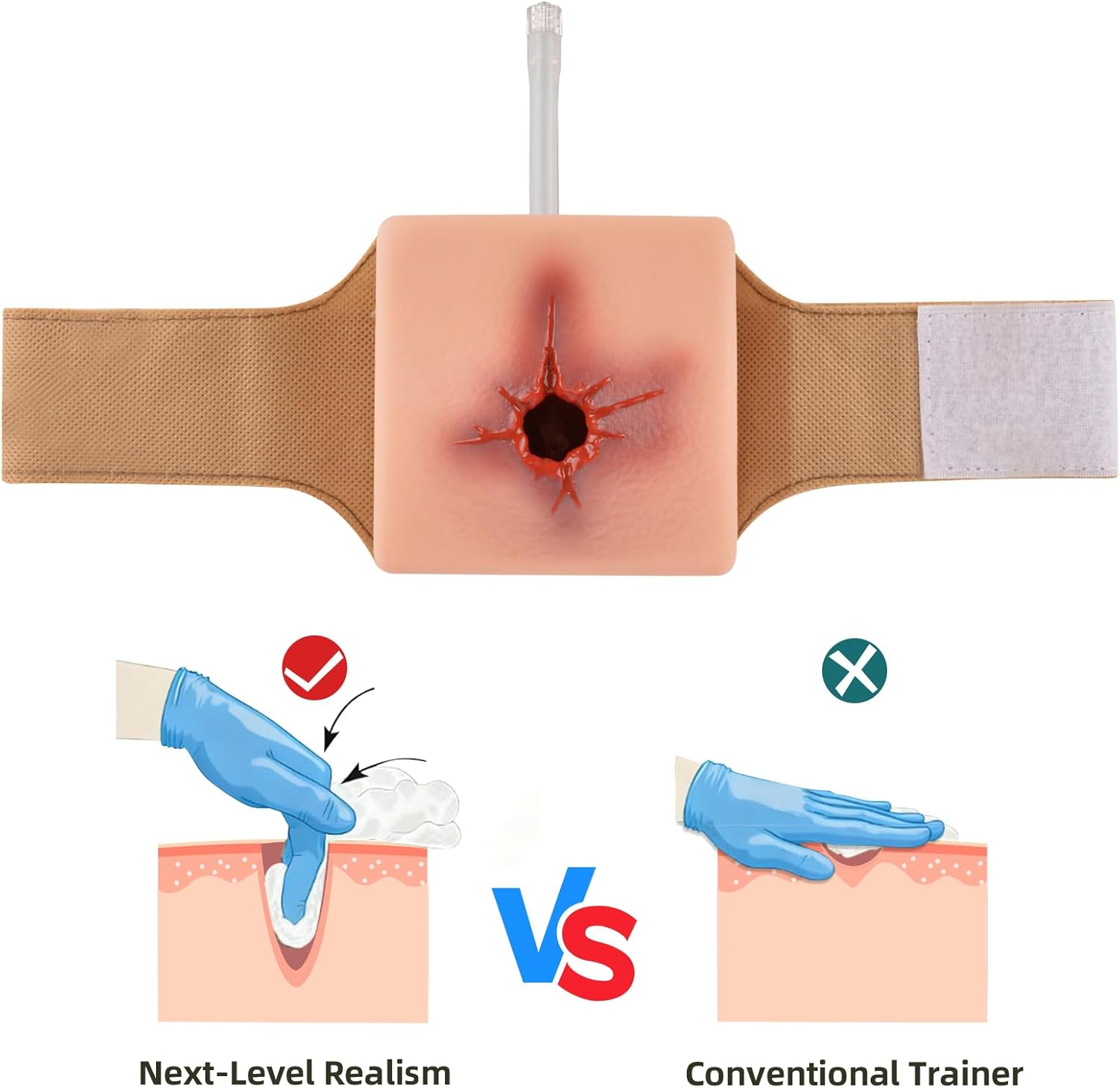
- Learn to fill a wound cavity effectively, not just cover the surface
- Coordinate packing with other bleed control methods
It is not about speed alone. It is about controlled, deliberate technique reinforced through repetition.
Step-by-Step: The Training Logic Behind Gunshot Wound Packing
⚠️ This section explains training flow and decision-making, not real-world medical instructions.
Step 1: Scene & Wound Assessment (Training Focus)
In training, learners must first determine:
- Is this a penetrating wound with a deep cavity?
- Is bleeding severe and not controllable with surface pressure alone?
- Is the wound in a location where a tourniquet may or may not be effective?
This decision-making process is the foundation of competent trauma care.
Step 2: Understanding the Wound Channel
Gunshot wounds are rarely straight or shallow.
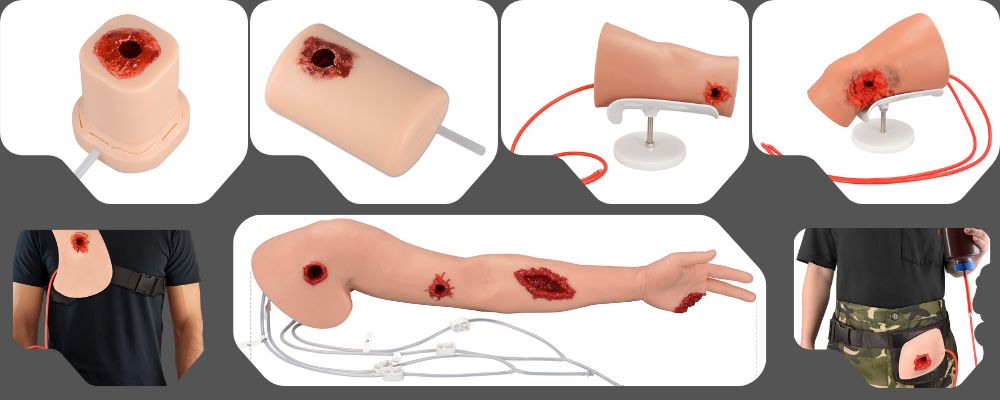
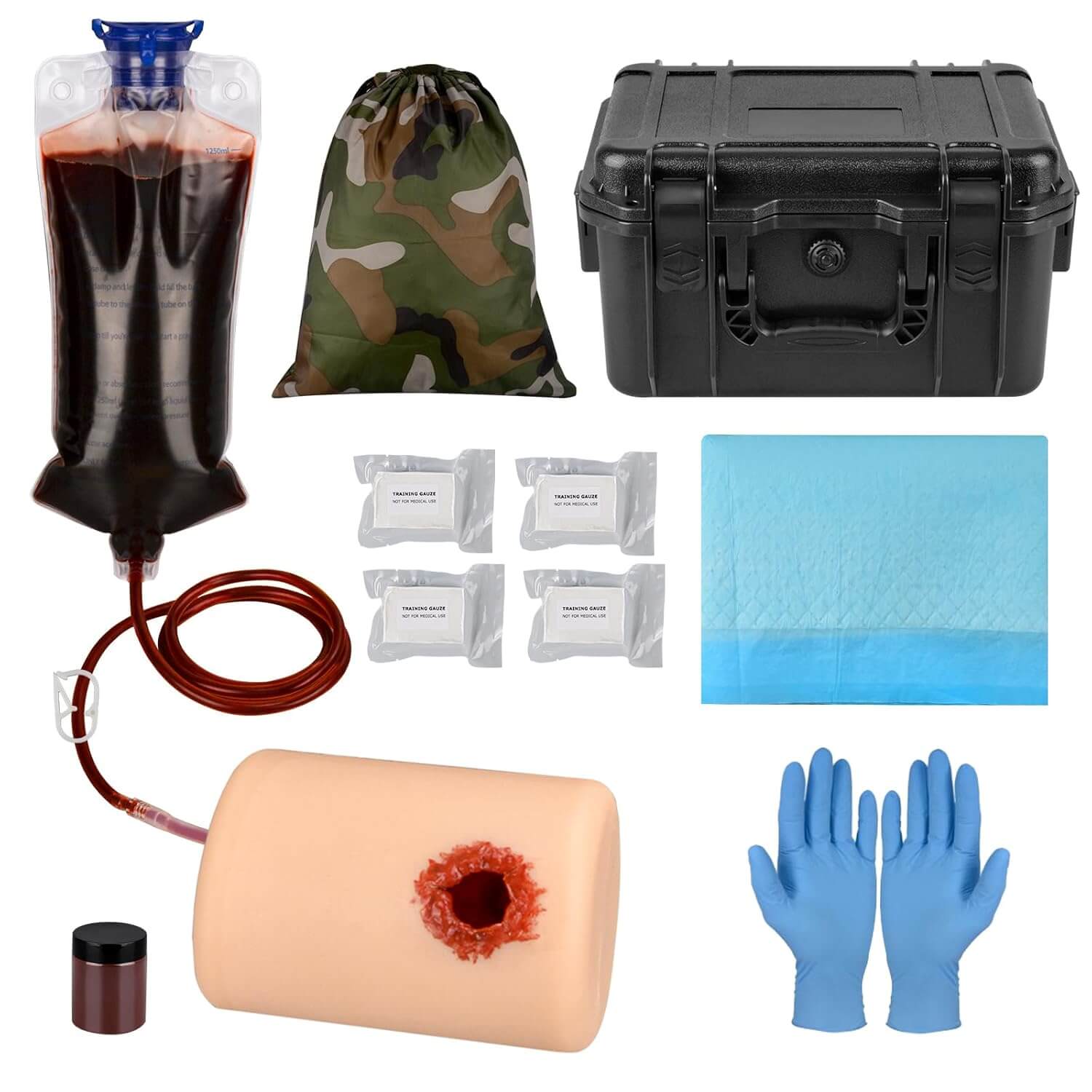
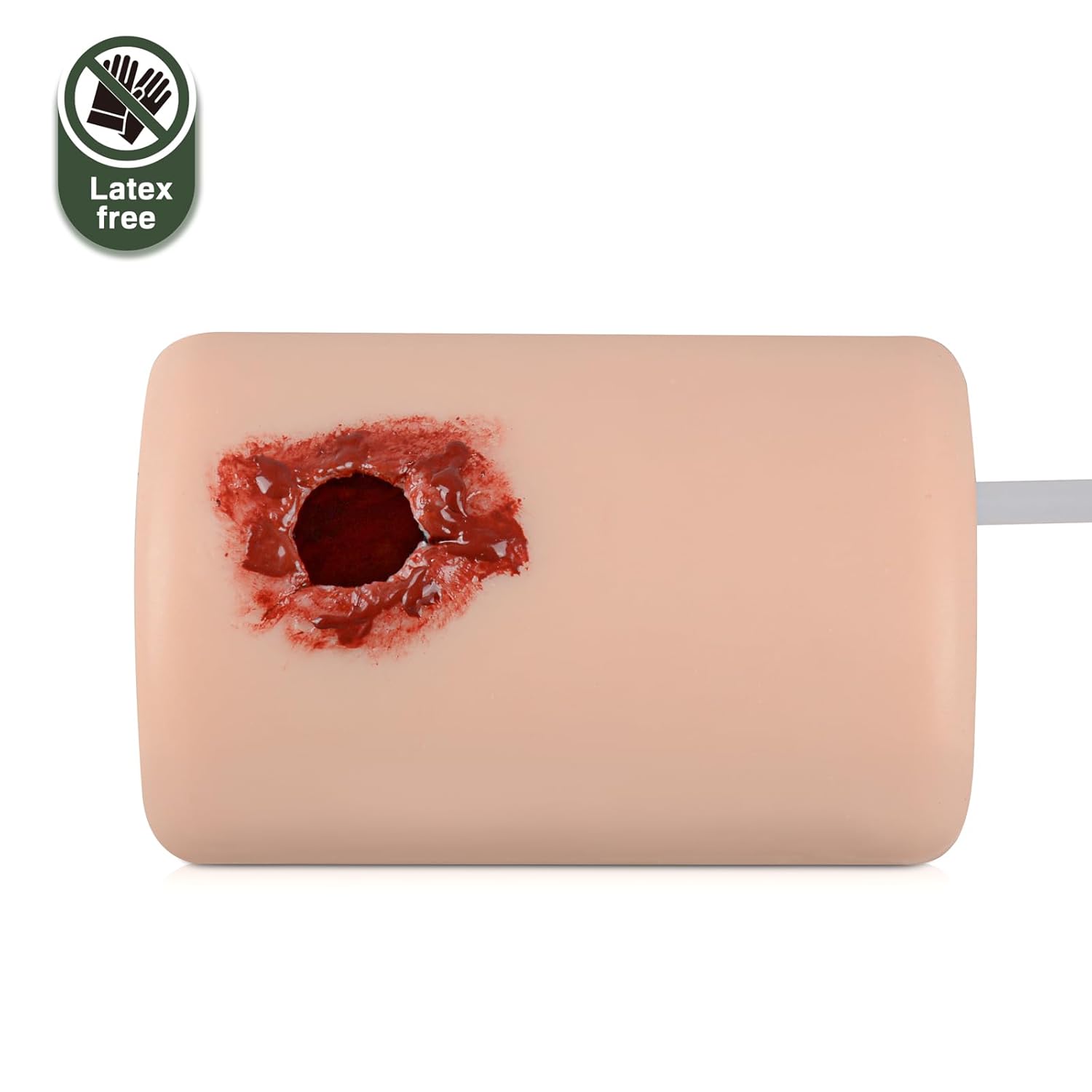
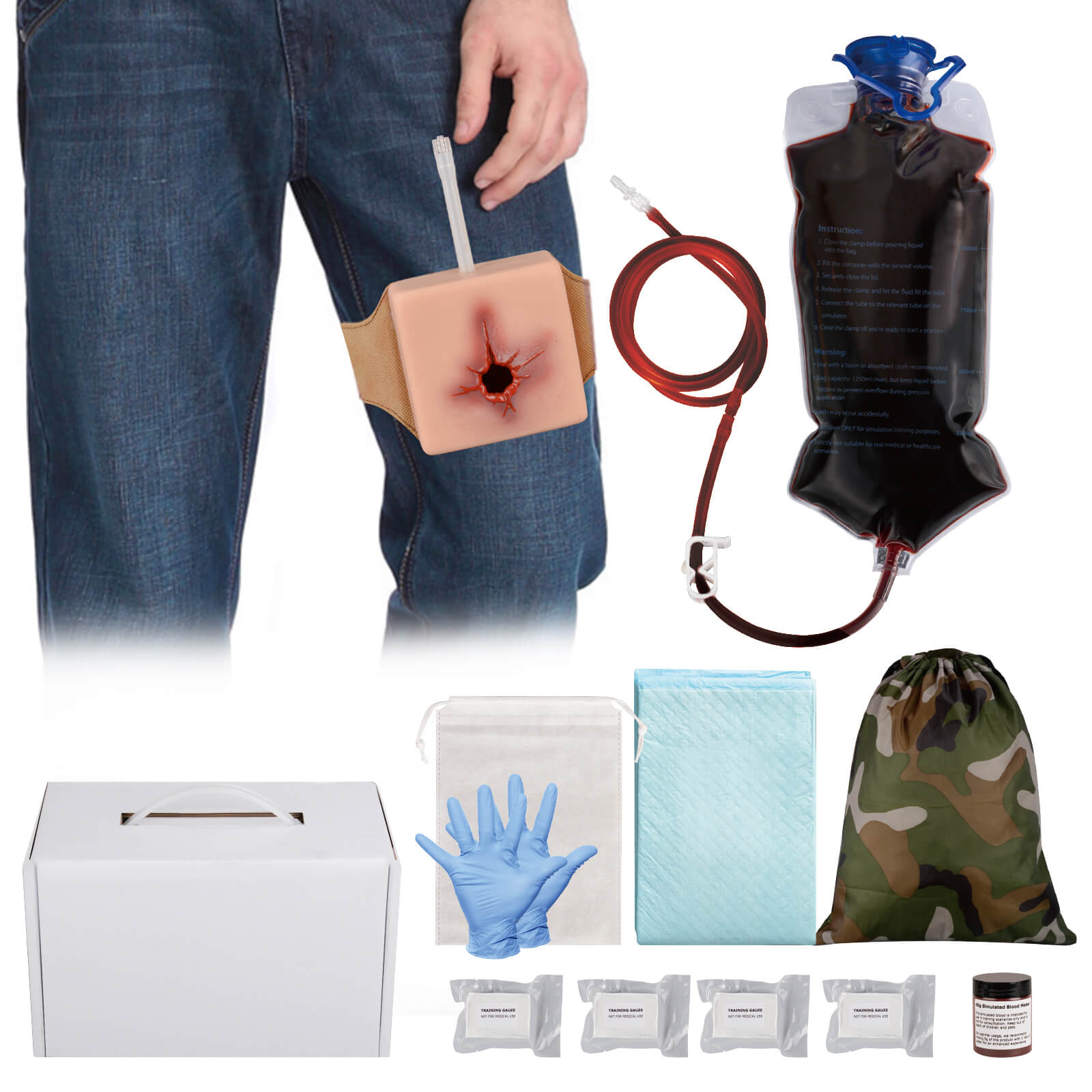
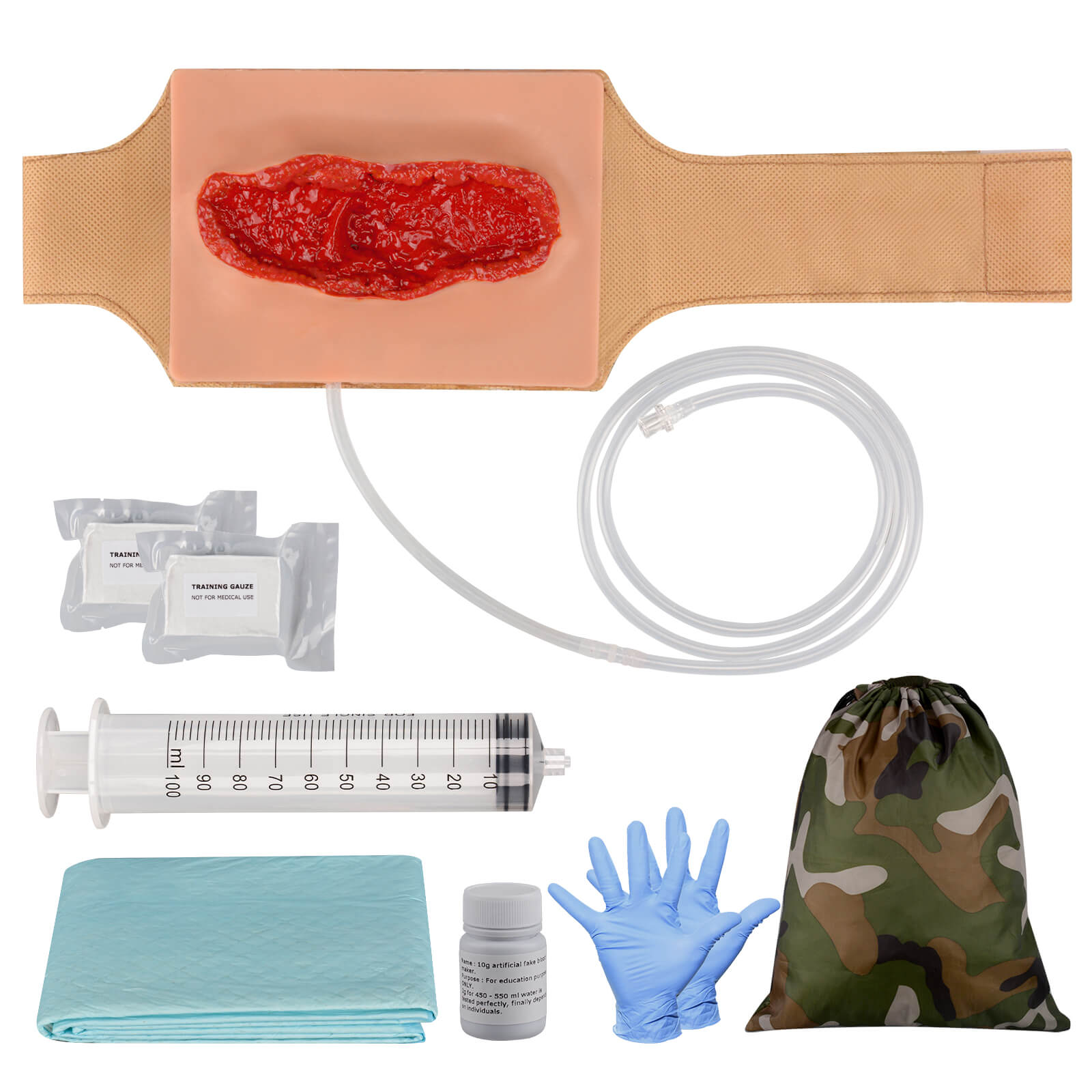
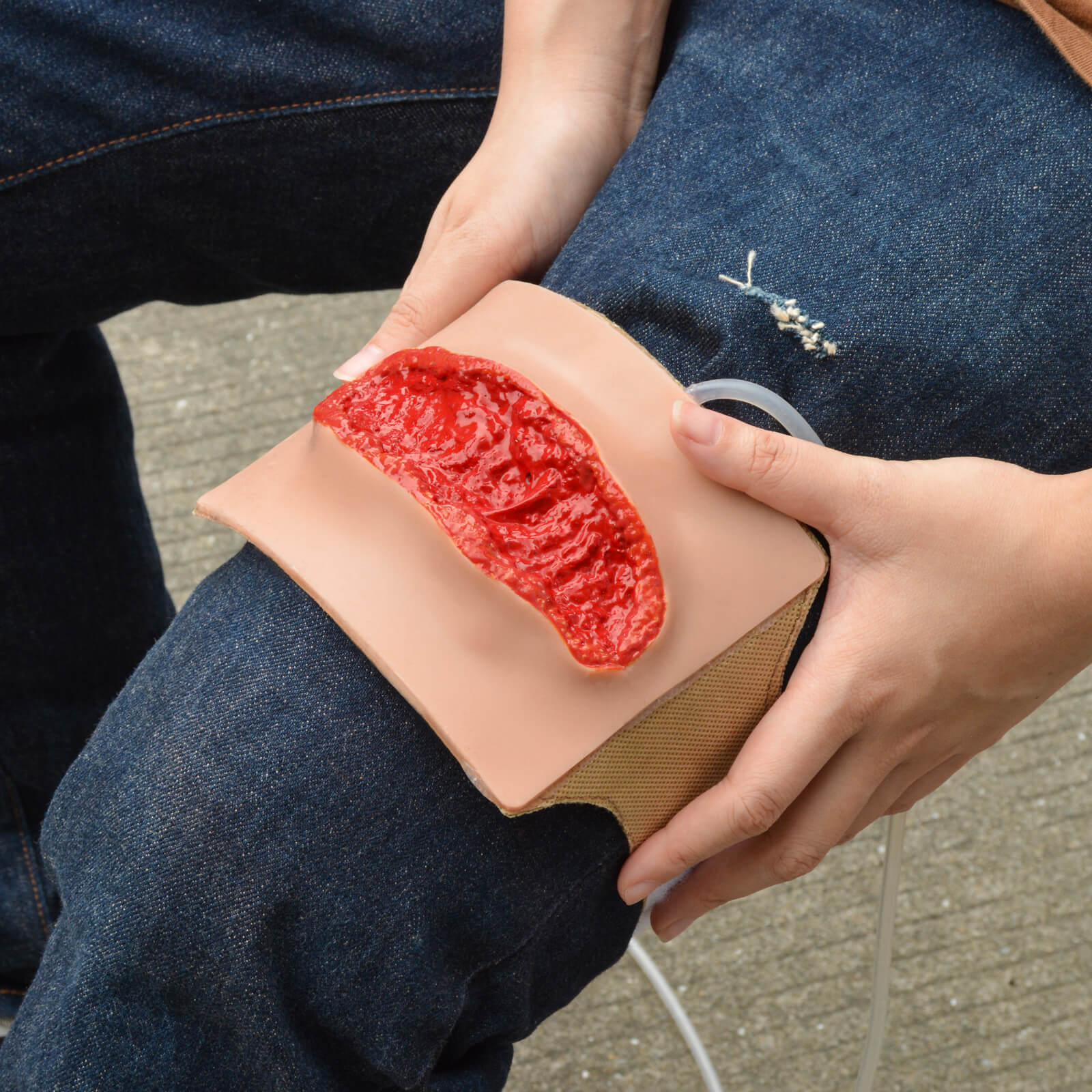
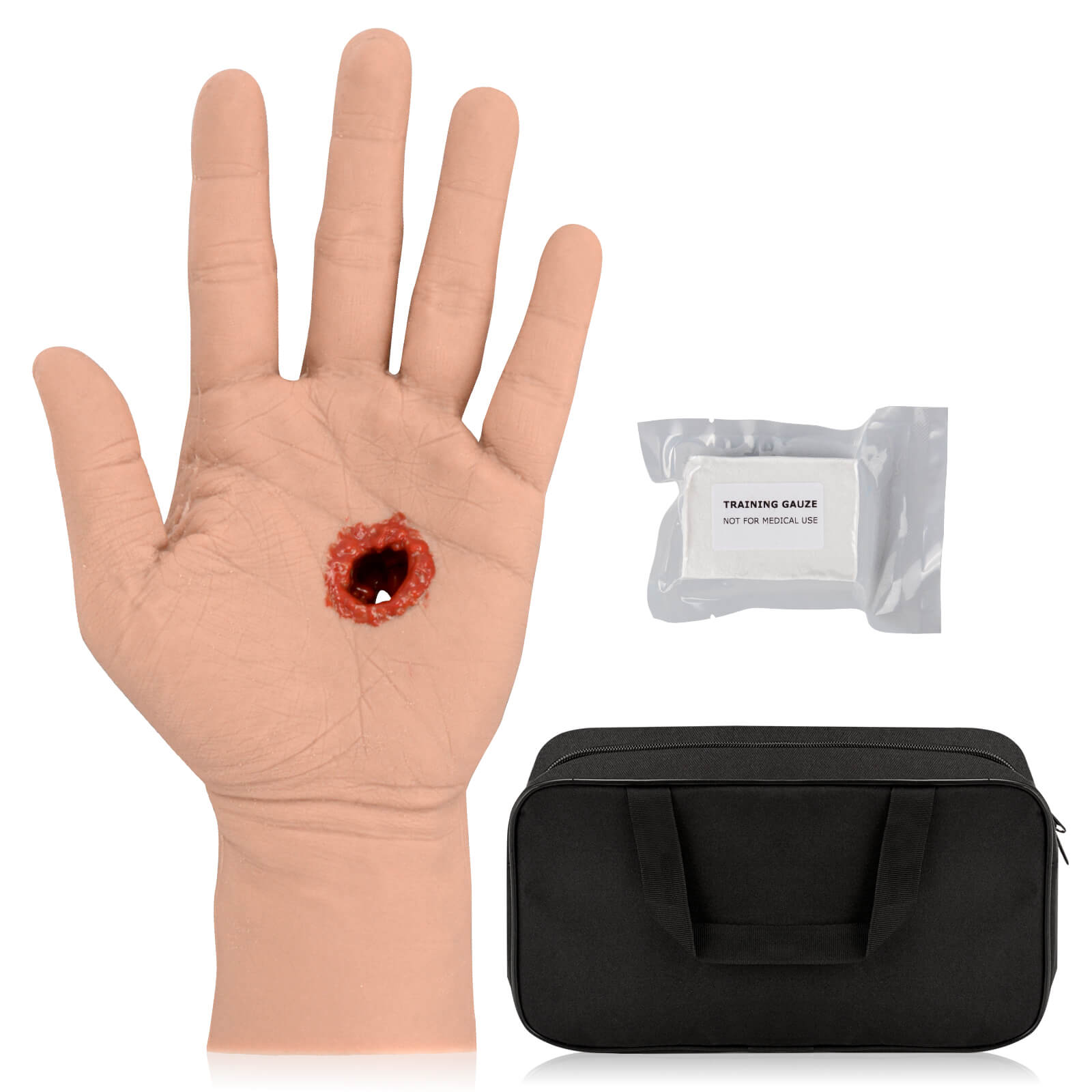
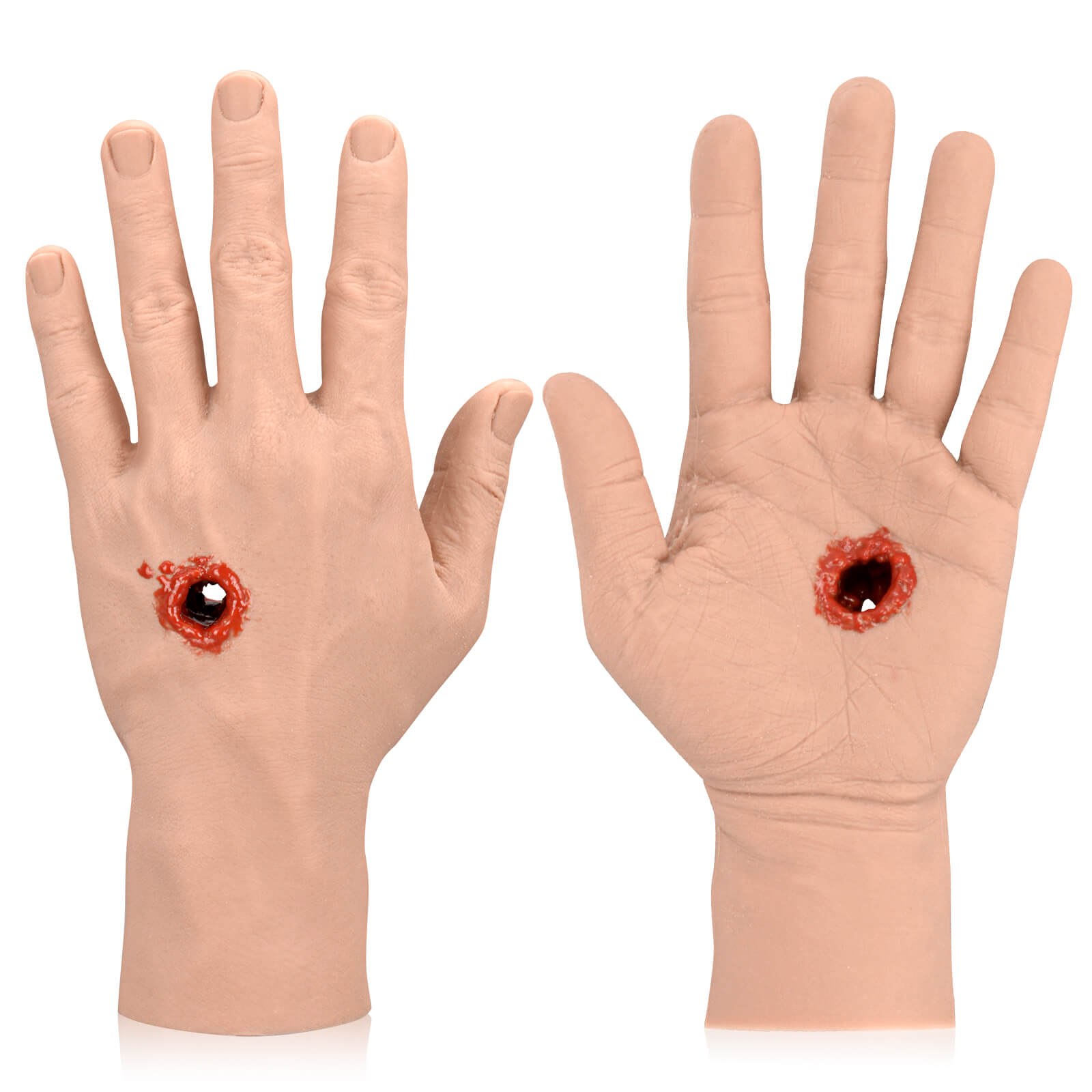
Using a deep wound trainer allows learners to visualize and feel:
- Wound depth
- Irregular internal spaces
- Resistance during packing
This tactile feedback cannot be learned from diagrams or videos alone.
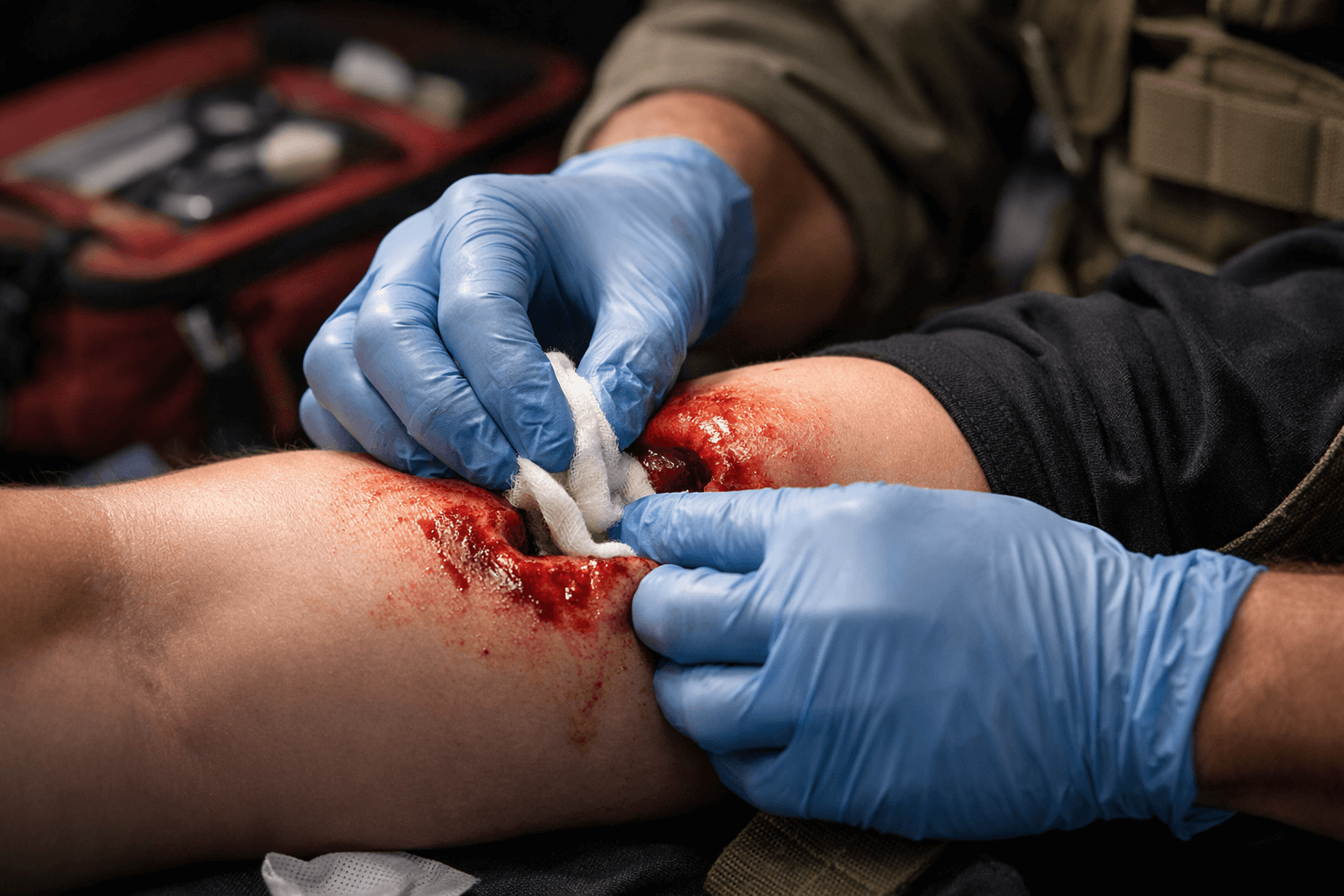
Step 3: Packing With Purpose (Not Just Filling Space)
In training, packing emphasizes:
- Placing gauze directly to the deepest point
- Applying firm internal pressure
- Filling from deep to superficial, layer by layer
This is where learners understand why packing controls bleeding, not just how.
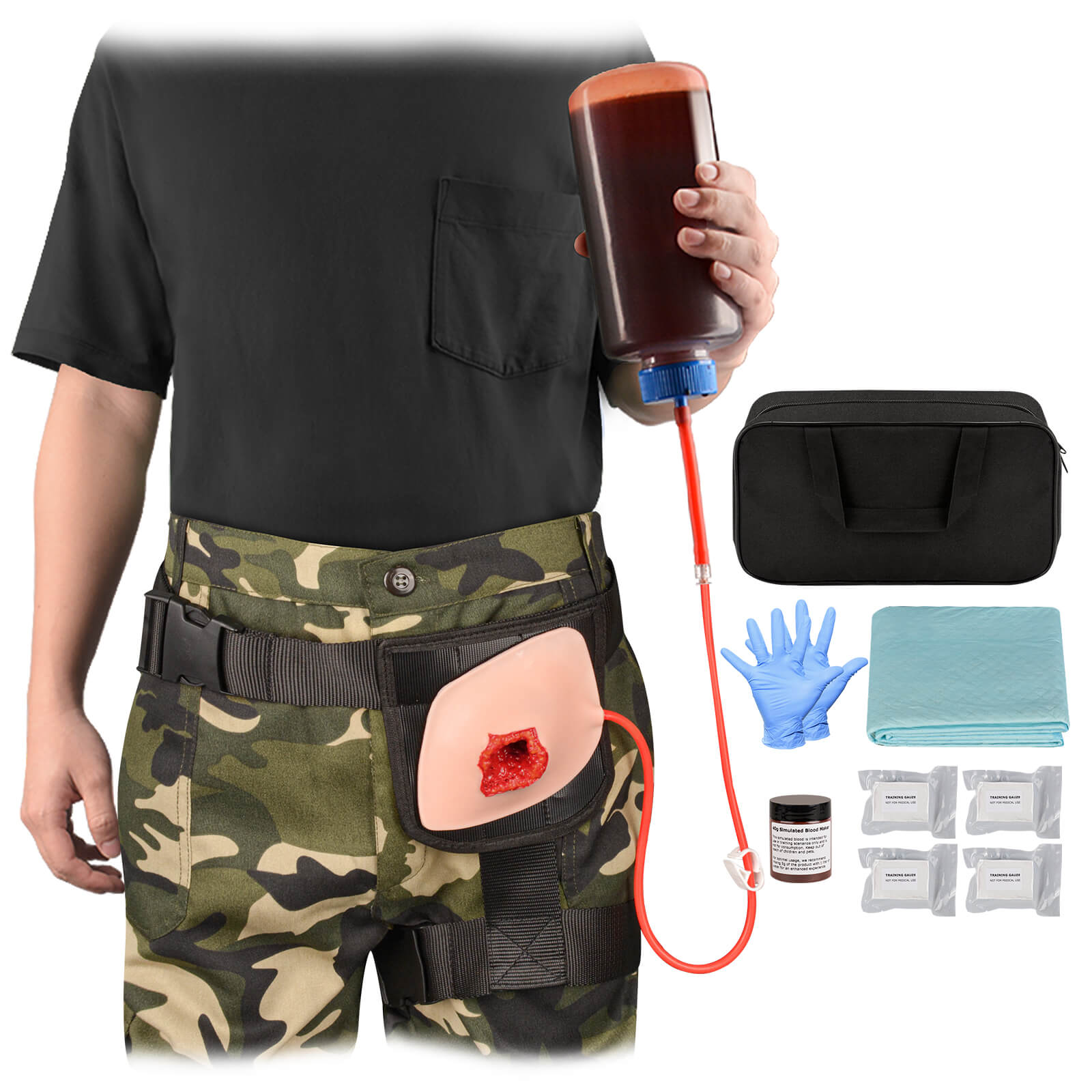
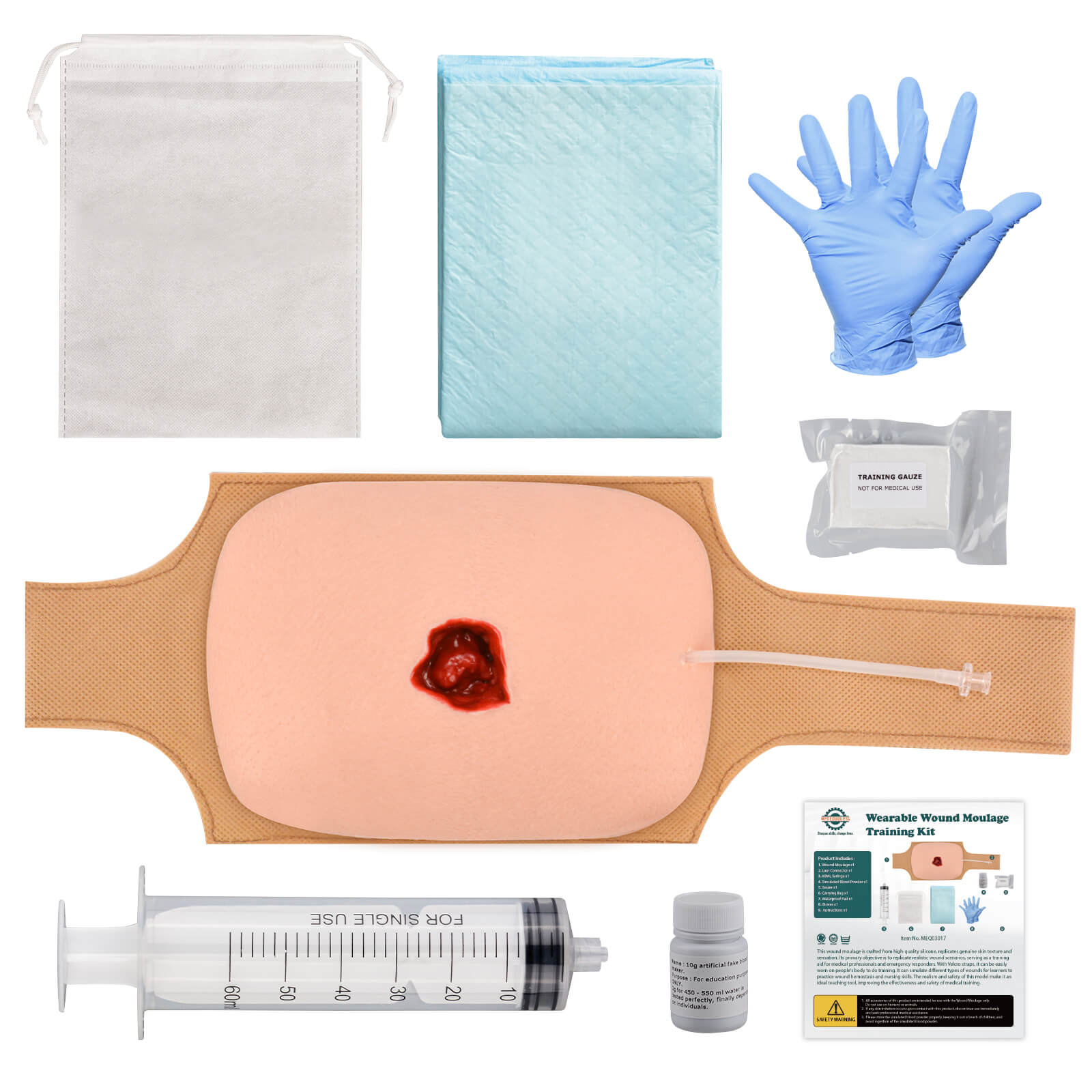
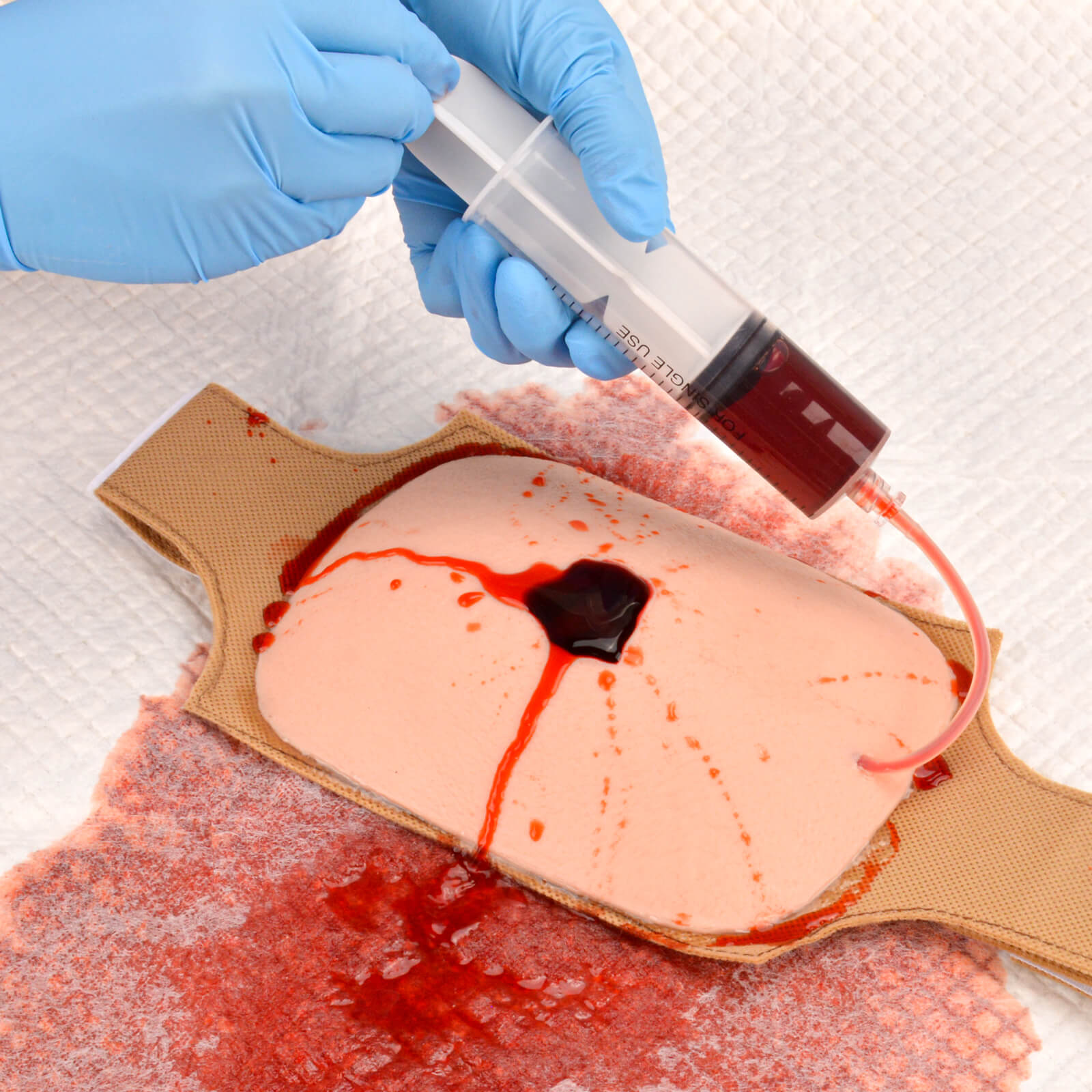
Practicing on a realistic gunshot wound trainer helps reinforce correct force, depth, and sequencing without risk to patients. About how to pack a wound, please continue to read more.
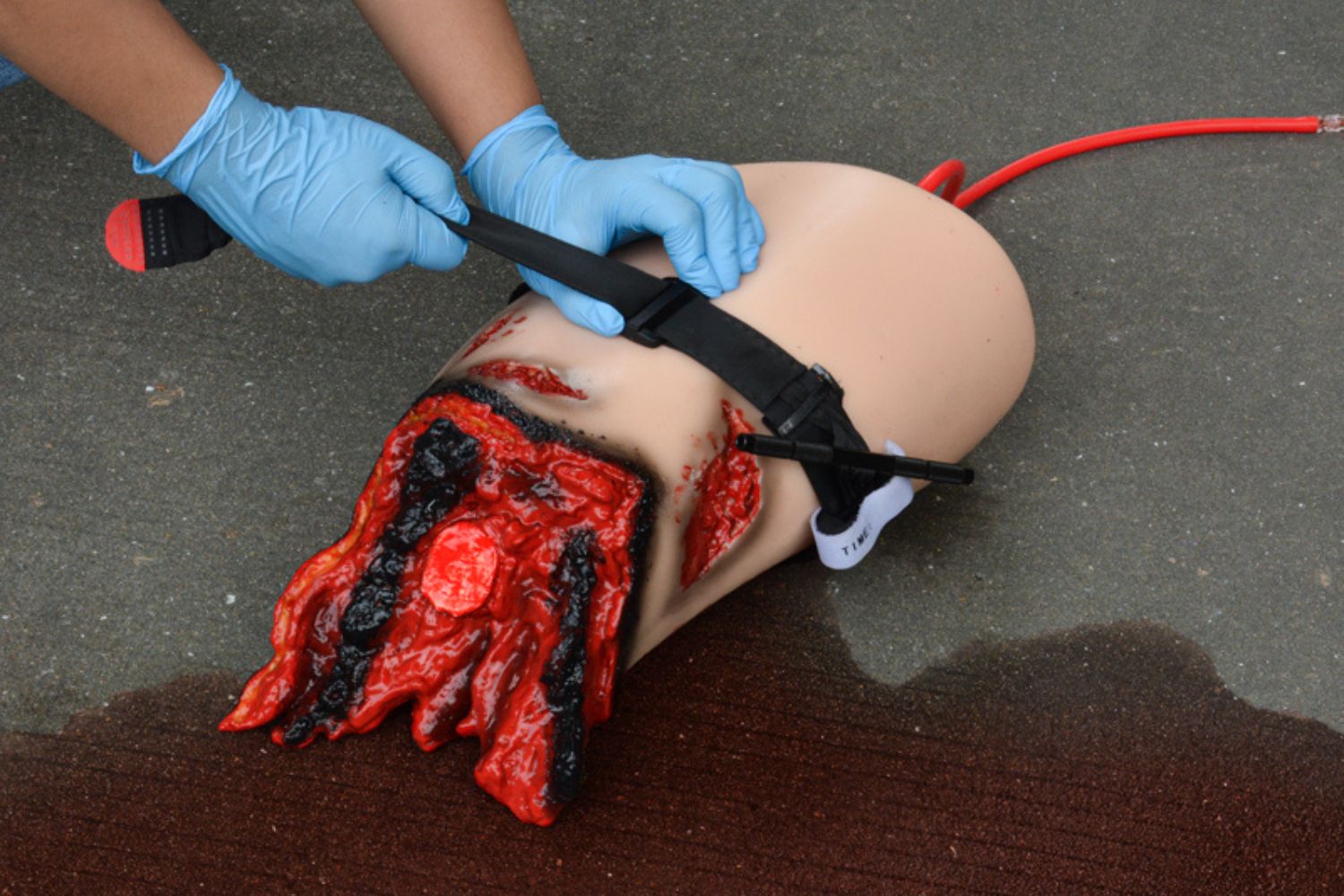
Step 4: Integration With Tourniquet Training
Many GSW scenarios require combined skills:
- Tourniquet application for limb hemorrhage
- Wound packing for junctional or deep wounds
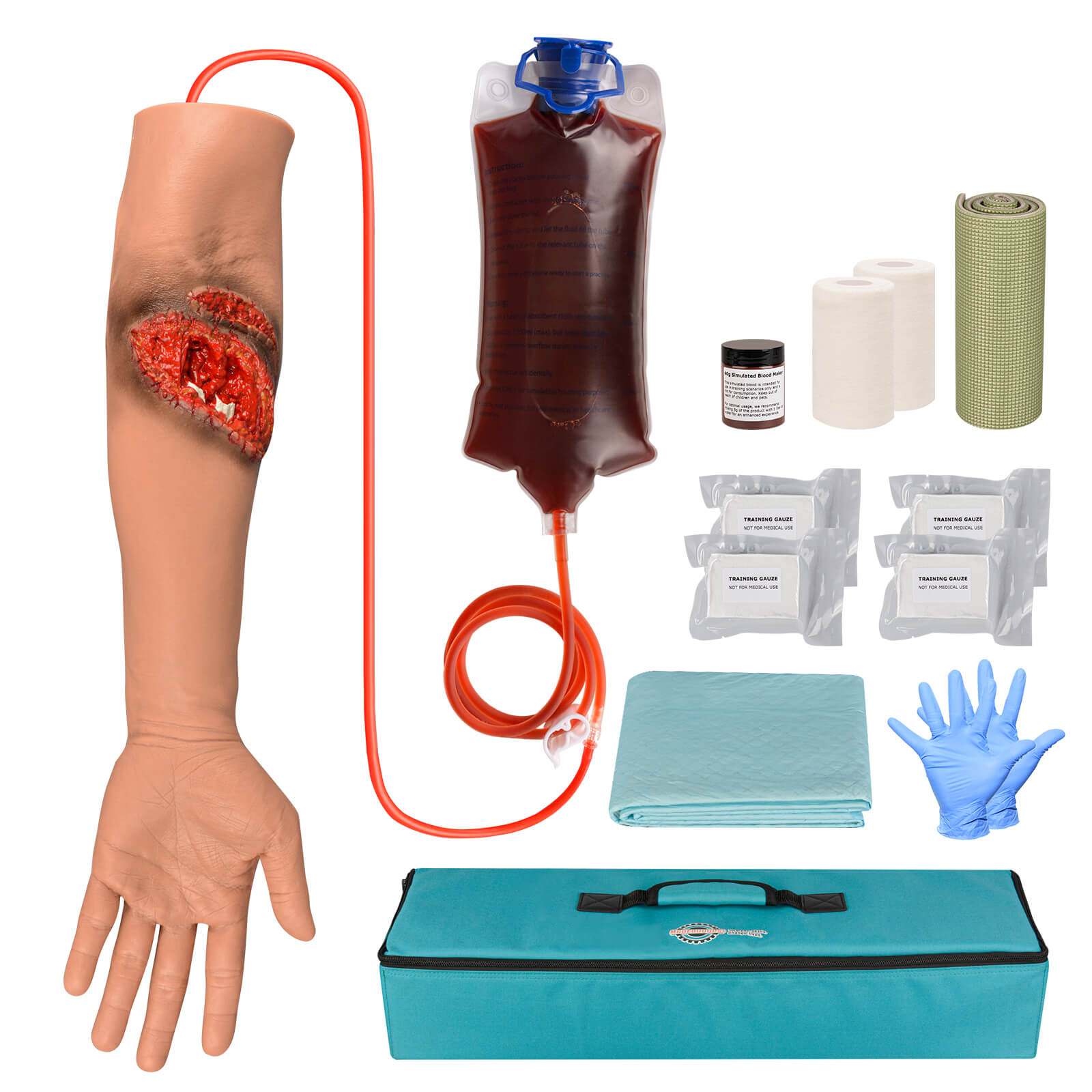
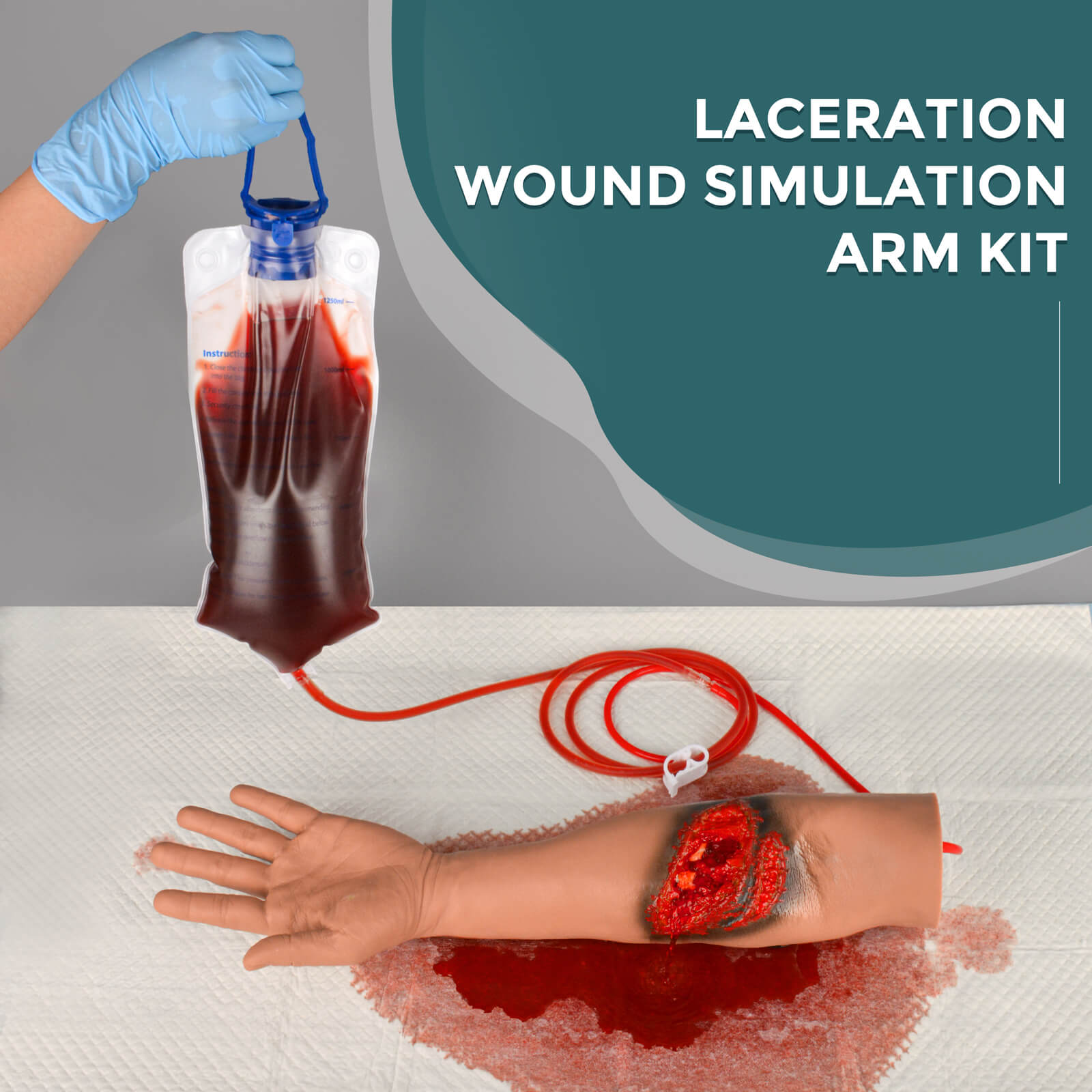
Integrated trainers allow learners to practice decision-making under pressure and understand how these techniques complement - not replace - each other.
Read more about Wound Packing vs Tourniquet.
Why You Should Never Learn Gunshot Wound Packing on Real Patients
Gunshot wound packing:
- Requires muscle memory
- Involves tactile judgment
- Demands calm execution under stress
Mistakes in real life are not reversible. Training with realistic simulators allows learners to:
- Make errors safely
- Repeat scenarios
- Build confidence and competence
This is why professional programs rely on dedicated wound packing trainers rather than first-time exposure in clinical settings.
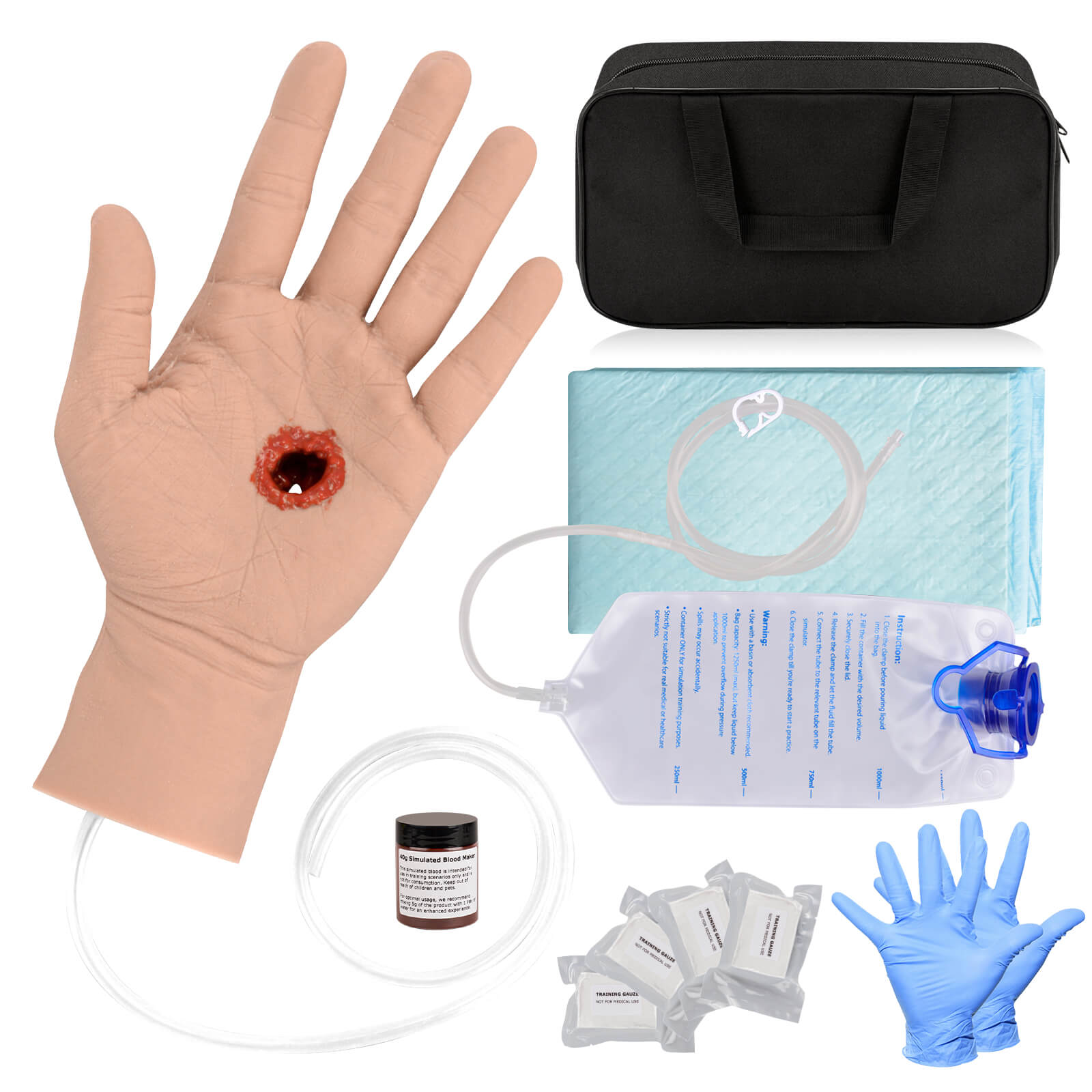
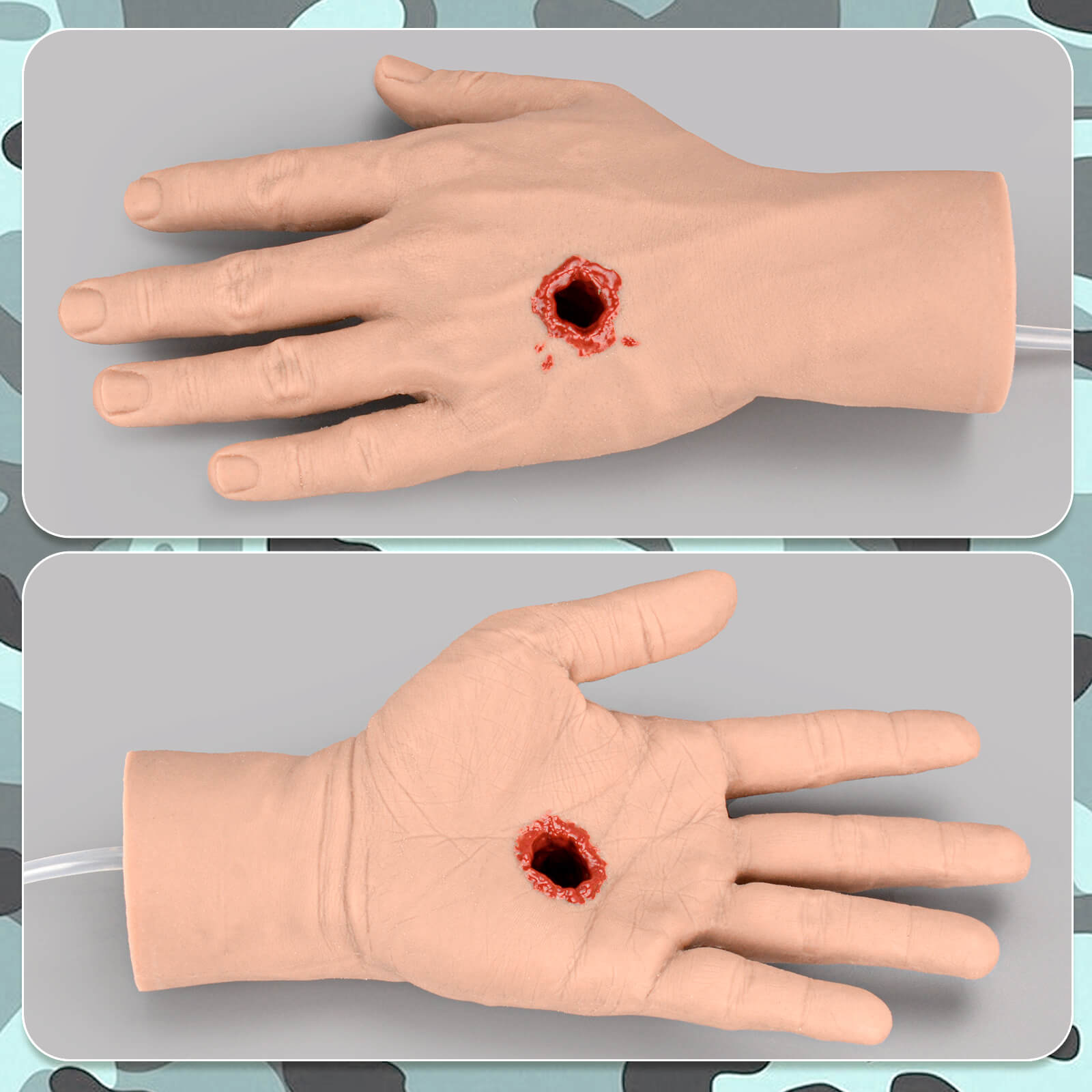
Explore realistic training solutions designed specifically for this purpose in the wound packing trainer collection.
Training Scenarios That Benefit Most From Gunshot Wound Packing Simulators
High-quality simulators support training for:
- EMS and paramedic programs
- Tactical and law enforcement medical training
- Stop the Bleed and hemorrhage control courses
- Nursing and emergency medicine education
Some advanced trainers even allow learners to practice both wound packing and tourniquet use in one scenario, simulating real-world decision complexity.
Frequently Asked Questions
Q1: Is this a real medical procedure guide?
No. This is a training-focused guide explaining learning logic and simulation principles, not instructions for treating real patients.
Q2: Why is gunshot wound packing hard to learn?
Because it requires depth perception, pressure control, and situational judgment - skills that only develop through hands-on practice.
Q3: Can wound packing be practiced without a trainer?
Not effectively. Without realistic resistance, depth, and cavity structure, learners cannot develop correct technique or confidence.
Q4: How does simulation improve real-world performance?
Simulation builds muscle memory, reduces hesitation, and improves decision-making before learners ever encounter real trauma.
Q5: Should wound packing and tourniquet training be combined?
Yes. Many real trauma cases require both skills, and integrated trainers prepare learners for these complex scenarios.
.jpeg?w=1600&h=1600)
.jpeg?w=1600&h=1600)
.jpg?w=1600&h=1600)
.jpg?w=1600&h=1600)
.jpeg?w=1500&h=1500)
.jpg?w=1000&h=1000)
.jpg?w=1000&h=1000)

.jpeg?w=1500&h=1500)
.jpeg?w=1500&h=1500)
.jpeg?w=1600&h=1600)
.jpeg?w=1600&h=1600)
.jpg?w=1600&h=1600)
.jpg?w=1600&h=1600)
.jpg?w=1500&h=1500)
.jpg?w=1500&h=1500)
.jpg?w=1500&h=1500)
.jpg?w=1500&h=1500)
.jpg?w=1500&h=1500)
.jpg?w=1500&h=1500)
.jpg?w=1500&h=1500)
.jpg?w=1500&h=1500)